MAPUSA
The Water Resources Department (WRD) has said it will take up repairs to the Tillari canal duct passing over the Colvale-Tivim road during the three-month shutdown of the Tillari canal proposed from October to December.
But even as the department has agreed to attend to the leaking duct, it has disputed the PWD’s contention that seepage from the structure is primarily responsible for the recurring damage to the road, with both departments now offering different explanations for a stretch that has been repeatedly reduced to deep potholes and waterlogging.
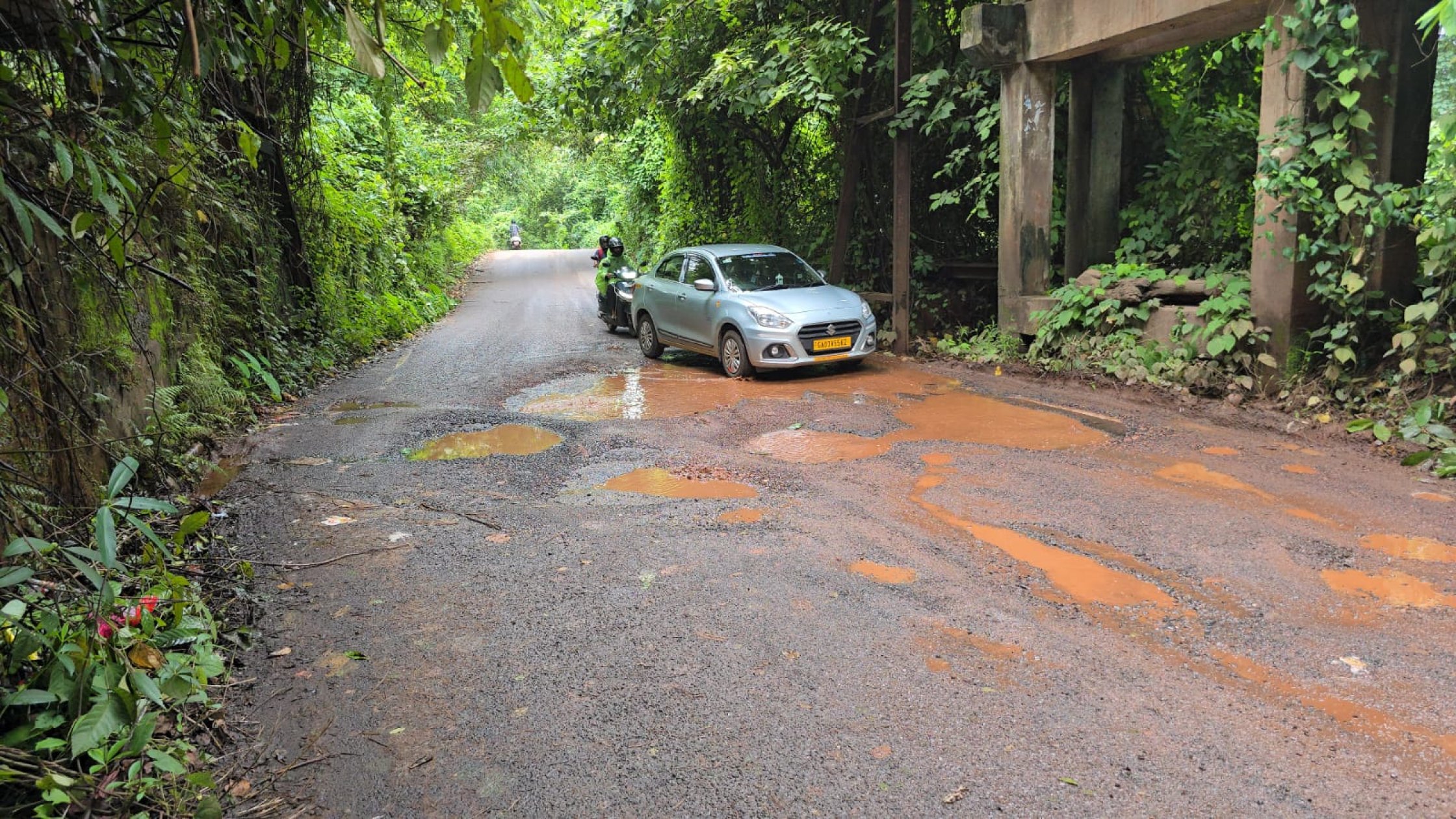
WRD Executive Engineer (Tillari) Pravin Parsekar said the duct leakage was not the major reason for the deterioration of the road. According to him, the more fundamental problem was the absence of a proper drainage system and inadequate road levelling, which allows rainwater to remain stagnant on the carriageway.
“The leakage from the Tillari duct happens on the side of the road and is not the major cause of the road developing potholes. The main problem is that the road does not have proper drainage and levelling to allow the rainwater to flow into the drains,” Parsekar said.
He said the WRD would nevertheless repair the duct during the proposed canal shutdown, when Goa and Maharashtra are expected to undertake maintenance and repairs, including attending to breaches along the canal, particularly on the Maharashtra side.
“But that alone will not resolve the problem. The road has to have proper drains for rainwater to slide into the drains and run off. The potholes happen because water gets stagnated on the road,” Parsekar said.
The WRD’s explanation, however, comes against the backdrop of the PWD maintaining that seepage from the Tillari duct is a major factor behind the repeated deterioration of the road.
PWD Assistant Engineer (Roads) Darshan Shetye had recently said that the road was constantly getting damaged and developing potholes because the Tillari canal duct passes directly over the road and water seeps onto the stretch. The PWD had also stated that it had written to the WRD on several occasions drawing attention to the leaking duct.
The conflicting explanations have effectively turned the condition of the Colvale-Tivim road into another instance of departments pointing to different causes for a problem that motorists have been facing for years.
For motorists using the Colvale-Tivim stretch, the distinction between a leaking canal duct and poor road engineering offers little relief. What matters on the ground is that the road continues to deteriorate, with potholes recurring despite the departments being aware of the problem.