


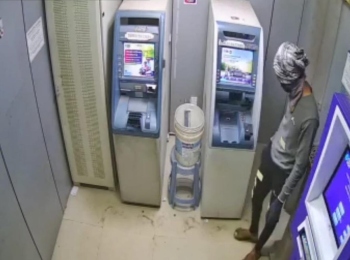
ATMs are not immune to incidents of thefts and loot, and recent incidents in various parts of Goa indicate the threat. In such situations, it is crucial to take appropriate security measures and the best approach is the implementation of stronger security protocols, including having dedicated security guards at each ATM location, enhanced surveillance, and possibly real-time monitoring of transactions.
Financial institutions are bound to regularly educate their customers about safe ATM usage, encourage them to change their PINs frequently, and promptly report any suspicious activities. Most of them wake up once in Blue Moon, or if any scams come to the fore.
There have also been instances when fake call centres are run in the name of some big names with many gullible customers falling prey to misleading and fictitious offers. These fraudsters are barely caught while the banks wash their hands off the issue. Several Goans are victims of this. Police crackdowns are also unfortunately not acting as a deterrent.
Several experts have advised the banking sector to work closely with law enforcement agencies to investigate and prosecute perpetrators of these crimes. Things are moving albeit at a soft pace.
Is physical guarding of all ATMs feasible?
The primary responsibility of the banks is to ensure the security of their ATMs at the same speed as they increase the number of ATMs in the State.
The banks are expected to install surveillance cameras, alarms, and other security measures to prevent criminal activities at their ATMs, while the police are responsible for monitoring high-crime areas and responding to emergencies.
South SP Abhishek Dhania directing the bank representatives to post security guards indicates the seriousness of the matter.
Deploying security guards at each ATM may or may not be feasible. It all depends on the number of ATMs in the area and the size of the bank's security team. Quite a few banks lack proper guards and secured access systems even at their major ATM locations, leave alone their small centres.
There’s another argument that major banks can afford to deploy guards whereas smaller branches may find it challenging as it increases their operating costs.
Lack of trained security guards
The lack of trained guards is a concern too. The Goan has reliably learnt that many banks do not have properly trained security men and some guards fear getting assaulted. In a laudable instance, a security guard posted at the Bank of Maharashtra ATM foiled a daring robbery on October 27, 2017, past midnight, despite being hit multiple times on his head. He was facilitated by Goa Police. It simultaneously raised questions about whether guards are imparted the required training to deal with armed robberies, and if ATMs should install alarms that alert officials/people on sensing mischief.
Alarms
Using the ATM service with masks on or wearing helmets is not allowed by some banks which have installed alarms at their centres.
It is crucial to invest in state-of-the-art security measures that can prevent burglary attempts by installing alarms in ATMs, banks and financial institutions that can effectively put a barrier between criminals and their potential targets.
Moreover, these security systems can instil confidence in customers who frequently use ATMs. Knowing that an alarm will sound if anyone attempts to tamper with the machine can help customers feel safe and secure while carrying out transactions.
Will customers bear costs over security?
With the April 1 deadline to deploy security personnel at ATMs in South Goa, the question arises if the customers will have to bear the additional cost, which will be imposed on them by the banks in different ways.
Deploying security guards will not be a one-time expense. They will have to maintain and pay the guards their salaries and benefits, which may be an extra cost for the bank and possibly passed on to the customers.


