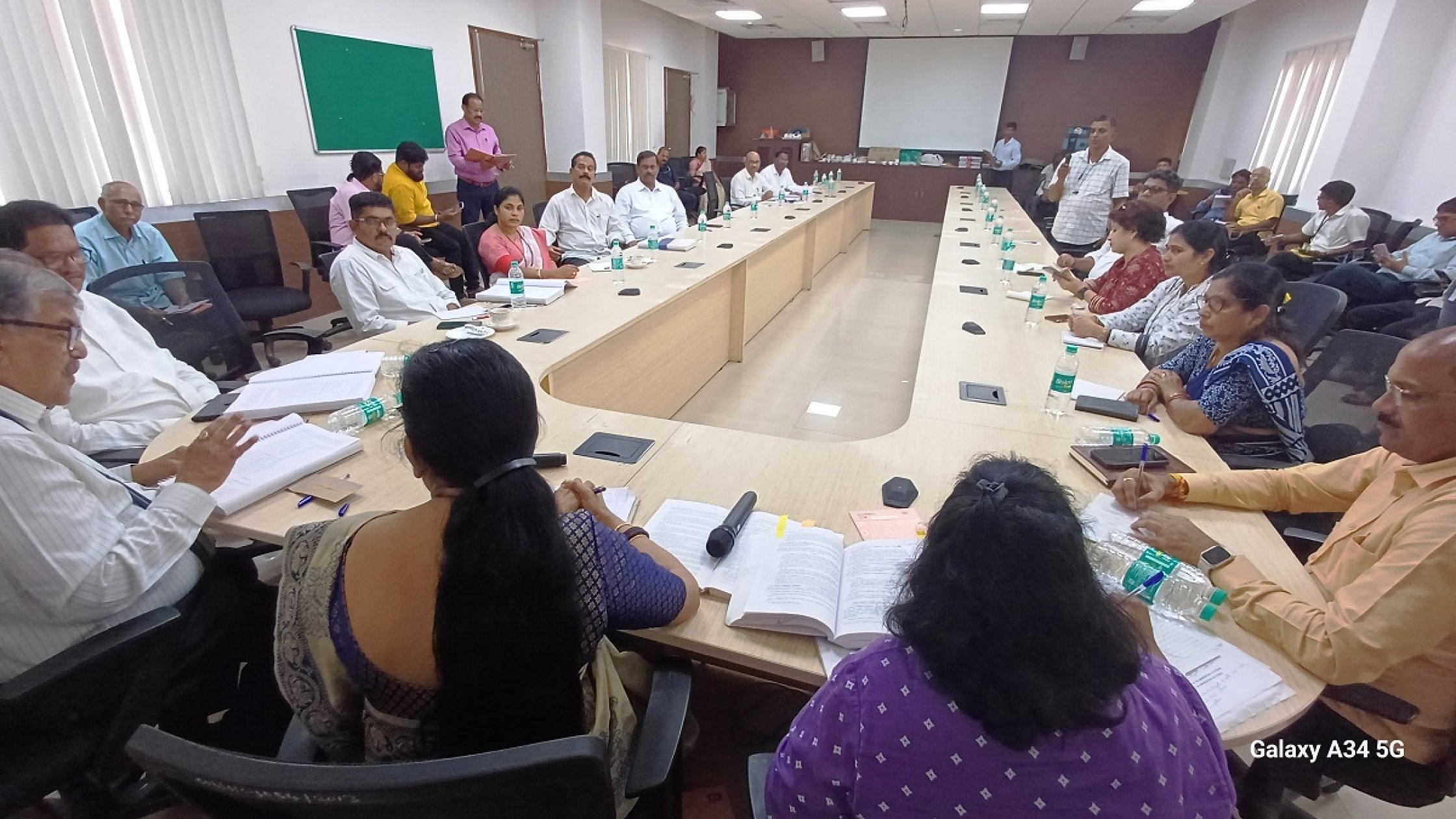
 File photo of the South Goa DPC meeting finalising the draft development plan for the financial year 2024-25.
MARGAO
This is the time of the year when the District Planning Committees (DPCs) of North and South Goa ought to be actively engaged in obtaining development plans from the Zilla Panchayats, village panchayats and municipalities and consolidating them into draft development plans for the respective districts.
As constitutionally mandated planning bodies, the DPCs have a clear responsibility to consolidate development plans received from local self-government institutions and prepare a draft development plan for the district. Yet, they have largely remained defunct, deprived of the government’s logistical support required to translate the constitutional mandate of bottom-up planning into reality.
This year, however, the DPCs will miss the planning exercise for an altogether different reason: they have not even been constituted.
It is nearly a year since elections to the North and South Goa Zilla Panchayats were held in December last year. While both Zilla Panchayats have elected chairpersons at the helm, the District Planning Committees for the two districts are yet to be constituted. And the reason cited for the delay has raised eyebrows.
When The Goan contacted newly appointed Director of Panchayats Shagun Velip to ascertain why the DPCs had not been constituted, he was quick to point to the municipalities, which are currently being run by government-appointed administrators following the postponement of civic elections.
“I have checked with my panchayat officials and they have replied that the DPCs could not be constituted since the municipalities do not have elected chairpersons, who are members of the DPCs,” Velip said.
He explained that the Directorate of Panchayats had initiated the process by writing to the two Zilla Panchayats and the Director of Municipal Administration, asking them to ensure that the Zilla Panchayats and municipal bodies forward the names of their representatives for induction into the DPCs.
“We have received the names of members from the Zilla Panchayats, but no names of Municipal chairpersons have come in, perhaps because the civic bodies are presently headed by government-appointed administrators,” he said.
Velip maintained that the DPCs could not move forward without representation from the municipal bodies. “Without representation from the Municipal bodies, the DPCs will not have representation from the urban local bodies. This will, in turn, affect the planning process envisaged under the Constitution of India,” he added.
The absence of elected representatives in the municipalities has thus emerged as the stumbling block in constituting the DPCs, leaving the constitutionally envisaged mechanism for integrating rural and urban development priorities in the two districts in limbo.
With the DPCs yet to take shape, the exercise of consolidating local development plans into comprehensive district-level plans faces another year of uncertainty.
Govt’s failure to constitute DPCs draws criticism