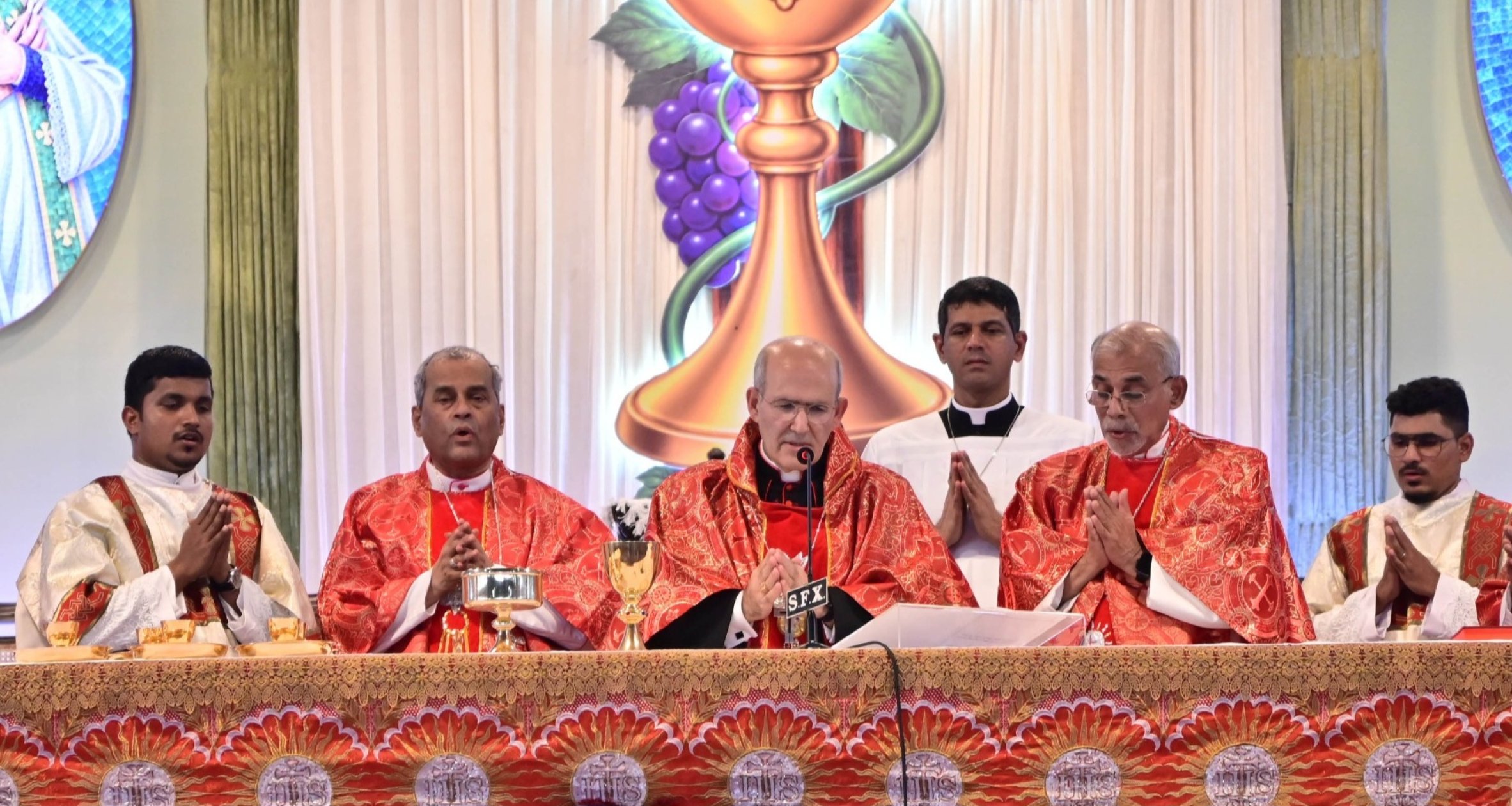
 Cardinal José Tolentino de Mendonça presiding over the Novena Mass of St Francis Xavier in Old Goa on Wednesday. Archbishop of Goa Cardinal Filipe Neri Ferrão was one of the concelebrants. Photos by Narayan Pissurlenkar
PANAJI
Emphasising that education is never exclusive but must form bridges, Cardinal José Tolentino de Mendonça, Prefect of the Dicastery for Culture and Education in the Vatican, called upon educators to teach students not only how to succeed in life but also how to live together with dignity, justice, and mutual respect.
Cardinal Mendonça was delivering his homily while presiding over the Novena Mass of St Francis Xavier outside the Bom Jesus Basilica in Old Goa on Wednesday. Other concelebrants included the Archbishop of Goa Cardinal Filipe Neri Ferrão, Archbishop of Nagpur Elias Joseph Gonsalves, Bishop of Varanasi Eugene Joseph, Auxiliary Bishop of Goa Simiao Fernandes, and several other priests.
Cardinal Mendonça described St Francis Xavier as a great missionary who carried the gospel across continents with extraordinary zeal.
“St Francis Xavier was both a missionary and educator, a man who formed minds by first touching hearts,” said Cardinal Mendonça, who is in Goa for a conference of Catholic educators from across India.
In his message to educators, Cardinal Mendonça said education is not simply the transmission of information but the formation of the human person and the shaping of conscience, character, compassion and commitment.
“In an age when information is available at the click of a button, and artificial intelligence can answer complex questions, the task of education remains unchanged: to help every person discover truth, goodness, beauty, and ultimately God.”
“Education is never exclusive. It builds communion; it forms bridges rather than walls. It teaches our students not only how to succeed in life but also how to live together with dignity, justice, and mutual respect.”
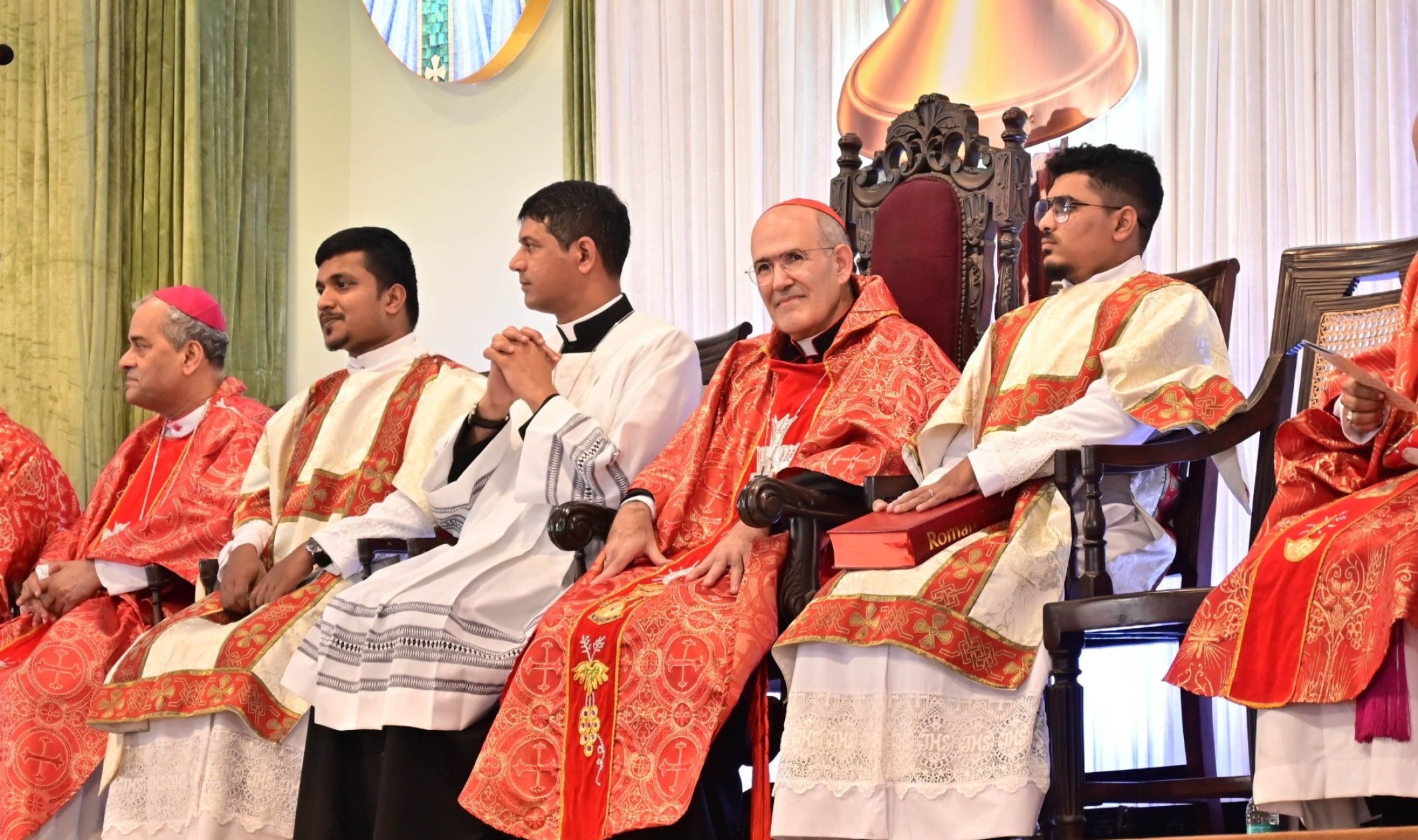 Cardinal Mendonça, who hails from Portugal, emphasised that education is not merely producing successful professionals, but transforming persons with renewed minds, compassionate hearts and a commitment to serve.
“This is precisely what St Francis Xavier lived. He did not simply travel thousands of kilometres. He journeyed into people's lives, he learned their language, respected their cultures, catechised children, and proclaimed Christ with tireless love. His life reminds us that the greatest lessons are not taught from textbooks but through witness,” he said.
Referring to the encyclicals of Pope Francis and Pope Leo, Cardinal Mendonça said schools, colleges, and universities must become places where young people encounter not only knowledge but also one another and above all, Jesus Christ.
“Education cannot remain fragmented; it must integrate faith and reason, science and ethics, knowledge and wisdom, human development and care for our common home.
“Authentic education is fundamentally about forming the whole human person. Educators must cultivate not only intellectual excellence but also wisdom, compassion, moral courage and a capacity for wonder,” he said.
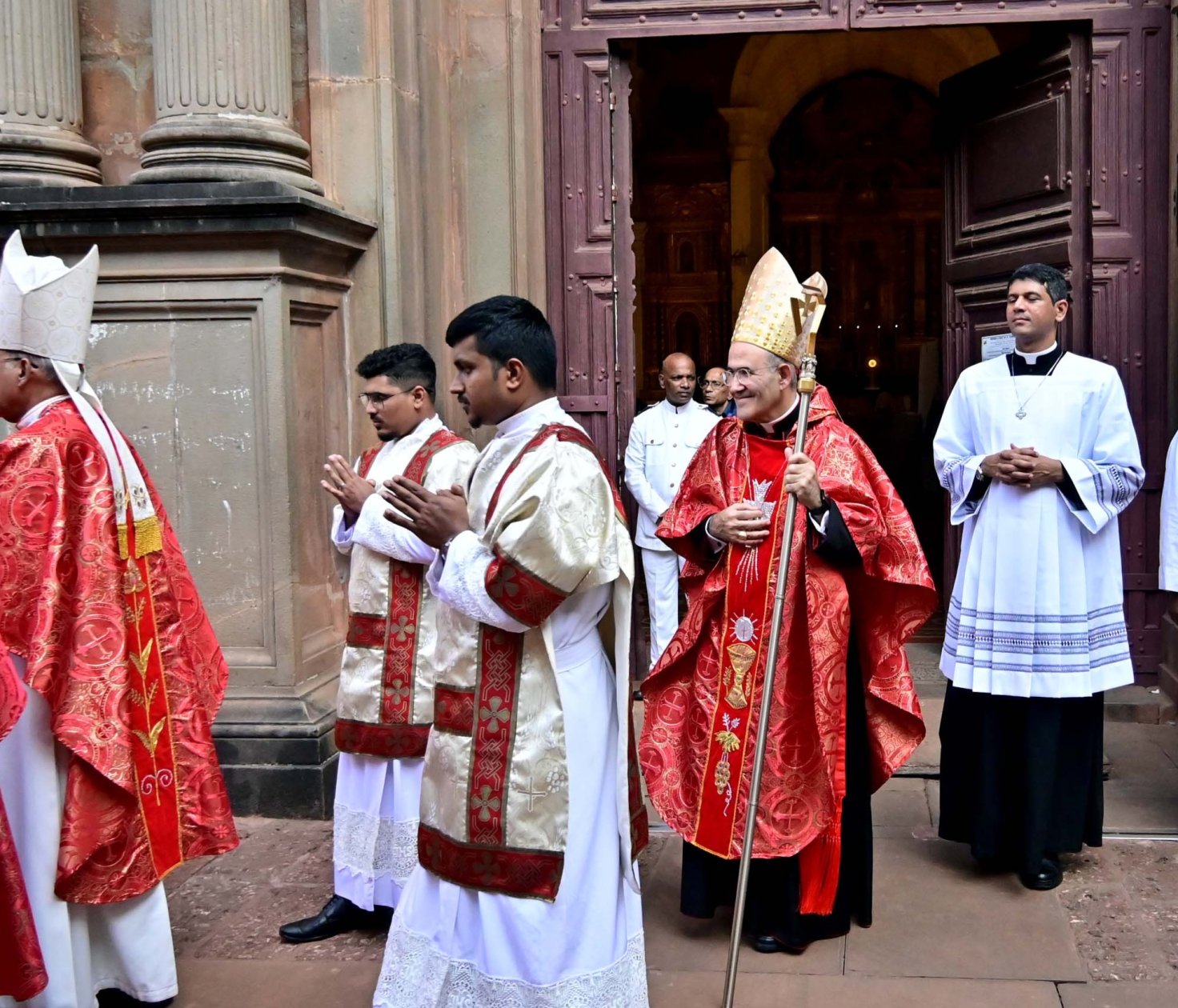 Stating that their vocation is sacred, Cardinal Mendonça told educators that every classroom and every lesson should be an opportunity to awaken curiosity, cultivate wisdom, and reveal the presence of God in the ordinary experiences of life.
“You do not simply prepare students for examinations; you prepare them for life,” he said.
“As devotees of St Francis Xavier, let us all remember that we are all educators in one way or another, as parents, grandparents, catechists, priests, religious and members of the Christian community. Every word we speak, every action we perform, and every value we embody, teaches someone.”
Earlier in his introductory address, Cardinal Ferrão welcomed Cardinal Mendonça and said his presence is a source of great blessing and an expression of his pastoral closeness and fraternal solidarity with the Church in India and the local Church in Goa.