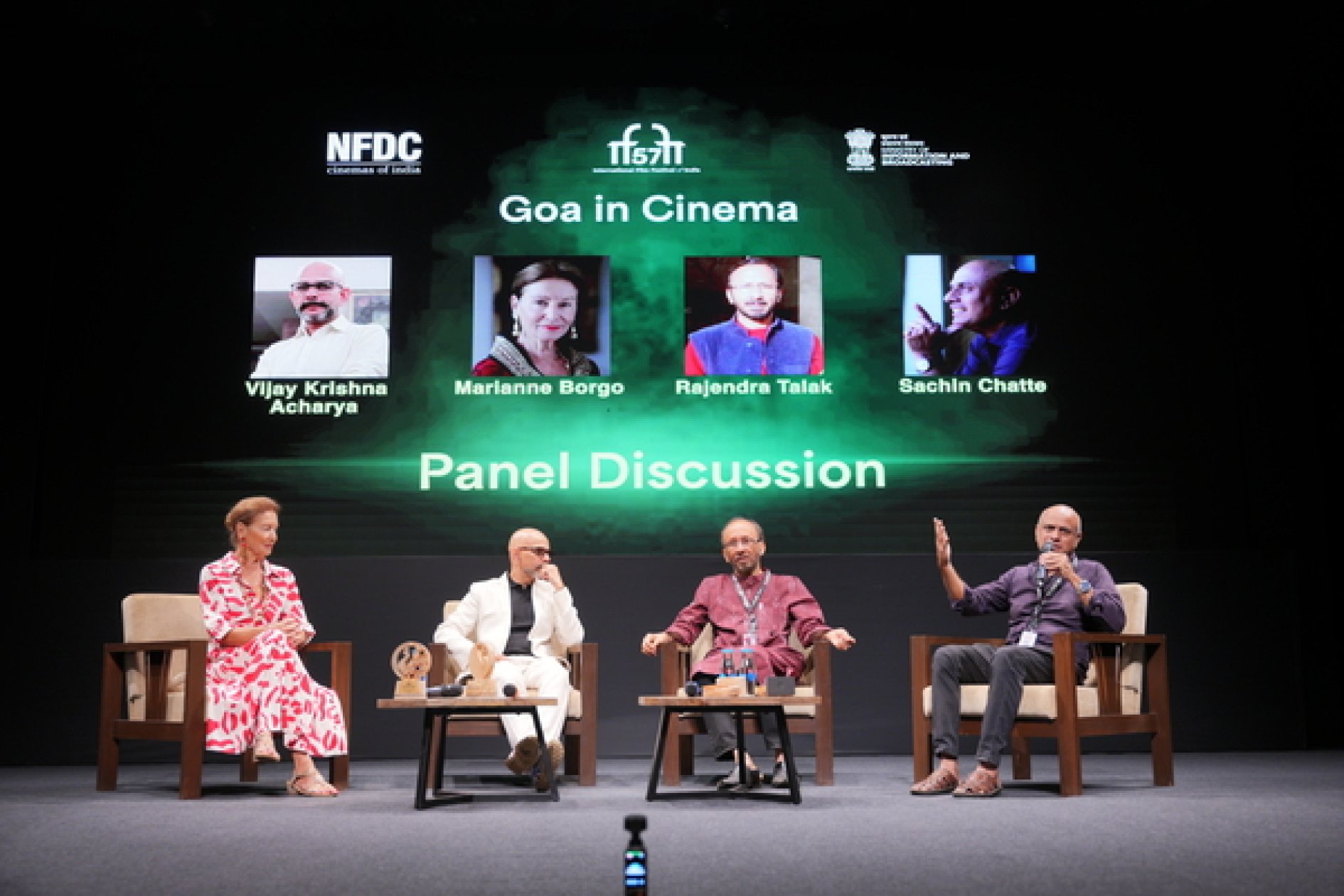
PANAJI: Goa’s potential as a film production hub, the need for dedicated filmmaking infrastructure and concerns over preserving its natural and cultural heritage emerged as key talking points at a panel discussion titled ‘Goa in Cinema’ at the 57th International Film Festival of India (IFFI) on Monday.
The session featured Konkani filmmaker Rajendra Talak, Hindi film director and screenwriter Vijay Krishna Acharya, and French actress Marianne Borgo, with film critic Sachin Chatte moderating the discussion.
Making a case for stronger film infrastructure, Acharya said Goa’s distinctive landscapes and cultural identity gave it an edge as a filming destination. Referring to Kabhi Haan Kabhi Naa, he observed that the film’s characters and setting were so intrinsically linked that the story could have worked only in Goa.
He stressed that production costs remained a major factor in determining filming locations and proposed setting up a film city in Goa to make the state more accessible to productions of different scales and budgets.
Acharya also called for film schools and film literacy centres to equip local talent with professional skills and open up employment opportunities in the industry. Such initiatives, he said, could help nurture a new generation of creative professionals and establish Goa as an artistic centre.
Talak, however, expressed reservations about the need for a film city, arguing that Goa already offered an abundance of locations for filmmakers. From traditional homes and heritage structures to its varied natural landscapes, the state had considerable untapped potential.
"Hardly ten per cent of Goa has been explored," he said, urging filmmakers to look beyond familiar locations and discover stories within the state's diverse settings.
He also cautioned against allowing the push for film-related development to compromise Goa's cultural identity and ecological heritage, stressing the need to preserve what makes the state distinctive.
Borgo brought a perspective shaped by her association with Goa, emphasising that its natural surroundings, traditional architecture and cultural character were as important as the infrastructure required for filmmaking. She urged production teams to adopt responsible shooting practices and ensure that their activities did not damage the state's heritage.
She also spoke about her introduction to Konkani cinema through O Mariya, which she watched at IFFI, recalling the talent and creative potential of the regional film industry.
The panellists also examined how Goa and its people have frequently been portrayed through stereotypes in mainstream cinema. They stressed the need for filmmakers to move beyond conventional representations and explore stories that reflect the state's diverse communities, culture and lived experiences.
The discussion brought out two complementary priorities: creating an environment that encourages more film productions in Goa while protecting the natural and cultural assets that make the state a distinctive cinematic destination.