the goan I network
PANAJI
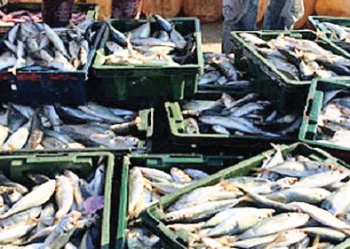
The import ban crackdown imposed by the Public Health Department on Tuesday ostensibly to overcome the public’s crisis of confidence in safety and quality of fish sold in local markets has thrown operations in the trade in disarray and sent prices of the staple skyrocketing.
A couple of seizures and destruction of fish in the 48 hours since the ban was imposed on Tuesday, has raised the heckles of trawler owners, transporters and even traditional coastal fishing communities.
“If fish being transported in the State is being confiscated how are we supposed to reach our catch to the local markets,” asked Savio D’Silva, president of Cutbona Boat Owners Union.
Fishing communities who have for decades been plying their trade in fishing hamlets across the State’s coast and rely on small unorganized transport vehicles to deliver their fish to the local markets are also in knots over authenticating the source of their catch during transportation.
Fishermen from Caranzalem and Benaulim told The Goan that public carrier vehicle operators have begun refusing to transport their cargo after reportage in the media of the seizures of fish by the police and authorities.
“Fish is highly perishable. If transportation is not available it will rot on the jetties,” D’Silva who heads one of the unions at the Cutbona jetty in South Goa said.
What are we supposed to do? Some of our catch which is unsuitable for local markets has to be transported to the export processing plants in Cuncolim. Some other varieties have to be taken to the solitary fish meal plant at the Cuncolim industrial estate,” D’Silva said, expressing disgust at the turn of events.
In a bid to check the operations of fish traders who import fish from Karnataka, Kerala and Tamil Nadu, suspected to be the culprits of the formalin-in-fish imbroglio raging in the State since mid-July, the Goa government has imposed a crackdown disallowing their trucks from entering the State until such time as quality testing facility is put in place.
The crackdown, however, has also begun affecting intra-state fish transport which is crucial to feed local markets in cities and towns with stocks from the coast fishing villages and the nearly half-a-dozen fish-landing jetties.
On Wednesday, a consignment of fish from the Malim fish-landing jetty meant for the fish meal plant at Cuncolim was confiscated and the stock sent to the Saligao waste management plant for destruction.
Health Minister Vishwajit Rane, under whose administrative control the Food and Drugs Administration operates, has ruled out any climb down or dilution of the order imposing the import ban.
“Transporters who fail to comply by the guidelines laid down by the FDA will be strictly acted against,” Rane said, adding that the RTO and the police have been instructed to ensure the ban order is not violated.
Cops reluctant to act on fish ban
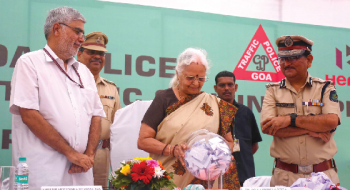
PANAJI: The police have expressed reluctance to wade into the controversial fish transportation turf. “It is not our mandate to check each and every transport vehicle. If we do so it will cause inconvenience to transporters and traffic movement also will be disturbed with long traffic jams,” Inspector General of Police Jaspal Singh said on Thursday.
Singh however added that police will check vehicles only with specific inputs.
“Our job is not to check passenger buses. If we have specific information or they have violated any traffic rules, only then we will check the buses,” Singh said.
“Checking of each and every passenger bus will lead to inconvenience and harassment to the traveling public,” he said. Asked about fish being transported in passenger buses, Singh said the issue needs to be addressed by the relevant department.