


MARGAO
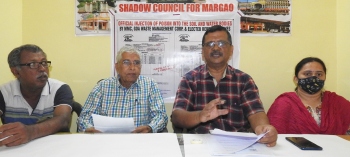
Citizens of Margao under the banner of the Shadow Council has said that analysis of the so-called compost dumped for land filling near the district court building has shown the levels of mercury found in the tests are six times higher than the permissible limits.
Saying that mercury is a known poison and is a serious threat to the life of citizens if it is dumped as is being done, the citizens contended that it is bound to enter the ecosystem.
Armed with documents obtained through RTI, the citizens have charged that destruction of soil, environment, ecology and ground water table is today a government sponsored initiative in Margao.
They demanded to know from Environment Minister Nilesh Cabral whether the Goa State Pollution Control Board is to protect the environment or whether it was a body to silently watch it getting destroyed. “We had on 24/11/22 submitted 3 samples of the dumped waste, and on 7/12/22, the GSPCB themselves have collected 2 samples from the site. We hope that the pollution control board does a sincere job, and make public the test reports of the samples at the earliest, before the MMC and GWMC starts another round of dumping poison in other parts of this city,” contended Shadow Council of Margao convenor Savio Coutinho.
The citizens comprising of Coutinho, Candeth Castello, Adv Snehal Onskar, Jose Maria Miranda, Maria do Carmo, Anthony Pereira, Damodar Onskar, Anthony Gonsalves and others listed out details of the poisonous nature of the waste being dumped by the authorities.
They have warned the concerned authorities to take up this matter before higher forums if they fail to act on this issue.
Pointing out that the sample shows ‘below-the-limit’ content for Total Organic Carbon, Nitrogen content and Phosphorous, Coutinho wondered whether it is because the inorganic content is high, while demanding further investigation.
“Most unexpected from these authorities is the fact that even after having such abnormal test results they went ahead dumping this hazardous waste near the district court. The GSPCB has approved the land that will be used to dump the compost, but has played no role to protect the citizens’ lives by ensuring that the dumped compost is not hazardous,” Coutinho said.


