But these doubts soon turned to respect, support, cooperation and gratitude, when people noticed and realised that the MFG had created opportunities, supported communities, added value, shared knowledge and expanded their horizons. THE GOAN takes a closer look at some of the initiatives and projects of MFG, which laid the foundation, built communities and transformed the lives of lakhs of people especially in the mining belt of Goa.
Village development when, where it mattered most
Mineral Foundation of Goa Chief Executive Officer Dr Sachin Tendulkar said the Gram Nirman project was a unique and maiden effort by the MFG.
“We concentrated on the participation of stakeholders at the ward level. We used different methodologies to engage the local people in terms of participatory rural appraisal, matrix ranking and the finalisation or prioritisation of the project. That made a huge difference when it came to ownership of the entire project”, said Dr Tendulkar.
Sakharam A Pednekar of Gaonkarwada-Mayem recalled his first contact with the MFG.
“In Mayem, villagers did not initially believe in the MFG and its objectives. They were sceptical and thought this move was to expand the mining activities”, admitted Pednekar.
“We had proposed de-silting of the Goingonem lake and after the proposal was submitted by the panchayat, MFG immediately initiated inspection work. They understood that it was a genuine problem and implemented our proposal,” said Pednekar.
“Like all other self-help groups, our Ravalnath SHG has also been associated with every development project initiated by the MFG.”
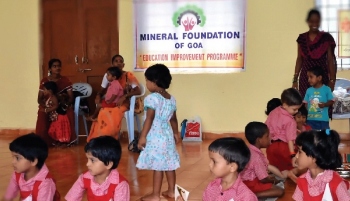
“In the past, our village lacked in agriculture infrastructure. Balwadis (Children’s nurseries) were in poor condition. Because of Gram Nirman, people got the chance to propose these projects during the meetings. This could happen only because people had a direct say in these meetings.”
Pednekar informed that through MFG’s Gram Nirman project, nearly seven Anganwadis were built in Mayem village.
He also made mention of other instances of village development through the MFG.
“In our village, mud would get washed into the fields. To prevent this, 50% of the peripheries were restored. Some fields had no access roads. These access roads were also built under the Gram Nirman project. Old wells were restored, while small bunds were built across the streams. Because of these projects, our fields now receive adequate water,” said Pednekar.