


the goan I network
MAPUSA
Educationist and political activist Atishi Marlena on Tuesday said that policy implementation and trusting people to do the right thing was the key that brought about a change in the educational system in government schools in Delhi.
“Change is possible only if there is political will to do so. In just three and half years the government in Delhi was able to bring about a transformation in government schools. Money was never a problem. Many governments cannot do this only because there is no will to bring a change,” Marlena said.
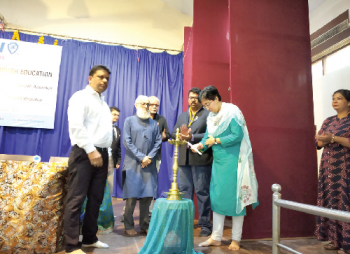
The educationist cum political activist was addressing a gathering as key note speaker at a symposium on ‘Future of India through Education’ organized by the Mapusa JCI on Tuesday at Bodgeshwar Hall, Mapusa.
Former chairman of Goa Board, Padmashri, Dr Suresh Amonkar and educationist and former SEC, Prabhakar Timble also spoke as guest speakers.
Continuing, Atishi said policy making was not a rocket science but implementing it was crucial to bring about a change in the system.
She said in an effort to bring about educational reforms in Delhi government schools there were several challenges and one of them was resistance from teachers.
The educationist disclosed that several steps were taken to win over the confidence of teachers and bring them into the system.
“Teachers are like free labour for the government. We removed teachers from the burden of all non-academic jobs like census enumeration, election-related work etc,” she said.
She said many teachers were sent for training to Singapore and Harvard University to learn new teaching techniques.
“Government increased the budget for training of teachers from a paltry Rs 10 crore to Rs 100 crore,” she disclosed.
Atishi recounted how little things like a new and classy note pad, pen, a proper lunch packet and other requirements were provided to the teachers.
“When system treated teachers with dignity and respect, the teachers in turn began to treat students with dignity and respect which never happened before,” she said.
Another crucial aspect that helped to bring a turnaround in Delhi government schools was the formation of school management committee (SMC) which although has been recommended under the Right to Education Act but remained only on paper.
“A SMC comprises of the principal, teacher, zonal member, a member of an elected representative of the area and some parents. Several parents came forward and we managed to elect SMCs in every school,” Atishi said.
She said participation of the parents helped in changing the “chalta hai” culture among teachers and bring about transformation of government schools.
Efforts were made to bring about a meeting between parents and teachers which was earlier a norm only in private schools.
“This helped to create a dialogue between teachers and the parents with teachers understanding the problems of poor parents who have to do two jobs to survive,” she said.
She said the government focused on infrastructure and cleanliness to bring about a perception change in the minds of the students.
“Children coming to government schools think they are second class citizens as opposed to those who go to private. When we improved the infra with new refurbished buildings including new classrooms, desks, black-boards, clean toilets and proper water to drink, the
children too began to walk with their heads up and looking straight in the eye,” the educationist said.


