MARGAO
The Margao Municipal Council (MMC) has comeunder the lens of citizens for a different reason — the manner in which thecivic body proposes to conduct the census and registration of stray dogsroaming the commercial capital.
Margao Municipal chief officer Madhu Narvekarhas issued an order constituting a 14-member team of municipal workers as nodalpersons to carry out the registration of stray animals. The team has also beendirected to ensure that details of the exercise are uploaded online on theBharat Pashudhan Portal.
The bigger question, however, remainsunanswered: How will the 14-member team compile details of stray dogs acrossall 25 municipal wards?
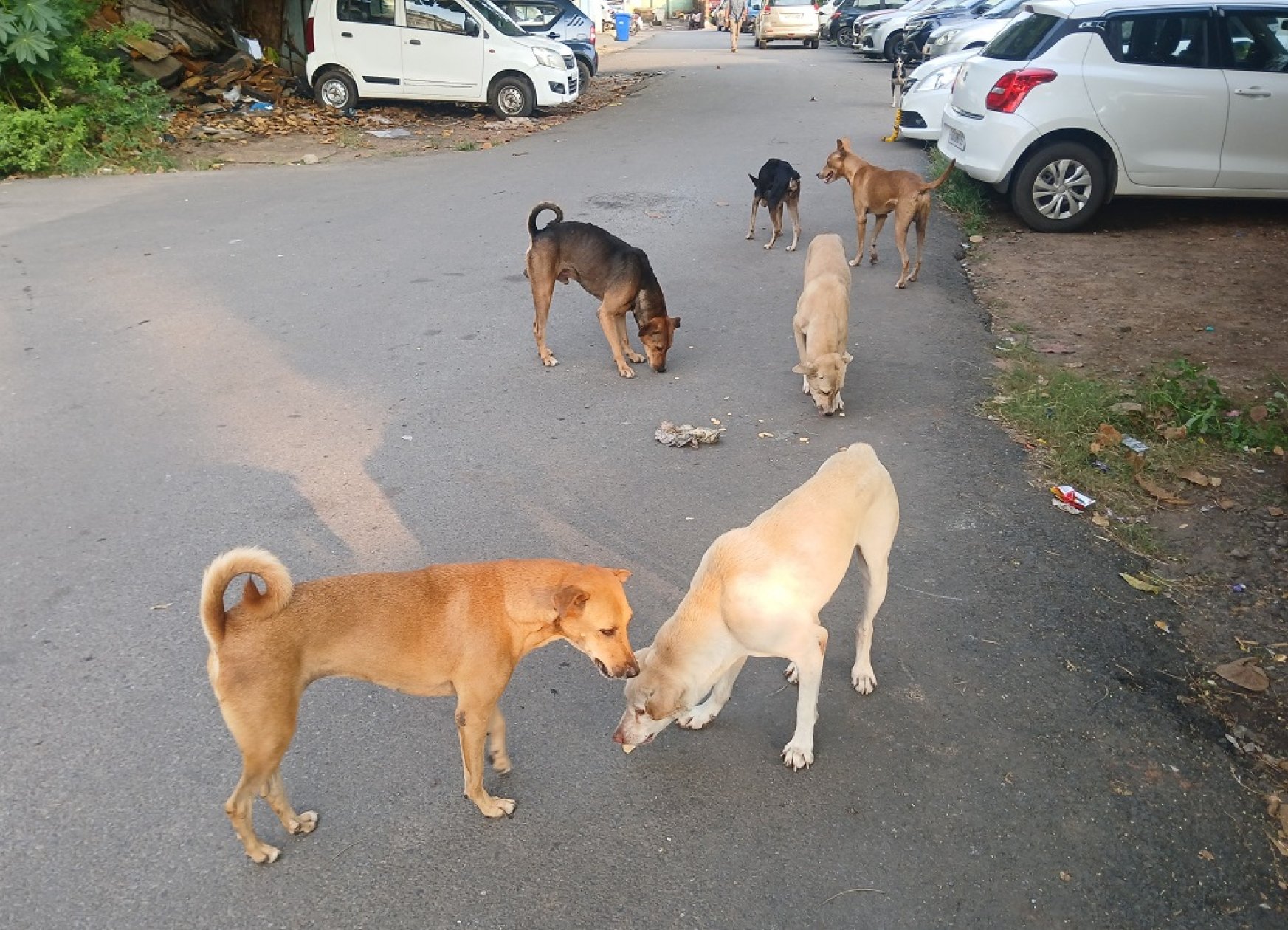
Municipal workers have already encountered apeculiar situation while carrying out the exercise. When they report for dutyin the morning and head out into the field, many stray dogs are found takingshelter under vehicles and structures to escape the scorching heat. By the timetemperatures ease and the dogs emerge in the open in the evening, the workers'duty hours are nearing an end, with the official working day concluding at 5.45pm.
This has raised questions over how the MMCplans to conduct a meaningful census when stray dogs are more visible andactive from late evening through the night and into the early hours of themorning.
Questions have also been raised within themunicipal building over whether a single nodal person can effectively undertakethe census in two municipal wards. There are concerns that the stray dogpopulation has increased substantially over the years, even as the municipalityhas failed to adequately address the issue.
A dog feeder pointed out that no municipalworker or nodal person had approached NGOs or feeders seeking details about thenumber of stray dogs being fed in various localities.
“If the municipality is serious about carryingout the census, it should ensure close coordination with dog feeders as well ascitizens who have knowledge about stray dogs in their neighbourhoods,” thefeeder remarked.
ABC programmesuffers setback
The MMC’s census of stray dogs assumessignificance for another reason — the civic body has failed to take the AnimalBirth Control (ABC) programme to its logical conclusion in the city over thepast five years.
The MMC’s Memorandum of Understanding (MoU)with an animal welfare NGO expired in December 2020. However, the civic bodydid not move swiftly either to renew the agreement or appoint another agency toundertake the ABC programme. The plea at the time was that the municipality washeading for elections and that the decision on renewing the agreement should beleft to the new council, which was expected to assume office in 2021.
However, after the new council took charge inApril 2021, the stray dog issue failed to receive the required attention,resulting in a major setback to the ABC programme.
The NGO continued the ABC operations,expecting the MMC to renew the MoU. However, with funds from the civic body nolonger flowing towards the programme, the NGO began facing financialdifficulties and was eventually forced to scale down its operations due to ashortage of funds to pay dog catchers.
The MoU with the NGO was eventually renewedthree years ago. However, the agreement was reportedly executed withoutcomplying with the required codal formalities. Although the MoU was notchallenged in court, the MMC again delayed the release of payments to the NGO.
As a result, the animal welfare organisationwas left to carry out the programme without adequate manpower, including dogcatchers, and without a vehicle to transport captured dogs to the Sonsodo dogshelter.
The civic body also failed to increase thenumber of cages at the dog shelter, leaving animal welfare workers with littleoption but to manage within the existing infrastructure.
With the civic body now undertaking a censusof stray dogs, citizens and animal welfare activists are questioning whetherthe exercise will be effective unless it is accompanied by a sustained ABCprogramme, adequate infrastructure and coordination with those already workingon the ground.