PANAJI
As the scorching heat continues to grip Goa, the depletion of water in dams has raised alarm bells with officials downplaying the situation, stating they have enough water to cater to the population during the summer months. The Water Resources Department (WRD) is also optimistic about normal rains replenishing the water levels to full capacity.
Besides the rise in mercury levels, the department has attributed the drop to an early release of water for irrigation purposes.
WRD Chief Engineer Pramod Badami said that early release of water for irrigation dropped the water level compared to previous years while assuring that each reservoir has enough potable water. “We are quite sufficient. As of now, reservoirs have the capacity to distribute water for over 70 days,” he said, speaking to The Goan.
This time, the release of water from dams was advanced to November 14, 2022, for irrigation purposes, which is earlier than the usual release date in the first or the second week of December. “The early release is to encourage and help the farmers; and despite this development, water has not been curtailed. Water for irrigation and potable use are separately allotted,” he added.
The department, he further said, is also monitoring critical water supply dams such as Selaulim. At Opa, the water level rose to 3.5 level on Wednesday giving much-needed relief as various places are grappling with an acute shortage of water.
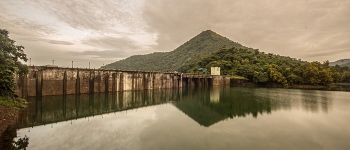
Selaulim reservoir largely supplies South Goa including Sanguem, Salcete, Quepem, Titan and Zuari while also augmenting the supply at Opa. “The water is depleting since there were no post-monsoon showers and pre-monsoon showers have also been delayed. Sharing water for irrigation has not impacted the distribution for potable use because it is just a minimum quantity (for farming). As per the latest calculation, we have water for around 90 days,” Assistant Engineer (WRD) Jason Menezes told The Goan.
Asked about the concerning drop in water level, he explained that a similar situation arose in 2019 but, “We managed to survive.”
“The current water level is 42 per cent, which was 54 per cent in the last year’s corresponding day and above 50 per cent the preceding year. The decline is due to irrigation supply but from next week, its requirement for water will reduce…The temperature rise is also depleting water to a certain level,” he further stated.
At Anjunem dam, where the current level is 26 per cent, has utilisation for over 55 days in addition to bandaras, each of which can distribute water for another 15 days in case of shortage.
The reservoir supplies water for the villages of Keri, Morlem, Shiroli, Gouteli, Ravona, Poriem, Podocem, and a few places in Curchorem, Bicholim and Karapur.
An official conceded that the dam is witnessing a 10-12 centimetres drop daily owing to the high temperature, but asserted it is not a cause for worry. “As on date, the difference in shortage to the corresponding period last year is barely three metres. The situation is only due to early release for farming and the rise in temperature,” the official said.
The declining water levels in reservoirs are not a new phenomenon, as it has become a regular trend where it drops to extremely low water levels every three years.