PANAJI
The electric vehicle (EV) market in Goa is indeed expanding at an impressive level with sales quadrupling in the last financial year.
However, it accounts for only 0.44 percent of the total sales in India.
According to data from the Ministry of Heavy Industries compiled till July 14, 2023, Goa ranks 21st in EV sales with 12,139 vehicles sold, which is only 0.44 percent of the pan-India sales. Uttar Pradesh leads with over 5.56 lakh vehicles registered, capturing a 20 per cent market share.
The Goa government is yet to release the figures for FY 2023-24, but, the FY 2022-23 saw a total of 7093 EVs purchased, a rise from 1816 in 2021-22, 230 in the Covid-19-impacted year of 2020-21, and a mere 39 in 2019-20.
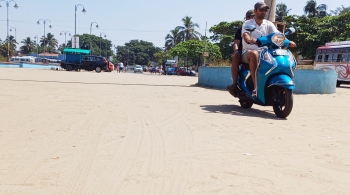
From the total figures for the last FY, a maximum of 6325 two-wheelers were sold compared to 1443 in 2021-22.
The 'Goa State Energy Vision 2050' targets a minimum of 75 percent adoption for public transport, 100 percent for two-wheelers and taxis, and at least 50 percent for ferry boats, by 2050.
In the State Budget 2023-24, Chief Minister Pramod Sawant announced the re-launch of the EV subsidy scheme, allocating Rs 25 crores for the purpose. However, it was only in February 2024 that the scheme was re-launched and hence the budgetary provision was extended for FY 2024-25.
Under the just-announced subsidy policy, the government has decided to provide subsidies from Rs 8,000 to Rs 1 lakh for retrofitting, scrapping, de-registration of old internal combustion engine (ICE) vehicles, and the purchase of new EVs “ only for around 5,600 EV buyers.
Despite arguments over subsidy allocation, government sources stated that Goa's subsidy scheme is relatively favourable, yet a little less, compared to other states. However, Goa does not extend subsidies to non-government buses or goods carriers.
In Delhi, where the subsidy policy is ending this month, two-wheelers are eligible for up to Rs 30,000 based on battery capacity, while three-wheelers receive a fixed subsidy of Rs 30,000.
In Uttar Pradesh, subsidies are offered for the first two lakh two-wheelers and the first 25,000 four-wheelers, while Odisha has revised its scheme to increase subsidy amounts for different vehicle types.