


MARGAO
The Goa State Pollution Control Board (GSPCB)’s decision to conduct a three-day joint inspection of the Sal River may bring a glimmer of hope to environmental activists and concerned citizens who have long demanded the restoration of the river to its pristine state.
The urgency has only intensified after the Central Pollution Control Board (CPCB) recently classified the Sal as a “critically polluted” river”an alarming tag that underscores the severity of its degradation.
The planned inspection will involve multiple agencies, including the Pollution Control Board, the Public Works Department, sewerage authorities, the Health Department, and the Margao Municipal Council. Their mandate is to identify and map sewage discharge points and trace the sources of contamination along the river’s course, particularly within the Margao municipal limits.
However, this exercise is far from unprecedented. Since 2021, authorities have undertaken several similar joint inspections with the same objective”pinpointing the origins of untreated sewage and effluents entering the river. Each time, the findings have revealed largely the same set of discharge points. Yet, despite repeated identification, little has changed on the ground.
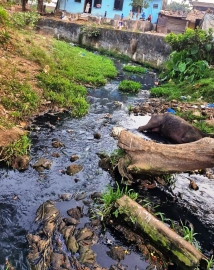
The core issue remains structural and longstanding. Margao, Goa’s commercial hub, still lacks a fully functional and comprehensive sewerage network, both in Margao and Fatorda. In the absence of adequate infrastructure, untreated domestic sewage and commercial effluents continue to flow unabated into the Sal River around the clock. Stormwater drains, nullahs, and informal outlets have effectively become conduits for waste discharge.
Periodic studies and reports by regulatory bodies, including the CPCB, have consistently highlighted high levels of biochemical oxygen demand (BOD), faecal coliform, and other pollutants in the river”indicators of severe contamination. These findings have triggered public outcry, court interventions, and repeated calls for accountability and action.
Despite this, progress has been slow. Infrastructure projects have faced delays, coordination between departments has often been lacking, and enforcement against violators has been inconsistent. As a result, the river continues to suffer, with visible impacts on biodiversity, fisheries, and public health.
====
From 2021 to now, inspections tell the same story on Sal
MARGAO: There has been no dearth of inspections by government agencies”including the Goa State Pollution Control Board (GSPCB), the Water Resources Department Goa (WRD), and district authorities”over the past five years to identify sewage and effluent discharge points into the Sal River.
Yet, despite repeated exercises, the outcome has remained largely unchanged.
Strange as it may seem, every inspection has echoed a common refrain: unless the entire city is connected to a functional underground sewerage network, no number of inspections will succeed in plugging the discharge points. A look at past inspections underscores the pattern.
July 2021: An inspection of stormwater nullahs in Margao by the WRD revealed at least five to six active sewage discharge points. These outlets were found carrying untreated sewage directly into drains, which eventually emptied into the Sal River”Salcete’s lifeline.
December 6, 2022: Less than a year and a half later, a second inspection saw then South Goa Collector Jyoti Kumari conduct a field visit to assess the situation firsthand. During the inspection, the Collector encountered a damaged sewage chamber that was discharging waste round the clock into a stormwater nullah leading to the river”highlighting both infrastructural gaps and poor maintenance.
October 19, 2023: A third inspection in as many years revealed little had changed. Authorities once again found thousands of litres of untreated sewage and effluents flowing into the river through stormwater drains, effectively choking the Sal with pollutants.
The repetition of findings across inspections points to a deeper systemic issue. While authorities have consistently identified the problem, the lack of a comprehensive sewerage network and delayed infrastructure rollout have allowed contamination to continue unchecked”turning what should be corrective exercises into a recurring cycle of documentation without resolution.
A familiar cycle
The upcoming inspection, while necessary, risks becoming another iteration of a familiar cycle”identify, document, and delay action. For meaningful change, stakeholders stress that identification must be followed by time-bound corrective measures, including fast-tracking sewerage infrastructure, plugging illegal discharge points, and enforcing strict penalties for violations.
Citizens must be hoping that this latest initiative marks not just another inspection”but the beginning of tangible restoration efforts for the Sal River.
====
Familiar with Sal crisis, Collector missing from latest inspection
MARGAO: South Goa Collector Egna Cleetus is no stranger to the long-standing issue of sewage flowing into the Sal River from Margao and Fatorda.
Around three-and-a-half years ago, during her tenure as Deputy Collector of Margao, Cleetus had accompanied then South Goa Collector Jyoti Kumari on an inspection of stormwater nullahs on December 6, 2022. The visit offered a ground-level view of the crisis, as officials witnessed first-hand how untreated sewage and effluents were being discharged into drains that ultimately emptied into the river.
During that inspection, the extent of the problem was starkly evident. Stormwater nullahs”originally meant to channel rainwater”had effectively turned into conduits for sewage, contributing significantly to the river’s steady degradation over the years.
Against this backdrop, it is noteworthy that the upcoming joint inspection organised by the Goa State Pollution Control Board (GSPCB) does not include any official from the district Collectorate. The absence of the district administration, despite its prior direct involvement and familiarity with the issue, has raised questions about coordination among agencies tasked with addressing one of South Goa’s most pressing environmental concerns.


