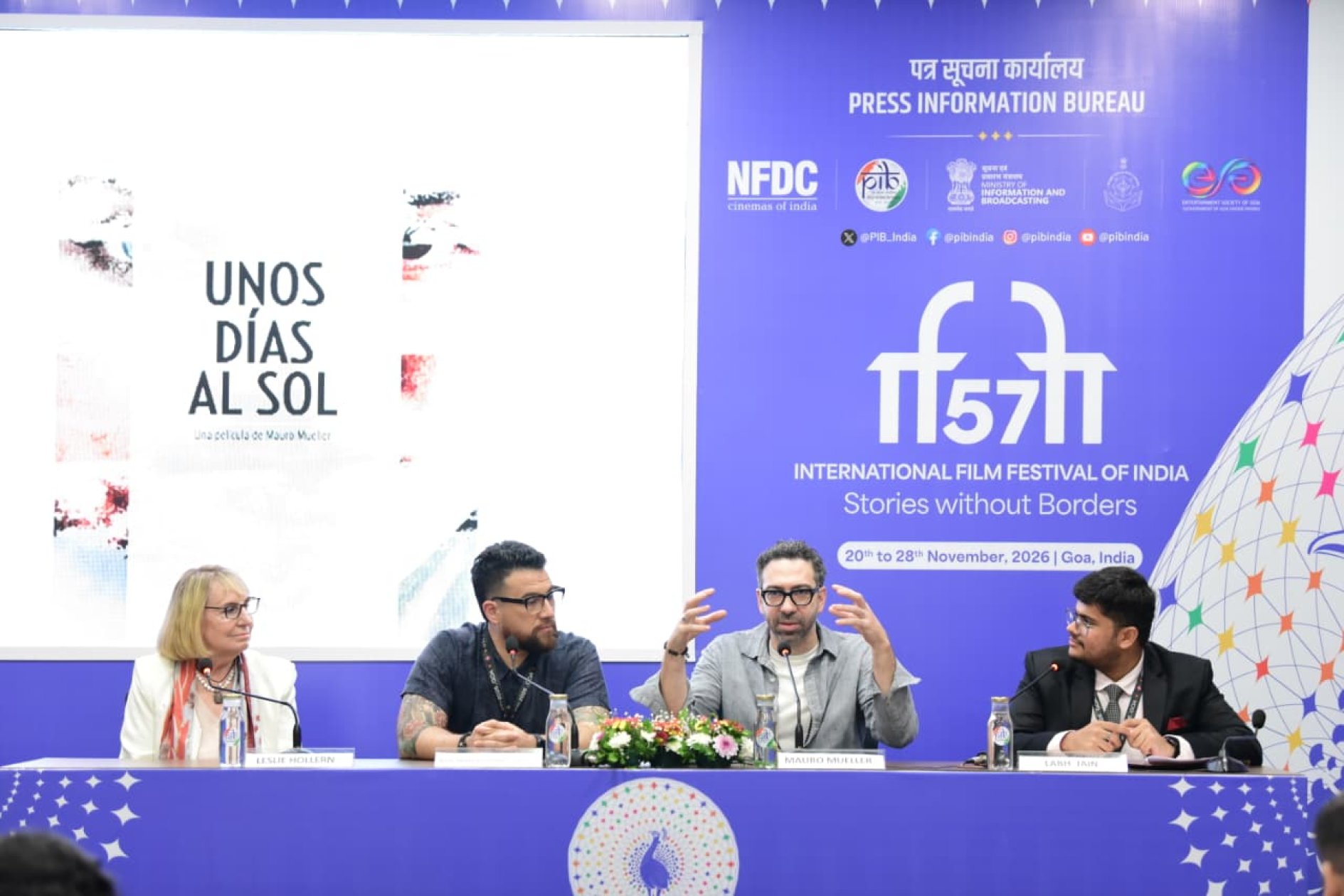
PANAJI: The unequal consequences of privilege, corruption and social divisions form the central narrative of A Few Days in the Sun, a bilingual thriller featured in the Cinema of the World section of the 57th International Film Festival of India (IFFI) in Goa. Director Mauro Mueller, writer José David Figueroa García and producer Leslie Holleran discussed the film's themes, creative vision and international production at a press conference on Thursday.
Set in Mexico’s Riviera Maya, the film follows two families from contrasting economic backgrounds whose lives become entangled in a violent kidnapping. A wealthy European couple uses illegal means to displace a local community from land earmarked for development, while a working-class Mexican family strikes a risky deal with a corrupt police officer to keep a teenager out of prison. When their paths cross, events spiral out of control, forcing everyone involved to confront the consequences of their actions.
The film explores the contrast between a destination experienced as a holiday by some and a home by others, examining how privilege and the struggle for survival shape people's choices.
Mueller said his experiences of living in Switzerland, Mexico and the United States influenced the film's perspective. He believes travelling and experiencing different cultures help develop empathy and an understanding of different ways of life. Learning languages and living in different countries, he added, allows people to understand why others make particular choices and how social systems and institutions influence their consequences.
Mueller is returning to IFFI after his earlier film The Janitor (El Conserje) had its world premiere at the festival's 56th edition in Goa in November 2025.
García spoke about the film's portrayal of class divisions and the unequal treatment of people from different economic backgrounds. He pointed out that characters making similar decisions can face vastly different consequences depending on their social standing. While the wealthy European couple can exercise their influence, the working-class family faces life-altering repercussions.
Holleran observed that for someone living in poverty, even a minor mistake can have devastating consequences. She added that the film presents both the captors and the captives as being imprisoned, in different ways, by their circumstances.
The filmmakers also examined how corruption operates across different levels of society. García explained that while corruption at the lower levels is often visible through practices such as bribery, it also manifests through wealth, political influence and the illegal displacement of vulnerable communities. The film attempts to place these different forms of corruption within the same moral framework.
Mueller said the film aims to help audiences understand the circumstances behind morally complex decisions rather than simply judge those who make them. The thriller format was a deliberate choice to reach a wider audience than a conventional social drama. He described the film as a character-driven thriller positioned between arthouse and commercial cinema.
Holleran described the narrative as women-focused, with the decisions made by women in both families and their connections playing an important role in driving the story. García added that conflicts between social classes are universally relatable, as everyone occupies a position within society. By presenting characters from different backgrounds facing difficult dilemmas, the film encourages audiences to understand perspectives beyond their own.
Speaking about the production, Holleran said she draws inspiration from experiences that are emotionally recognisable but unfamiliar. The film's exploration of outsiders entering an established community emerged from this interest in understanding different lives.
The international co-production brings together Mexico, the Dominican Republic, Germany, the United States and Switzerland, with the film made in English and Spanish. Holleran described working across countries and collaborating with filmmakers from different backgrounds as among the most rewarding aspects of producing. She also spoke about her affection for Mumbai, comparing its diversity and vibrancy with those of her home city, New York.
Reflecting on the film's wider message, Holleran said people across the world are seeking equality, recognition and representation. She stressed the importance of stepping beyond familiar surroundings, experiencing different languages and engaging with unfamiliar cultures. Greater exposure to different ways of life, she said, could help build a more accepting and equitable world.