PANAJI: The buying and selling of women as brides, a disturbing practice that continues to affect women across several Indian states, forms the subject of Paro: The Untold Story of Bride Slavery, featured in the Indian Panorama section of the 57th International Film Festival of India (IFFI) in Goa.
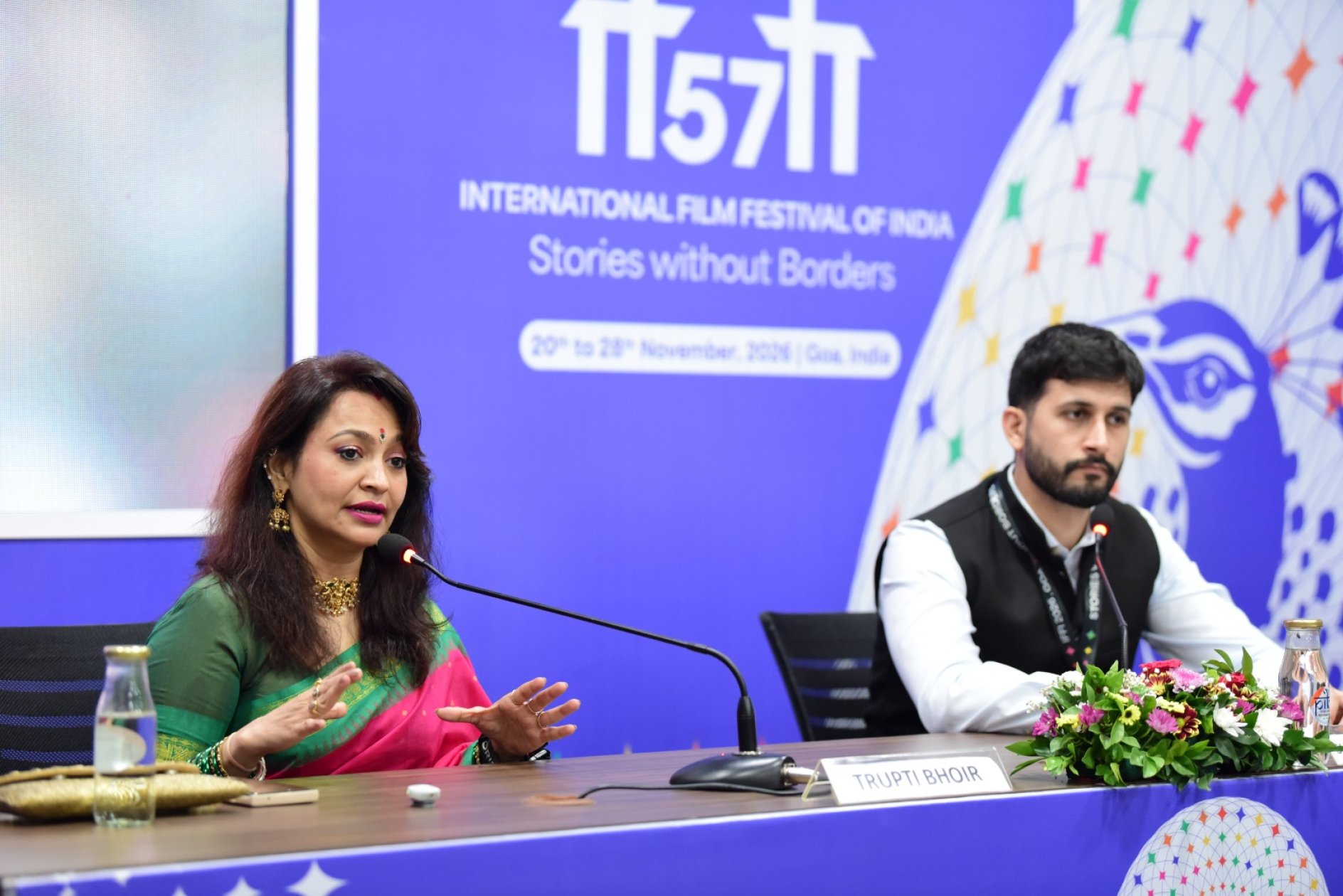
Speaking at a press conference during the festival, actor and filmmaker Trupti Bhoir revealed that she spent four-and-a-half years researching the practice, particularly in Mewat, Haryana, where the term ‘Paro’ is used to describe women bought or sold into marriage. The film marks another significant milestone in her career, with Bhoir describing it as her second Oscar-listed film. She has taken on the triple responsibility of producer, screenplay writer and protagonist.
The idea for the film took shape after Bhoir came across documentaries and media reports highlighting bride slavery in India. Known for exploring women's issues and rights through her films, she said the accounts of women subjected to this practice deeply disturbed her and prompted her to investigate the issue further.
With the assistance of an NGO, Bhoir and her mother visited villages disguised as journalists to understand the realities faced by these women. During their research, they interacted with approximately 62 to 63 survivors of bride slavery from Maharashtra, Andhra Pradesh, Odisha, Bihar, Uttar Pradesh, Rajasthan, Gujarat and Delhi.
Bhoir said the practice was rooted in gender inequality and poverty and was not restricted to Haryana. Women and girls from different parts of the country continue to fall victim to the trade, making it a wider national concern.
One of the most disturbing accounts that emerged during the research was that of a girl believed to be between 11 and 13 years old, who had reportedly been sold for a meagre amount. Her story became the inspiration for the protagonist of the film, a character portrayed by Bhoir herself. Through this role, she attempts to bring alive the pain, helplessness and exploitation experienced by women whose stories rarely find a place in public discourse.
Bhoir said the film's purpose extends beyond bringing the issue to the screen. NGO Shelter Foundation has compiled data on approximately 2,000 women who are victims of bride slavery. According to her, the information was submitted to National Commission for Women Chairperson Vijaya Rahatkar around a year and three months ago, following which the Union Government constituted a fact-finding committee.
“I salute the Government which has taken steps to address this issue. This is another reason for me to make this film,” she said.
Drawing attention to the global dimensions of trafficking and sexual violence, Bhoir observed that while awareness about human trafficking and prostitution has increased over the past 15 to 20 years, the buying and selling of women as brides continues to receive comparatively little attention. Her interactions during screenings at film festivals and institutions across the world have further strengthened her belief that the issue requires greater international awareness and discussion.
Through Paro: The Untold Story of Bride Slavery, Bhoir hopes to bring this largely under-reported practice into mainstream conversation and draw attention to the realities of gender inequality, trafficking and the fundamental dignity and rights of women.