Goa entered 2025 with ambitious promises across infrastructure, utilities, civic services and governance deliverables, but a year later many of those initiatives remain unfinished or stalled. Projects meant to ease urban congestion, upgrade public amenities, and strengthen basic services are caught between bureaucratic delays, funding shortfalls, and the State’s chronic struggle to convert policy into tangible outcomes. While some schemes inch forward in piecemeal fashion, others languish in cold storage, leaving citizens waiting for improvements that were pledged but not delivered. The Goan examines some of these key initiatives across sectors, highlighting where progress has faltered and what to expect in the coming months.
SAND MINING
Standstill after
CRZ deadlock
Goa continues to grapple with the long-standing sand mining crisis, with the State government facing mounting challenges in reviving legal sand extraction that has remained shut since 2018. While legal mining remains suspended due to regulatory and environmental hurdles, illegal sand mining continues unabated across riverbeds, despite repeated court directions to crack down on such activities.
The issue has been mired in a complex web of legal battles before the High Court, the National Green Tribunal (NGT) and regulatory restrictions under the Coastal Regulation Zone (CRZ) framework. The biggest obstacle before the government is securing relaxation under the CRZ notifications, without which restarting legal sand mining has become virtually impossible.
Chief Minister Pramod Sawant has twice approached the Union Ministry of Environment, Forest and Climate Change (MoEFCC) — in May and again in October last year — seeking amendments to the CRZ Notifications of 2011 and 2019. Under the CRZ Notification, 2011, sand mining is prohibited in CRZ IV-B areas, classified as critically vulnerable coastal zones, which cover large stretches of Goa’s rivers.
The State has urged the Centre to consider Goa as a special case, seeking relaxation similar to that granted to the Andaman and Nicobar Islands, where sand mining is allowed on a case-by-case basis for construction needs. The government has cited livelihood concerns of traditional sand extractors and the acute shortage of construction material as key reasons for seeking the exemption.
However, the relaxation is yet to be approved. In the interim, the NGT has extended the ban on sand excavation activities till January 28, further delaying any possibility of restarting legal operations. As the stalemate continues, the State faces the dual challenge of protecting fragile ecosystems while curbing illegal mining and ensuring legitimate livelihoods.
TIGER RESERVE
Supreme Court nod looms
As Goa steps into 2026, the BJP-led state government finds itself under mounting pressure to notify the long-pending Goa Tiger Reserve, a move it has resisted for nearly one and a half decade. The proposed reserve, spanning 468.60 sq km and contiguous with Karnataka’s Kali Tiger Reserve, has now been vetted by the Supreme Court’s Central Empowered Committee (CEC), leaving the final decision to the apex court.
The proposal, first initiated by the Centre in 2011, envisages a protected landscape that would seamlessly integrate Goa’s forests with Karnataka’s tiger habitat, forming an ecologically significant expanse of about 1,814 sq km. Despite repeated pushes from conservation bodies and court interventions, successive state governments have been reluctant to move forward, citing concerns over local habitation and socio-political sensitivities.
In its report, the CEC has sought to balance conservation with human concerns by recommending a phased approach. Phase one includes Netravali Wildlife Sanctuary, Cotigao Wildlife Sanctuary and parts of Bhagwan Mahaveer Wildlife Sanctuary and National Park, together affecting fewer than 100 households. Areas with higher human presence, such as Mhadei Wildlife Sanctuary and the southern part of Bhagwan Mahaveer Sanctuary, have been proposed for inclusion only in phase two.
The CEC has proposed 296.70 sq km as core area and 171.90 sq km as buffer. Once the Supreme Court issues its final order, the state will be bound to notify the reserve within three months.
The urgency follows the High Court’s July 2023 direction, later challenged by the state, mandating declaration of a tiger reserve in Mhadei and adjoining areas. With replies from the state and petitioner Goa Foundation awaited, the government enters the new year cornered—facing judicial scrutiny, ecological responsibility and a decision it has deferred for over a decade.
MHADEI RIVER
Govt faces crucial test
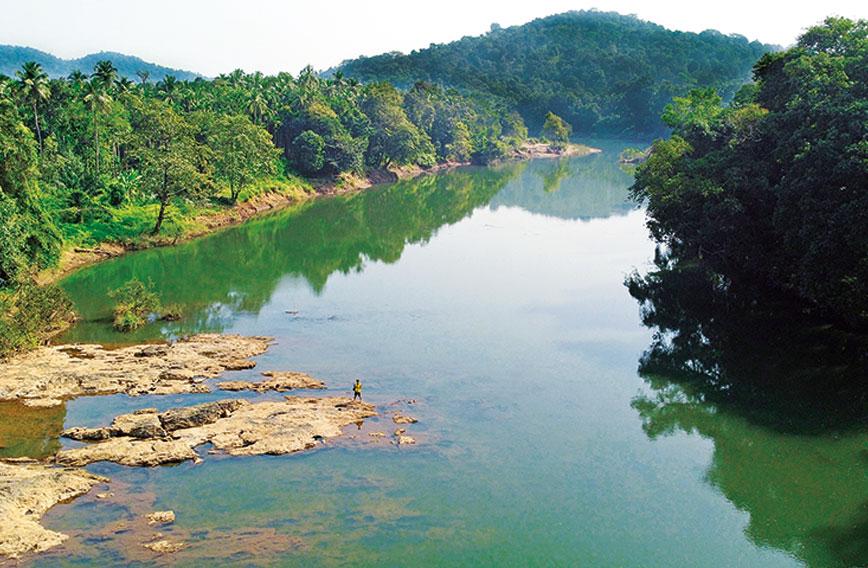
As the Karnataka government aggressively advances its Kalasa-Bhandura drinking water projects to divert Mhadei river water into the Malaprabha basin, Goa finds itself struggling to protect the lifeline river, largely confined to a prolonged and uncertain judicial battle. Despite repeated concerns raised by environmentalists and political leaders, the Goa government has largely relied on court proceedings, even as the Supreme Court has not taken up the matter for substantive hearing for the last one and a half years.
The ongoing legal dispute involves special leave petitions filed by all three riparian States—Goa, Karnataka and Maharashtra—along with contempt petitions moved by Goa against Karnataka. However, the last major hearing was held in July 2023, after which the matter has seen multiple adjournments, leaving Goa without any interim relief or stay on construction activities.
In the absence of judicial intervention, Karnataka has continued work at the Kalasa-Bhandura sites, a move Goa alleges is in complete disregard of pending litigation. Although the Goa government had earlier announced plans to approach the Mhadei Water Dispute Tribunal and the Karnataka government for permission to conduct an aerial survey of the project area, and to seek an early hearing before the Supreme Court, these steps are yet to materialise.
At present, Goa’s only reprieve lies in the Centre’s decision to withhold key statutory clearances, including forest and wildlife approvals, for the project. However, Karnataka has reportedly made repeated representations to the Prime Minister and other authorities seeking these permissions.
With Mhadei serving as a critical source of water and livelihood for nearly half of Goa’s population, pressure is mounting on the State government to urgently press for an immediate hearing before the Supreme Court to safeguard the river and Goa’s ecological and economic future.
ZUARI BRIDGE
OBSERVATORY TOWERS
CRZ and AAI clearances awaited
The long-pending construction of the Eiffel Tower-inspired observatory twin towers and viewing galleries on the new Zuari Bridge is expected to commence later this year, subject to approvals from the Coastal Regulation Zone (CRZ) authorities and the Airports Authority of India (AAI).
The ambitious tourism project, conceived as a landmark attraction for Goa, has remained stalled since 2023 despite the State government signing an agreement with the contractor—Dilip Buildcon subsidiary Zuari Observatory Towers—in the same year. As per the agreement, the project is to be completed within three years from the date of execution. The foundation stone was laid in December 2023, but physical work is yet to begin.
Union Minister for Road Transport and Highways Nitin Gadkari has earlier pulled up the Goa government over the delay in commencement of the project. During the ground-breaking ceremony held in July this year, Gadkari publicly expressed concern over the absence of on-ground progress even months after the foundation stone laying.
Officials have attributed the delay primarily to pending statutory clearances, including CRZ approval and aviation clearance from the AAI, given the project’s height and proximity to flight paths. The State government is now under pressure to ensure that the contractor expedites the clearance process so that work can begin without further delay.
If the required nods are secured in time, the State expects construction activity to finally take off later this year.
COASTAL GOVERNANCE
Seven years on, still
no CZMP 2019
Even seven years after the Coastal Regulation Zone (CRZ) Notification 2019 came into force, Goa continues to function without an approved Coastal Zone Management Plan (CZMP) based on the revised rules, mirroring the prolonged delay witnessed during the CZMP 2011 exercise. The drafting and finalisation of Goa’s CZMP 2019 has been inordinately delayed, raising serious concerns over coastal governance and regulatory enforcement.
The Thiruvananthapuram-based National Centre for Earth Science Studies (NCESS), tasked with preparing the plan, has been working on the CZMP since 2023. As per the latest timeline, NCESS was required to submit the draft CZMP 2019 to the State government by January 2025. However, it has failed to meet this deadline.
Notably, the State government has already missed two deadlines—October 2023 and May 2024—set by the National Green Tribunal (NGT) for finalising the plan. Goa remains the only one among India’s 11 coastal States where the CZMP 2019 process is yet to be completed.
In the absence of a notified CZMP 2019, the provisions of the CRZ Notification 2019 are not being implemented in Goa and hence rampant illegal constructions have taken shape. Instead, the State continues to rely on the outdated CRZ 2011 guidelines, undermining the intent of updated coastal protection norms. The prolonged delay could lead to regulatory ambiguity and unchecked development along Goa’s fragile coastline.
HEALTH
Collem Rural Health Centre
The upgrade of this rural health centre deep in the hinterland taluka of Sanguem was initiated several years ago but last year the government had promised completion within three months.
As of December 2025, the centre is still incomplete, forcing residents to travel long distances for even minor health issues.
Locals have expressed frustration, highlighting the urgent need for completion in 2026 as it directly affects access to healthcare, especially for senior citizens and patients with chronic conditions in the area.
The delays in such execution of projects highlights Goa’s larger problem of incomplete infrastructure which the Comptroller and Auditor General (CAG) has repeatedly flagged. Last year alone (2024-25) the statutory auditor had pegged fund lock-in due to incomplete projects at Rs 973 crore.
More seats at GMC
In June 2025, the Goa government announced the addition of 19 postgraduate medical seats across five specialties at the Goa Medical College. Additionally the government had also raised hopes of an additional 50 under-graduate seats saying it had forwarded the formal proposal to the Union health ministry but these did not materialise in the current academic year.
Even the 19 post-graduate (MS and MD) seats are expected to be effective only next year as faculty appointments, infrastructure readiness, and student intake remains incomplete.
Now, the expectation is that by 2026, these seats will be operational, strengthening Goa’s medical education and healthcare workforce.
Tertiary cancer care centre
In April 2025, the Goa cabinet approved the construction of a Rs 310 crore tertiary cancer care centre at GMC. The proposal was initially estimated at Rs 247 crore, but revised to ₹310 crore to include equipment and advanced facilities.
When Health Minister Vishwajit Rane first announced it in February last year, he had set December 2026 as the commissioning date, a deadline which currently seems like a miracle if achieved. The government has tied up with Tata Memorial Hospital, Mumbai, for consultancy services to build the centre at GMC.
Goa lacks a dedicated tertiary cancer hospital which forces many patients to travel outside the State to Mumbai and Bengaluru for advanced treatment. The Centre will provide specialized oncology care, radiotherapy, chemotherapy, and surgical oncology services under a single roof.
POWER
Smart metering
Two major electricity projects in Goa that were initiated before 2025 but remain either incomplete and bogged in controversy are: (1) the Rs 467 crore Smart Metering Project, and (2) the Rs 145 crore Aerial Bunch Cabling (ABC) initiative.
The smart metering project was sanctioned by the Centre in 2021 but the Goa Cabinet approved the service provider only in May last year.
DigiSmart Networks Pvt Ltd was appointed to execute the smart metering but delays in issuing the work order and the actual rollout has made slow progress.
Chief Electrical Engineer Stephen Fernandes has said that the smart metering infrastructure will first be installed and calibrated for the department's own installations such as the wheeling stations and sub-stations before rolling them out for the State's 7.5 lakh consumers.
The project remains stalled amd the investigation report has reportedly suggested possible restructured implementation to reduce power theft and outages.
The Union Power Ministry has indicted Goa for the delay, stressing urgency. It is expected to improve billing accuracy and reduce transmission and distribution losses.
Aerial Bunch Cabling (ABC)
The initiative got stalled several years ago after earlier failures had led to the Joint Electricity Regulatory Commission (JERC) ordering a probe into losses of over Rs 140 crore.
The project was designed to replace overhead power lines with insulated bundled cables to reduce theft and outages.
The inquiry and possible revival of the project with stricter oversight is expected this year.
Aerial bunch cabling is technically critical to reduce power theft, improving reliability, and ensuring safer electricity distribution in urban and rural areas.
AGRICULTURE
Amrit Kaal Agricultural Policy 2025
Announced in early 2025 to rejuvenate farming and attract the younger generation to the sector, the Goa State Amrit Kaal Agricultural Policy 2025 encompassed climate-resilient farming techniques, organic and natural farming, integrated farming systems, and precision agriculture.
The policy, however, remains largely on paper, with pilot projects and funding allocations pending, perhaps due to the passing of its chief architect and former Agriculture Minister Ravi Naik.
This year, however, operational programmes for organic farming, watershed development, and mechanization support are expected to be rolled out.
With Goa's agriculture sector and farming community facing real threats of erratic climate related events for successive seasons, climate change resilient practices, proposed to be promoted through the policy, will be vital.
The Khazan Land Development Policy included in it seeks revival of traditional khazan (unique coastal reclaimed ecosystems) cultivation of paddy as well as aquaculture.
However, groundwork and studies besides pilot restoration projects with farmer cooperatives and scientific support are yet to see the light of day.
Another significant initiative in the policy is the 'Integrated Farming Systems' (IFS) which propose combination of crops, livestock, fisheries, and horticulture for better income.
The guidelines for IFS have been drafted but there is no action on ground including setting up of demonstration farms and subsidy schemes to encourage adoption.
Organic and natural farming promotion is yet another initiative in the policy with certification and training programs envisaged. But operational launch of organic certification schemes and farmer training modules are still lying in the drawing rooms.
Goa Farmers Welfare Act 2025
Proposed alongside the Amrit Kaal Policy to guarantee livelihood security and simplify government processes for farmers, this new law envisions crop insurance, income assurance, and streamlined access to credit and subsidies.
As of now, the Act has not been fully enacted (notified) or implemented.
Historically, Goa has struggled with translating policy into ground-level execution and agriculture officials say its success will depend on training, awareness, and incentives for farmers to adopt modern practices.
RIVER SAL
Long-delayed rejuvenation
As the New Year begins, one perennial issue continues to top the expectations of Saxttikars — the long-delayed rejuvenation of the River Sal. It has been two years since Water Resources Department (WRD) Minister Subhash Shirodkar called for the restoration of the river, considered the lifeline of Salcete and a legacy for future generations.
With Margao MLA Digambar Kamat now at the helm of the Public Works Department (PWD), hopes have risen that the long-standing sewage problems plaguing the commercial capital will finally be addressed. Residents believe that plugging the sewage outlets flowing into the river from Margao is the critical first step toward restoring the health of the Sal.
Once the sewage inflow is effectively curtailed, it is expected that coordinated efforts by the PWD and WRD will extend along the Salcete coastal belt to comprehensively tackle sewage discharge, rejuvenate the river, and restore it to its pristine glory.
TRAFFIC
Chaos continues at Comba
railway crossing
The dawn of a new calendar year brings little cheer for students and commuters at Comba, Margao — a major educational hub offering institutions from kindergarten to postgraduate levels. Traffic chaos continues unabated at the Comba railway crossing, which remains shut over 60 times a day to facilitate the movement of passenger and freight trains.
The frequent closures result in long traffic snarls, severely inconveniencing students, parents, and daily commuters. With Margao MLA Digambar Kamat now heading the PWD, expectations have grown that the long-pending proposal for a flyover at the Comba railway crossing will finally gain momentum.
Residents are hopeful that the minister will leverage his close rapport with Union Minister for Road Transport and Highways Nitin Gadkari to secure much-needed central funding for the project, which is widely seen as the only permanent solution to the chronic traffic problem at Comba.
WHOLESALE FISH
MARKET
Commissioning still pending
Will the redeveloped Margao wholesale fish market remain merely a showpiece, or will the government finally direct the South Goa Planning and Development Authority (SGPDA) to commission it and rid the area of the persistent stench and filth?
It has been a year since work on the redeveloped wholesale fish market was completed in all respects by the Goa State Infrastructure Development Corporation (GSIDC). However, the market has yet to be inaugurated, delayed repeatedly under one pretext or another, despite the SGPDA being required at the initial stage itself to factor in key requirements such as market maintenance and the tendering of sopos.
With commissioning still pending, uncertainty continues to prevail, raising questions over whether the redeveloped complex will finally be thrown open to fishing stakeholders at least this year.
POLICE
A long-stalled
Police Bill
For the Goa Police, 2026 opens with a familiar and unresolved challenge: the Goa Police Bill, a long-promised reform meant to modernise policing and remains stuck nearly two decades after it was first conceived.
The Bill has time and again failed to reach the floor of the Goa Legislative Assembly, even as it was drafted for the third time in 2023 and widely expected to be tabled soon thereafter.
The absence has raised questions on the State’s ability to move beyond the colonial-era Police Act of 1861, whereas several other States have already done so.
Chief Minister Pramod Sawant announced the drafting of the Bill in his 2023–24 Budget speech, citing the need to bring Goa’s policing framework in line with the Ministry of Home Affairs guidelines.
The latest version was prepared under former Director General of Police Jaspal Singh shortly before his transfer to Delhi. It aligns closely with the Model Police Act of the Ministry of Home Affairs, drawing from police legislation in Delhi and Mumbai, while retaining elements of the Indian Police Act. The draft also seeks to address persistent weaknesses in tracking habitual offenders, an operational gap Singh had publicly acknowledged.
Its legislative history is marked by repeated setbacks. First modelled on Singapore’s policing framework in 1995, it was rejected by then-President APJ Abdul Kalam. A fresh draft in 2008 was tabled the following year, only to be sent to a Select Committee headed by the then Home Minister Ravi Naik where it stalled indefinitely. Political opposition to a clause giving the Police Establishment Board exclusive authority over transfers and postings has been the obstacle.
FIRE SERVICE
Empowering DFES
The fire that tore through Birch by Romeo Lane, killing 25 people, will be a defining challenge for the Goa government this year, forcing a hard re-examination of empowering the Directorate of Fire & Emergency Services (DFES) with statutory powers to impose penalties and seal the violating establishments.
The tragedy has underlined that fire safety can no longer be treated as a routine cycle of advisories and paperwork, but as a test of the State’s resolve to assert authority, fix accountability and create real deterrence against violations that put lives at risk.
Fire-fighters who rushed into the blaze did so knowing the dangers — smoke-filled rooms, burning stairwells and unstable structures, with little margin for error. Yet the nodal agency for fire prevention and emergency response remains without statutory powers to seal unsafe premises or penalise establishments that flout mandatory norms.
“We issue notices and declare structures unsafe if norms are not implemented, but we do not have the powers to take action over negligence in following fire safety guidelines,” a senior fire officer said.
Within government corridors, this regulatory gap has been acknowledged for years. Officials said building owners comply with fire safety requirements during construction to secure a temporary fire NOC, required for an occupancy certificate. Once that stage passes, enforcement weakens sharply.
Although fire safety clearances are meant to be renewed annually, officials also concede that this rarely happens. As a result, a growing number of commercial buildings operate with expired or non-existent clearances, even as fire loads rise due to altered interiors, decorative materials and ad hoc electrical changes.
So also, a draft Model Goa Fire and Emergency Services Bill, meant to replace the three-decade-old Goa, Daman and Diu Fire Force Act, 1986, has been pending since 2019, awaiting consideration by the State government.
HOME
Offshore casino relocation in focus
Relocating offshore casino vessels from River Mandovi remains one of the biggest and most politically sensitive tasks this year, with a long-standing promise to move the off-shore casinos to another location.
In December 2024, the State Cabinet granted offshore casino vessels an extension to continue operating in the Mandovi till March 2027. The government, however, made it clear that this would be the final extension, after which the vessels would have to be relocated.
With a little over a year remaining before the deadline, and the timeline coinciding with elections, the relocation exercise is emerging as a major governance challenge for the BJP-led government.
The policy decision to shift offshore casinos out of the Mandovi was taken by the then-BJP government in 2013. However, the failure to identify a viable alternative location resulted in repeated extensions being granted to the operators since March 2014.
Successive BJP-led governments have faced sustained public pressure to move these vessels away from the riverfront, citing environmental, navigational and aesthetic concerns.
In 2018–19, the State government, through the Home Department and the Captain of Ports, tentatively identified four possible relocation sites – the mouth of the Mandovi near Aguada jail, two locations in the Zuari River – east and west of the bridge – and the Chapora River.
Those proposals, however, failed to progress after strong objections from local residents in the identified areas. As of now, the government has acknowledged that no alternative site is readily available.
TOURISM
High prices, poor perception and uneven recovery
Goa Tourism enters 2026 confronting a paradox that has defined its post-pandemic recovery: record domestic footfall alongside reported slump in foreign arrivals, and a growing perception that the state is becoming less welcoming, less affordable and harder to navigate.
Tourism, which employs more than a third of Goa’s population and contributes over 16 per cent to the State’s gross domestic product, remains central to its economy. Yet the sector is weighed down by structural problems, starting with alleged taxi mafia, inflated taxi fares and hotel tariffs, to overcrowded beaches with ill-behaved tourists, littering, poor infrastructure and more.
Over a year ago, a viral social media post declaring Goa’s tourism “down in the dumps” sparked a public debate. The state government dismissed the criticism as exaggerated, releasing data to counter claims of falling footfall. The numbers, however, tell a more complex story.
Domestic tourism surged, with arrivals rising from 71.27 lakh approx in 2019 (tourist season) to a record 99.41 lakh approx in 2024. Foreign tourist numbers, by contrast, have nearly halved, dropping from around 9.37 lakh in 2019 to around 4.67 lakh in 2024, and remaining far below pre-COVID levels even in 2025.
Industry stakeholders have often pointed to high airfares, steep hotel prices, unwelcoming attitude by taxi operators and cumbersome visa procedures as major deterrents. Comparisons with Southeast Asian destinations are increasingly common, with travellers noting that a week in Vietnam, Thailand or Indonesia often costs less than a similar stay in Goa.
Taxi services have remained another flashpoint. The tourist taxis, dominated by unions, are frequently accused by visitors of charging “extortionate” rates, while attempts to introduce app-based aggregators have met fierce resistance. Draft guidelines were issued in 2025 to regulate such services, but implementation has so far remained contentious. The government then proposed a State Taxi Policy with operators told to form a 10-member committee to convey grievances, which would be factored into the new draft. The draft is yet to be finalised.
DABOLIM FLYOVER
Project the public can no longer afford more delay
For thousands of commuters passing through Dabolim each day, the flyover project has ceased to be just another infrastructure work. It has become a daily test of patience, safety and endurance — and a grim reminder of how delays in public works exact a human cost.
Conceived to ease congestion on one of South Goa’s busiest corridors and to ensure smooth access to the airport, ports and industrial belts, the Dabolim flyover was meant to be a solution. Instead, prolonged construction has turned the stretch into a bottleneck where tempers fray, vehicles crawl, and risk lurks at every bend.
Morning and evening peak hours tell the same story. Long queues of buses, trucks, taxis and two-wheelers inch forward amid clouds of dust. Sudden diversions, uneven surfaces and poorly marked barricades leave motorists guessing their way through the chaos. For residents of Dabolim, Chicalim, Bogmalo and surrounding areas, what was once a short commute now stretches into a frustrating ordeal.
The inconvenience, however, goes far beyond lost time. During the course of construction, several accidents have been reported along the stretch, some of them fatal. Narrowed carriageways, abrupt lane changes, inadequate lighting at night and the mixing of heavy vehicles with local traffic have created conditions that are anything but forgiving. Families who lost loved ones in crashes linked to the disrupted road layout see the flyover not just as delayed concrete, but as a project that arrived with grief. Local shopkeepers and small businesses along the highway have also paid a price. Reduced accessibility, frequent traffic blocks and dust pollution have driven customers away. Ambulances and emergency vehicles are often caught in snarls, raising uncomfortable questions about preparedness when minutes can mean the difference between life and death.
Despite repeated assurances and revised timelines, the project has dragged on, feeding public anger and mistrust. Commuters ask a simple question: how many more months — and at what cost — before this flyover is finally opened?
Solutions, many argue, are neither radical nor impossible. First, the project must be treated as a time-bound priority, not an endlessly extendable work. Clear milestones, strict monitoring and accountability of contractors are essential if completion within the year is to be more than a slogan.
Second, traffic management during the remaining construction phase needs urgent correction. Properly engineered diversions, reflective signage, adequate street lighting and trained traffic marshals at choke points can significantly reduce risk. Temporary speed calming measures and strict enforcement against rash driving on the narrowed stretch are equally necessary.
Third, communication with the public has to improve. Regular, transparent updates on progress and timelines would help restore confidence and allow commuters to plan their travel better. Silence and vague promises only deepen resentment. The Dabolim flyover was envisioned as a gateway to smoother mobility and economic efficiency. Completing it within this year is not merely about meeting a deadline — it is about restoring safety, dignity and normalcy to daily travel. For the people who endure its consequences every day, delay is no longer an option.