


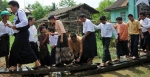
Their youthful defiance of a brutal junta that locked themup for years turned Myanmar's "88 Generation" student activists intonational heroes. As the country reforms, many wonder if it will also make thempoliticians. Freed along with scores of other political prisoners in January,it did not take long for the movement's leader Min Ko Naing and his deputy KoKo Gyi to regain their fighting spirit. "I want to change society,"Ko Ko Gyi said.
But it is not -- so far -- a political organisation,concentrating instead on grassroots activity while other veterans of thedemocracy movement, most notably Nobel laureate Aung San Suu Kyi and her party,concentrate on their new parliamentary roles. "We deeply consider what weshould do for the future. Some of the leaders are actively engaged in politicsand some remain in social work. We are trying to cooperate with political partiesand social organisations," Ko Ko Gyi said.
As students two decades ago, the 88 Generation figuresraised a huge movement against the junta, with protests spreading from majoruniversities to the streets of Yangon and then the whole country. Reviled strongmanNe Win stepped down after several months of demonstrations, but the army keptits grip on the country and a huge August rally was crushed in a bloodycrackdown that left at least 3,000 people dead.
Despite their failure to topple the junta the ralliesplanted the seeds of political struggle in the minds of a generation. They alsogave rise to the country's most famous dissidents, including Suu Kyi, thedaughter of independence hero Aung San. Suu Kyi was swept up in the protestsduring a family visit to Myanmar from her home in Britain and soon became aprominent activist at the helm of her National League for Democracy (NLD)party. Years later, dozens of heavyweights of the 80s remain at the forefrontof the democracy movement. But the context has changed dramatically.
The junta handed power to a quasi-civilian regime -- albeitdominated by former soldiers -- in a bloodless political transition in March2011. A series of reforms ensued that have been praised by the opposition andthe West. Suu Kyi, having supported her party's boycott of controversial 2010polls, decided to participate in a landmark April by-election that saw hereasily win a seat in parliament. She is now setting her sights firmly on a 2015general election that could bring the biggest transformation in the country'spolitical landscape since the army seized power half a century ago.
The vote, which many expect to herald an NLD victory, may bethe first in Myanmar to be truly labelled democratic. Whether the democraticold guard will join forces to contest the poll together has yet to be decided.


