


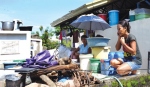
As floods which have swamped parts of the Philippines andaffected more than two million people extend into their second week, the deadand the living are sharing premium space on dry ground. Teresa Concepcion andher extended family of five moved to the Catholic cemeteryin Calumpit town, on the main island of Luzon, after their house wentunder chest-deep floodwaters. Both they and the water have stayed put since.
The Concepcions have set up camp on the tops of tombs thatsit like islands atop the murky water. Some of the bigger tombs have roofs,providing a dry spot even during the rain. "We believe in ghosts, but theyhave not troubled us. Maybe they took pity on us and allowed us to stay,"the 34-year-old unwed mother of two said as she dried driftwood with which tocook their food.
In the capital Manila, several cemeteries are home to entirecommunities of settlers who dwell among the tombs year round and eke out aliving as scavengers in nearby rubbish dumps.
The Concepcions appeared quite relaxed about remaining atthe cemetery which is just across the road from their home. "We had donethis once before, and three of our neighbours have told us they plan to joinus," she said. "But we could do with food rations though." Thefamily has survived on buying instant noodles and tins of sardines from anearby store. The floods, which submerged about 80 percent of Manila for abouttwo days early last week, have killed 66 people and affected 2.68 millionothers, according to the government.
Large areas of Calumpit, a farming town 50 kilometres northof the capital, have been swamped with floods for a week, as have surroundingareas on the low-lying, rice-growing plains at the centre of Luzon. While mostof the waters in the capital had receded by Friday, large areas of centralLuzon remained paralysed by waters that remain chest-deep in some parts. Morethan 441,000 people displaced by the floods are crammed into schools,gymnasiums and other government-run makeshift evacuation centres.
Tens of thousands more have been converging on the centreseach day, and the government has repeatedly said the refuges are overwhelmed.Those who cannot find space there have sought shelter elsewhere.


