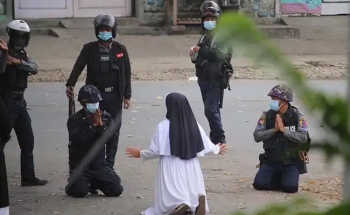
A photo is a moment frozen in time. It cannot be captured for the second time. Photos tell stories. They speak without words. A photo has the power to take us back into memory lane and walk past a moment we lived in the bygone era. A photo is an itched memory but on paper. As the world takes a pause amidst the pandemic, to celebrate World Photography Day, let’s remind ourselves that nothing is as precious as time and once lost, it is gone forever. So, let’s preserve those precious moments we once lived and etch them on the slate of our memory, forever, and for that, we need to capture a picture, a photo.
A photograph can recreate that moment in the past. We can relive the moment, enjoy it. It brings smiles to the faces of all those who shared that moment together. And yes, photography allows us to be creative, to adapt to a situation, to try new concepts, to experiment and explore. It brings out the child in us. Hence, the day should be observed by young and old, with the same spirit.
Today, with the advancement of technology, taking a picture is not very difficult and each one of us, at some point or other, have been able to capture the right moment at the right time with a single click. World Photography Day is to celebrate these moments by sharing them with others across the globe. Sharing a photo is like sharing a joy, a smile or even a tear, with those who can resonate the same emotion, the same feeling with similar intensity. A photograph is worth a thousand words. What words cannot explain, a photo can express without a single word, yet screaming silently.
People have a photographic memory. It means they can remember the scene observed once and can describe it vividly later, whenever asked for. When was the art of photography discovered? Photo is different from a picture. A picture is an image of something around us, drawn or painted with external tools like a pencil, brush or colours. A photo is an image taken with the help of technological tools, like a camera. But both, pictures or photos hang on walls and stay evergreen. They make life colourful. Science and technology have helped us transform our lives from black and white images to colourful photos with the help of wonderful cameras.
World Photography Day is a day to celebrate the magic of cameras and photography. Today, a camera is very common and comes even with a mobile phone. This has brought ease into filming and documenting events, incidents and happenings around us. One need not be a professional photographer to click a photo, as even a kid can take it. The day brings together people who share the same passion for taking pictures and sharing them on common social media platforms or participate in photography contests.
It would be interesting to know the journey of photography “ from a pinhole camera to today’s digitals, SLRs and DSLRs and the telescopic Hubble. It was in the 1880s that Kodak launched its first consumer-based camera in the market. However, it took more than half a century for camera films to become affordable, in the 1940s. The world was grappling with wars and cameras became a means to show the world what war was like. Photojournalism saw a rise and very soon, the camera became a tool of communication.
Actually, the history of photography is much older. The first known permanent photography of any object was taken in 1826 by a French, Joseph Nicephore Niepce. However, it was far from the camera mechanisms known to today's world. Niepce used a portable camera obscura that used a heliograph to take his first photo which was named, ‘View from the Window at Le Gras’.
A decade later, in 1837, Niepce teamed up with Louis Daguerre to make the daguerreotype camera. Before the daguerreotype, there was an 11th-century Iraqi invention called the camera obscura, which was the pin-hole camera that projected only an image. The scenario changed with the daguerreotype. The daguerreotype process made it possible to create a highly detailed image on a sheet of copper. The sheet was coated with a thin coat of silver, and the process did not require the use of a negative. It became the first method for obtaining a permanent image with a camera.
Over 40 years later in 1884, George Eastman from Rochester, NY refined the Daguerreotype process. He replaced the copper plate with a dry gel on paper, which he called film. This invention alleviated the need for photographers to carry around heavy copper plates and toxic chemicals. In 1888, Eastman developed the Kodak camera. The invention allowed virtually anyone to take a photo.
In the mid-1960s the polaroid instant image system was introduced. Then followed the SLRs and then, the digital revolution pumped in with DSLRs. Smart cameras, camcorders gave way to the phone cameras and laptop cameras of today.