One of the many things that makes Goa unique is it’s air of acceptance and the confluence of different cultures. And it was this very fact that gave Moumita Pal the idea of starting her own performing arts institute in the state.
“ I believe Goa is ready to take theatre to the next level and it is the more opportunistic place for art,” she says. And Pal has already set the ball rolling for her theatre pursuits in the state by bringing The Vagina Monologues, which has been performed around the world, to Goa. Having already done three shows, the production is now set to be staged in Panaji on March 31 in Kala Academy and on April 1 in Artjuna. The production which is in solidarity with the One Billion Rising campaign has been around for over 20 years and was written by Eve Ensler where she interviewed women around the world to find out why there was so much hush- hush around the v-word.
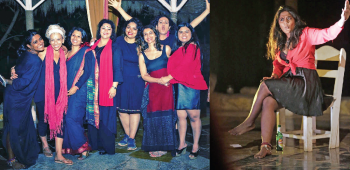
Having been a part of the acting team for four years, Pal decided to produce the play this time around and put together a Goa team which then rehearsed for about three weeks.
“These aren’t professional actors but people who have a passion for acting and understand the cause. All the cast have been working for free,” says Pal. The previous shows have been in aid of raising funds for Bailancho Saad and had certain content restrictions. The remaining show which will see Pal stepping into the director’s chair for the first time has been tweaked to be more personal.
“One of the monologues that we have incorporated this time around is a poem ‘No Ladoos only Jalebis’ which was written by one of the actors. The monologue talks about how when a son is born, ladoos are distributed but when a girl is born, jalebis are distributed as they are cheaper,” informs Pal.
Along the journey so far, the production has also changed the cast members. “In the beginning the actors were just saying their lines but over the course of time they began to relate to it on a more personal level. Each of them have evolved and grown in the way they see other women. For instance we had a Q&A workshop where we realised that each and every woman had been sexually abused or cat called or eve teased at some point or the other. During the workshop they spoke about the anger they felt and why they reacted in certain ways. And the others understood their mindset at that point instead of critiquing it,” says Pal.
And although they may not have been professional actors, Pal believes that every person can act. “Every Indian who has been born and raised with Bollywood can act. They just need someone to guide and inspire them,” she says, adding that while she worked with each of the actors, getting to the root of why they were acting usually did wonders.
Interestingly, the cast perform without any mics, as Pal believes that this makes the setting more intimate. “ You would be more comfortable saying or listening to someone talk about this topic when you are seated across from the person rather than when the person is at the mic,” she says.
Not surprisingly, they have faced a few challenges owing to the bold nature of their content. “When we first created the a Facebook page announcing the event, someone flagged it and the page was taken down,” says Pal. They have had to make certain cuts in terms of vocabulary too. “Usually these words are there for a purpose. When talking to our friends in our daily interactions we do use swear words. However rather than being rational about this and given that India is country which is easily offended, it is much easier to just make the cuts,” says Pal. “However, if after seeing the production, someone is still offended by it, then my job as a producer has failed because the message of the play hasn’t gotten across.” What’s even more interesting is the reaction of foreigners to this. “ They have a very backward view about India and don’t understand the point of having something like this here,” she says.
Overall however, people have been accepting and encouraging, says Pal. “When I was part of the cast that did this play in Chennai, we were stopped by the police before entering the theatre and told that we couldn’t perform this as it was culturally inappropriate. I was fearful that there could be such a reaction here. But thankfully there hasn’t been. And it is only when someone starts something like this and women realise that it okay to talk about it that a revolution will begin.