THE GOAN
PANAJI
For animal caregivers across the state, veterinary bills can add significantly to the cost of caring for a pet, beyond food and other day-to-day expenses. Since animals cannot communicate their symptoms or discomfort, diagnosing their condition requires careful observation, examination and, at times, several tests. This makes veterinary expertise particularly important, especially in cases that require specialised treatment or further investigation.
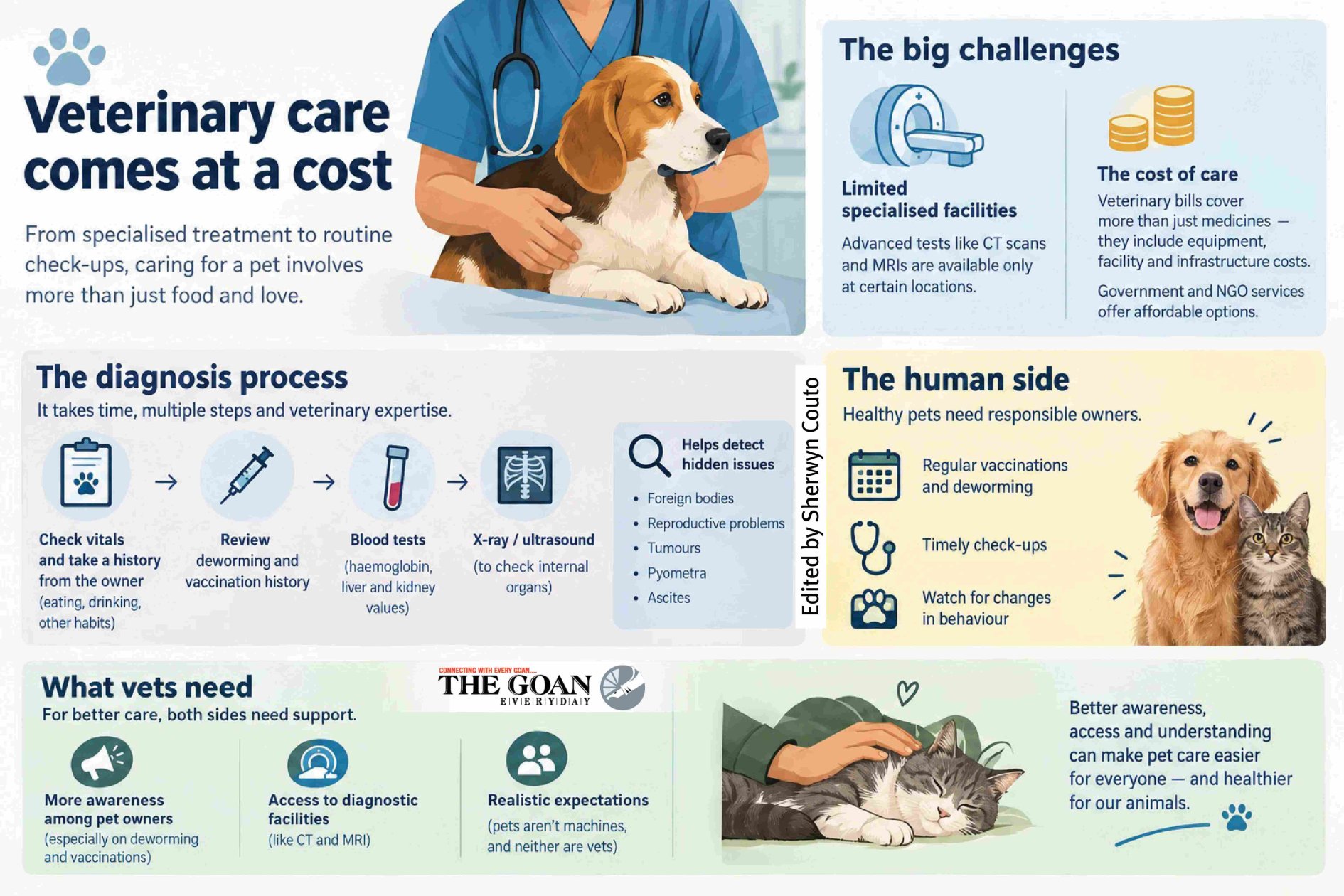
Limited facilities
Veterinary doctor Dr Nitin D’Souza points to the lack of specialised facilities as one of the biggest challenges. “If a dog needs to get a CT scan taken, or undergo an MRI, it is almost not possible for us, as such facilities are available only at specific locations,” he remarks. This can make it difficult for pet owners to access advanced diagnostic services when their animals require them, particularly when such facilities are not readily available in the state.
This also ties into the concerns around the cost of veterinary care. Citing the Chief Minister’s recent comment, Dr Nitin feels that veterinary bills are still comparatively lower. “If it was a human getting the same medicine and treatment, I assume the bill would have been even more. If veterinarians are investing in infrastructure, they cannot function on charity, and hence the expense comes,” he maintains. He points out that providing veterinary care also involves investments in equipment, medicines, and infrastructure, which add to the overall cost of treatment. At the same time, he notes that affordable options are available, with several NGOs and government veterinary facilities offering services at a bare minimum cost.
The diagnosis process
While the availability and cost of facilities are concerns, another challenge begins even before treatment can be decided. Another veterinary doctor, who wished to remain anonymous, points out that diagnosing an animal can itself be a lengthy process. “A vet can give solutions to a pet only after diagnosing a case,” he states. Before the diagnostic process begins, veterinarians often have to work with limited information. Animals cannot tell their vets what they have eaten or what they may have consumed earlier, making the history provided by the pet owner an important part of understanding the animal’s condition. “The pet won't be able to tell us what they ate or drank before,” he remarks.
According to him, reaching a diagnosis involves a series of steps. “It starts with checking the vitals and taking a history from the pet owner about their eating, drinking and other bodily functions,” he explains. This is followed by checking the animal’s deworming and vaccination history and conducting blood tests to assess parameters such as haemoglobin, liver and kidney values. “Then, if anything is found suspicious, we follow with X-ray or ultrasonography to check the internal organs,” he mentions. The process, therefore, can be lengthy and requires veterinary expertise at different stages, particularly when the symptoms are not immediately clear. The tests also help doctors identify problems that may otherwise go unnoticed. “Following all the steps helps us in knowing and identifying if there is accidental ingestion of any piece or any foreign body, or if there has been some reproductive issue,” he states. “Tumour growth, pyometra and ascites are among other issues that can be found out through ultrasonography and X-rays,” he adds.
Responsible ownership
While diagnosis and treatment come with their own challenges, both vets also point to the importance of responsible pet ownership. When asked what they would like to tell people planning to get a pet, Dr Nitin has a simple yet important message. “Commitment to the life of the animal they are getting. People often tend to forget that pets are work and they require commitment and responsibility.”
For the other veterinary doctor, the concern is the lack of awareness among some pet owners. “Many pet owners don't deworm their pet or vaccinate their pet against deadly viruses and bacteria in dogs,” he states. He feels that understanding the importance of regular deworming and vaccination is an important part of caring for an animal and avoiding health issues. He also points to the high expectations placed on veterinarians, with pet owners often expecting every problem to be resolved. “People expect a vet to solve all the problems,” he says, before explaining the challenges that come with treating animals. “The animal is not a machine, and we vets are also not machines to resolve all issues. Not a single animal will tell its problem to the vet. So we need to check the vitals of the pet, and every animal has a different anatomy,” he remarks.
The concerns raised by the vets point to how pet care involves responsibilities on both sides. For pet owners, regular vaccinations, deworming and timely check-ups, along with paying attention to changes in an animal’s behaviour, can help prevent some health problems and allow conditions to be detected earlier. For veterinarians, better awareness among pet owners, access to diagnostic facilities, and realistic expectations about treatment can help make the process of caring for animals easier for both the pet and its caregiver.