THE GOAN
PANAJI
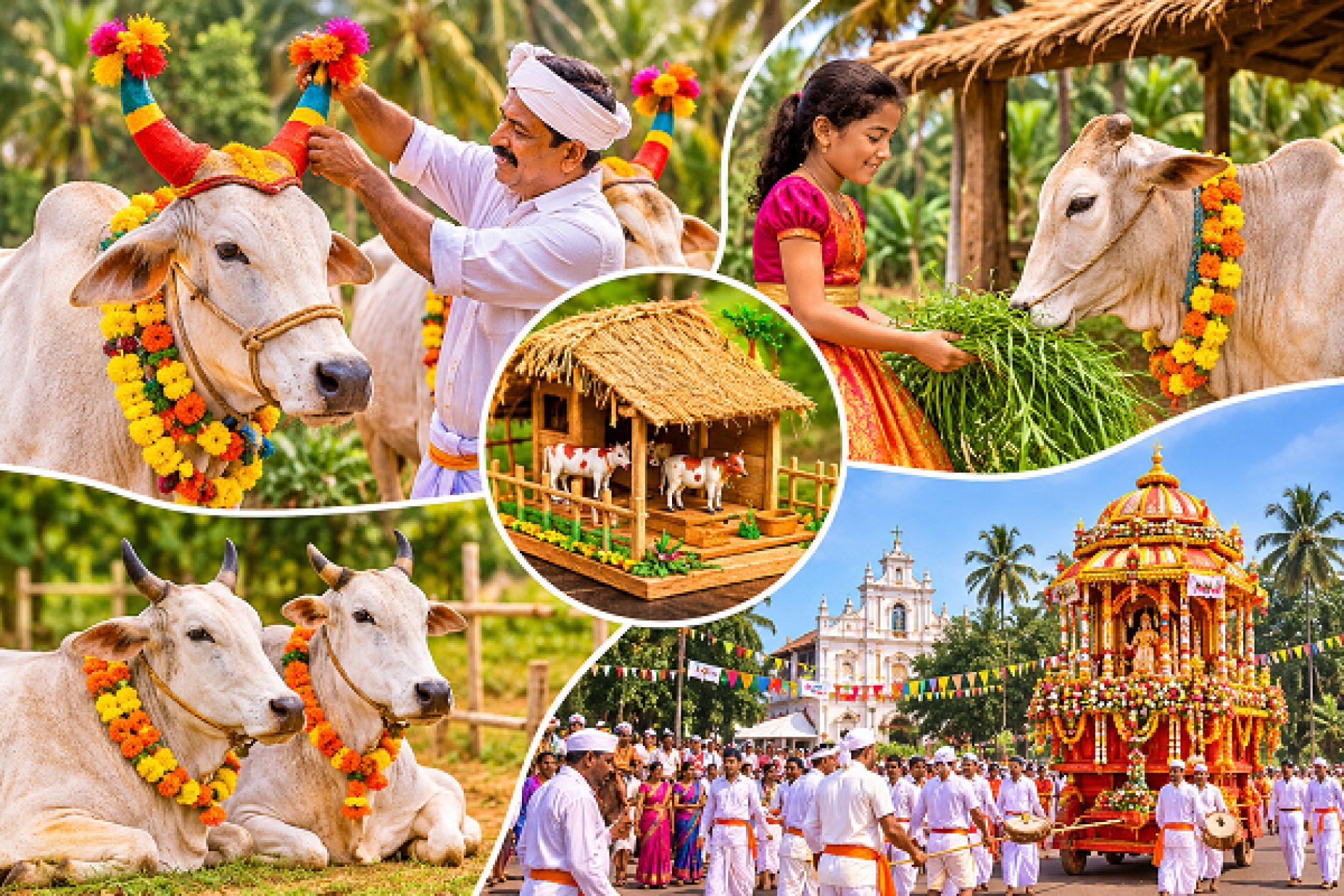
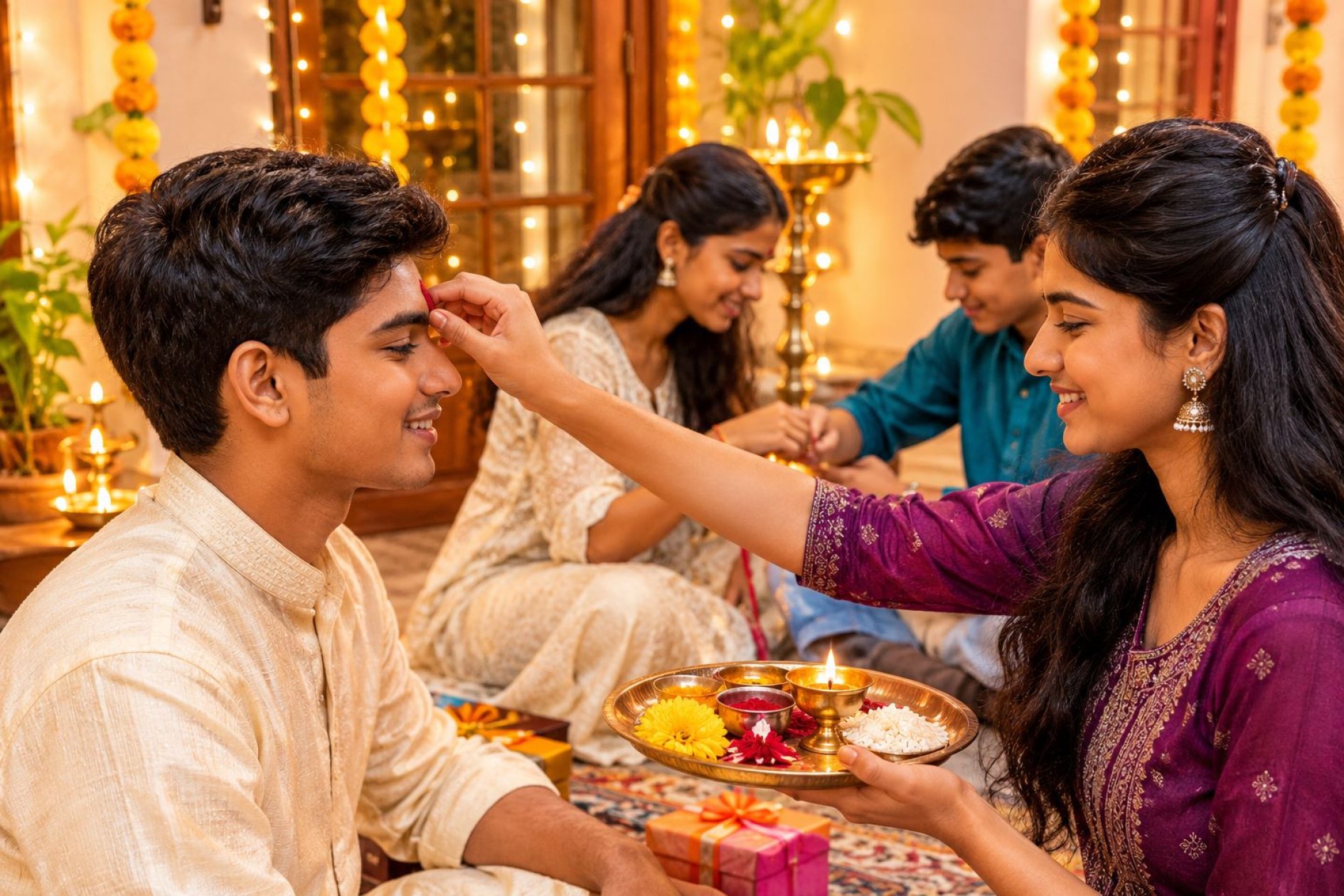
The kumkum and rice grains are settled on the puja thaali, the brothers sit in a line along the wall, and diyas flicker as evening sets in, catching the light from the akashdiva outside. Sisters welcome their brothers, perform the aarti, and pray for their well-being. While Diwali may be over, the festive spirit continues in Goa, with Gurancho Padwo celebrated on November 10, Bhaubeej or Bhai Dooj on November 11, and the festivities drawing to a close with Tulsi Vivah on November 20. The bond between siblings is celebrated through Rakshabandhan and Bhaubeej, each with its own story and rituals.
The Bhaubeej ritual
On Bhaubeej, it is traditionally the brother who visits his sister's home. She welcomes him with a meal, performs the aarti, and applies a kumkum tilak, praying for his long life. He, in turn, offers his blessings. The festival is associated with the story of Yamraj, the god of death, and his sister Yamuna, who welcomed him with an aarti and a meal. Touched by her affection, Yamraj blessed her and promised to visit her every year. The rituals may be familiar, but every family has its own memories of the day.
For Shobha Raikar from Ponda, Bhaubeej brings back memories of a childhood when the house would fill with cousins and celebrations continued well beyond the rituals. She and her cousin sisters would join her brother in the celebrations. “It was our unspoken tradition that as soon as the Bhaubeej formalities got over, we would run outside to burst the leftover Diwali cho fog (firecrackers),” she reminisces with a smile. The celebrations have become quieter over the years, but the sentiment remains. “Now, I just visit my older brother for Bhaubeej. He cannot leave his house for long periods, so I go there, perform the aarti, and pray for his healthy life,” she says.
Three generations together
Bhaubeej has always been an occasion to catch up with her cousins for Riya Prabhudessai, who grew up with a sister but no brother. With a large extended family, the celebrations bring generations together. “I have many cousins on both sides, so it is always a full house! Our celebrations are the usual as you see anywhere else. We do the aarti and the brothers give us their blessings,” she says, adding that this year she plans to gift her cousin brothers something too. At her uncle's house, the aarti moves through three generations: her grandaunt performs it for her grandfather, her aunt for her father and the other uncles, and then Riya and her sister take over for their cousin brothers. “It is so much fun and something we all look forward to every year,” she says.
A bond beyond rituals
Riya and her sister have also found their own way of marking Rakshabandhan. One popular legend associated with the festival tells of Lord Krishna injuring his finger and Draupadi tearing a piece of her saree to tie around the wound. Moved by her gesture, Krishna promised to protect her, a promise he later fulfilled during her disrobing in the Kaurava court. The story symbolises the protection and trust represented by a rakhi.
For the past three years, Riya and her sister have tied rakhis to each other. A sister traditionally ties a rakhi on her brother's wrist and prays for his well-being, while he promises to stand by her. The sisters have adapted the ritual. “As we do not have a brother and the rakhi is a sign of protection, my sister and I have started tying it to each other,” she says. Their practice shows how the affection associated with the festival can extend beyond the usual brother-sister pairing.
Celebrating across distances
Distance, however, can make keeping traditions alive more difficult. For Vardhan Pai, who lives outside India, Rakshabandhan and Bhaubeej are occasions when he misses his sister and the rest of his family a little more. “Not that we did anything extraordinary when we lived in the same house, but living so far away and not being able to see all my family is difficult, especially when I see everyone celebrating with their loved ones,” he says. He remembers the COVID period, when travel restrictions left no certainty about when he would return home. His sister found a way to continue the Bhaubeej ritual by performing it over a video call. “It was so odd and yet so funny. I even gave her shagun of Rs 21 through an e-transaction. It was hilarious seeing her reaction on camera,” he laughs, adding that he gave her a proper present later.
From crowded gatherings and childhood mischief to rituals shared across screens, Bhaubeej looks different in every household, but the affection remains. Siblings grow up, move away, and build families of their own, yet these occasions bring them back to shared memories and bonds. There may be arguments, teasing, and the occasional squabble, but the connection endures beyond the rituals. The tilak may fade, and the festivities may end, but the care it represents stays long after the day is over.