CHRISTINE MACHADO
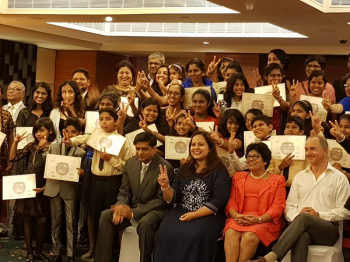
Having training over 200 students in the nuances of fado and reached out to almost 800 people through awareness campaigns, the reach of Fado de Goa, an ongoing initiative by noted Goan fadista Sonia Shirsat and Taj Hotels Palaces Resorts Safaris, is only growing. And Shirsat could not be more delighted. “There is a lot of interest in fado from all sections of society. In fact 50 percent of the students have no prior knowledge of the language but have joined just because they have fallen in love with the music form,” she says. So far the group has trained four batches who have all completed the first level training.
“There are two levels of training. The first is the workshop level which is a set of ten classes of two hours each conducted once a week. Here the students are taught how to sing fados as well as theory,” says Shirsat. In fact, Shirsat states, people don’t realise that there is a lot that comes under theory. “It is not just about singing a song, but the singer should be able to identify with it,” she says. Thus, the students are taught about the history and origin of fado, the important personalities who have shaped fado, the growth of fado over the centuries, the various instruments used in fado, the different areas of fado etc. “There are certain rules and structures of fado as well, for instance the number of syllables and number of lines in each verse. Also, for every fado, there is one name for the melody and one name for the poem,” explains Shirsat. Students are also taught about the different types of fado. “ Traditional fado doesn’t have a chorus. However, the fado canção which emerged in mid to late 1900s is an exception to the rule,” says Shirsat, “In Goa, people are not so aware about the traditional fado. The ones that have remained popular through the decades are the ones sung by Amalia Rodrigues in the 50’s. People here are vague about those prior to these and after these. They know the tunes but not the origin.”
At the workshop level, students are taught five fados “ Fado canção, Traditional fado, fado Coimbra, one based on folk music and the fado Tudo isto é fado. “This last one has unofficially become the official anthem of the course as it explains everything that is fado in it,” says Shirsat smiling.
Students are given tests and assignments and later have to answer a final exam where they are judged by a panel.
“The panel consists of three people “ one person who is musically inclined, a second who is a Portuguese language expert and the third is from the Taj Group of Hotels and judges on the overall presentation and whether the candidate is good enough to perform in front of a crowd,” says Shirsat. Apart from this, musician Carlos Meneses has also been a part of this initiative right from the start and guides students in the music aspect while Marlene Meneses looks after the administrative section.
Those who qualify from this first round then go into the second round which is the masterclass round. This is conducted by Shirsat herself and includes five session of two hours each. “The idea is that at the end of the first ten classes, students should be able to sing fados at an amateur level and at the end of the masterclasses should be polished enough to sing at concerts and competitions,” says Shirsat. Of the batches done so far, 38 students have qualified for the second round. Of these, a few will be performing at the upcoming Festa de Fado concert which will be held on January 21 at Maquinez Palace, Panaji. Prior to this, Shirsat will be conducting her masterclass. The concert, informs Shirsat, will include a mix of both traditional and modern fado. A few students will also be performing for the Fado Evening the next day at Fortune, Miramar.