Atika Modassir (Oxon)
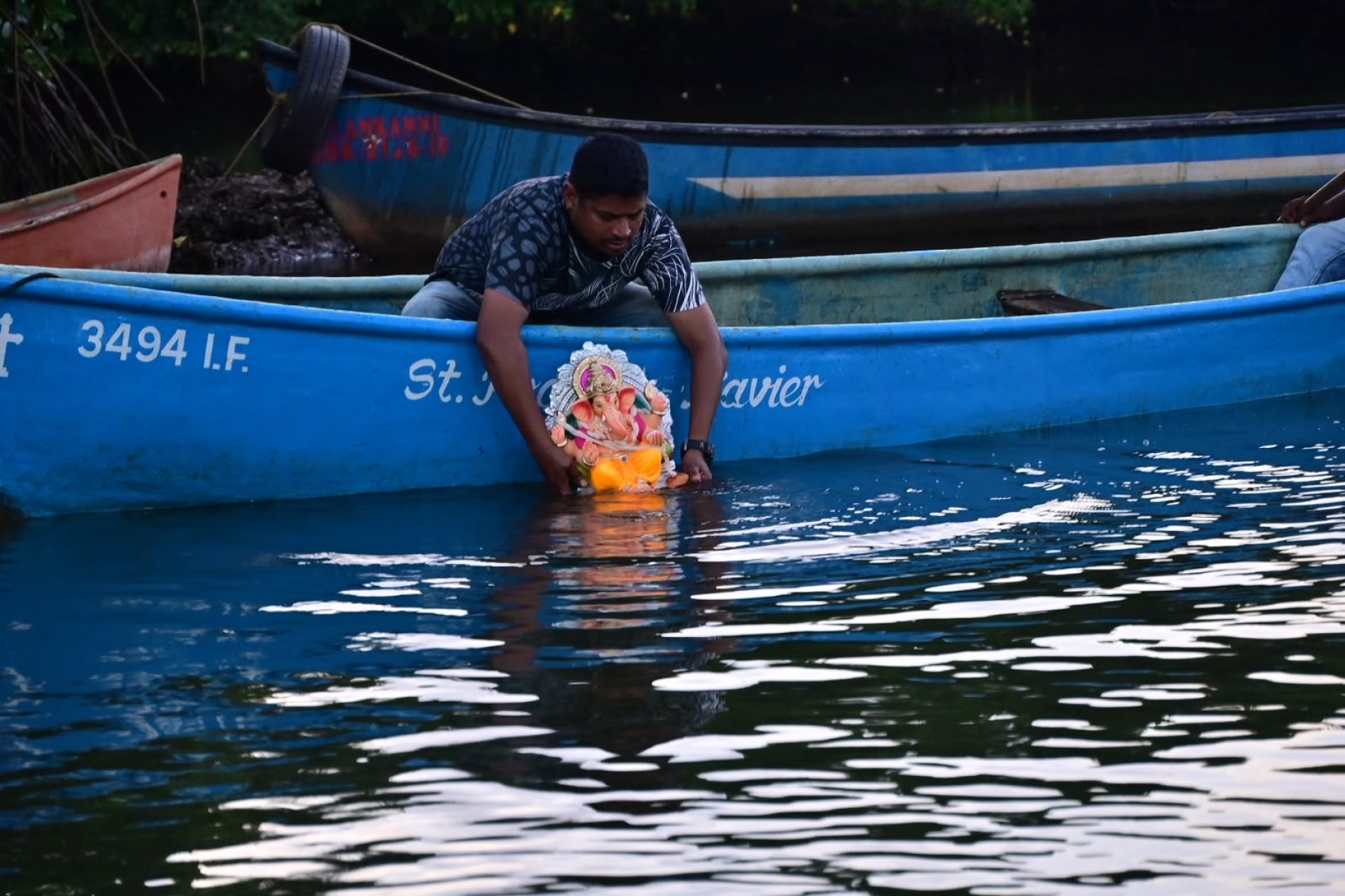
Ganesh Chaturthi - a festival that celebrates not just the arrival of Ganesha, but also marks his departure with zeal and grandeur. It is a festive recognition of a journey from form to formlessness- the cycle of new beginnings and poignant endings. Ganpati Visarjan, the send-off or immersion of the idol in a waterbody, marks the pinnacle of celebratory devotion to hail the endearing elephant-headed deity of Hinduism.
While the origins of visarjan trace back to the Satavahana, Chalukya, and Rashtrakuta dynasties, its evolution to its present scale is rooted in India’s freedom struggle. It was freedom fighter Lokmanya Bal Gangadhar Tilak who visualised it as a public commemoration. When the mutiny of 1857 exposed divisions within society, Tilak realised that a unifying celebration was the need of the hour, given the British imposition. Until then, Ganeshotsav was primarily a private family ritual. In 1892, Tilak made it a public(sarvajanik) observance to build solidarity and national pride, with Bombay and Pune heaving with Indians celebrating Chaturthi, even though substantial gatherings were outlawed by the British. To this day, the public revelry is characterised by dancing in musical processions, with localities installing monumental idols and participating in community functions that democratise ceremonial worship. The Ganesha idol is installed on the Chaturthi date and is immersed on the Chaturdashi date.
Not a mere ceremonial farewell, visarjan is the final occasion where the whole family congregates a final time in the festival to offer their gratitude and adoration. As they offer Aarti, ceremonial offerings (bhog) are made and blessings sought for prosperity and protection. They beseech pardon for their human failings and express hope to gather again, as a family, the next year. After taking the idol through the home a final time to disperse benedictions, the family departs for the immersion, letting go of their attachments and trusting in the divine presence beyond the physical form. The idol is dipped thrice before release in the water. The first dipping is the expression of the intent to let go. The second dipping is an expression of the release to the elements, and the final immersion is in surrender to the cosmos. As the idol immerses while facing the family, it is said to dissolve the family’s domestic troubles and drown worldly hindrances in the water. This is why Ganesha’s primary epithet is Vignaharta or Vignesh, meaning the ‘remover or destroyer of obstacles’.
Many perspectives on visarjan revealingly intermingle mythology, devotion, imagery, environmentalism, and philosophy to make it a ceremony of import and significance.
Mythology
Maharishi Ved Vyas began narrating the Mahabharata story to Ganesha, over a period of ten days. Once the Mahabharata was recorded, Maharishi opened his eyes to find that Ganesha had a fever owing to continuous exertion. To restore normalcy, Maharishi bathed Ganesha in the lake; that day being Anant Chaturdashi. Hence the practice of immersing Ganesha after ten days of worship.
Visarjan also symbolises Ganesha's return to his celestial abode on Mount Kailash to reunite with his parents, Shiva and Parvati, after his stay with his worshippers. Mt Kailash in Tibet nestles the auspicious Lake Manasarovar at 15,000 feet. Hence Visarjan mirrors that return journey to the heavenly realm.
Transience of life
When the clay idol is immersed, it dissolves and returns to the earth it comes from. Likewise, our life and its material attachments are impermanent. Visarjan is a symbolic reminder that emphasises the ephemerality of life, as a cycle of creation and dissolution.
The play of the five elements
The clay represents the earth (Prithvi), the chanting is a manifestation of air/ breath (Vayu), the aarti/lamp light signifies fire (Agni), the immersion reflects water (Jal), and Space (Akash) symbolises the omnipresent spirit that exists beyond the ceremonial.
The Divine polarity –Saguna and Nirguna
In Hindu philosophy, two polarities depict the ultimate truth. Saguna-meaning with form and physical attributes. Nirguna- without form and physical attributes. The idol worshipped in homes is Saguna and, once submerged and dissolved, transforms into Nirguna. Visarjan reminds us that while forms change, the spirit remains constant.
Devotion and detachment
The Puranas depict idol devotion as attachment and its immersion as detachment. This shows how the ritual demonstrates the balance humans need to strike between the two. Osho called this “the absolute unclinging – freedom – no clinging, not even to gods.”
Moksha as liberation
The waterbody represents infinity, and the idol characterises the mortal body that bears the essence or the soul. Once submerged in the infinite, the essence is released from the physical to merge with the Infinite Power, thus leading to the attainment of Moksha/ salvation. Cyclically, formlessness assumes earthly form before culminating in formlessness. What follows is Divine Bliss.
As Kahlil Gibrán said, “When you reach the end of what you should know, you will be at the beginning of what you should sense.”
(With four PG degrees and a career spanning education and global HR leadership, Atika has followed one enduring question through Oxford lecture halls, global boardrooms, and her Goan homestead - what helps people and societies grow, flourish, and find meaning?)