


Dr ALVARINHO J LUIS
Goa is dotted with lesser-known places that share similar names but have distinct identities. From the serene shores of Vainguinim near Dona Paula to the agricultural heartlands of Bicholim, the forests of Sattari, and historic Bainguinim near Old Goa, these fascinating locations reveal a rich tapestry of nature, history, traditions, and heritage.
Vainguinim coastline
Nestled along the shimmering Arabian Sea, Vainguinim shoreline is one of Goa’s lesser-known coastal treasures, offering a peaceful retreat from the bustle of its more popular shores. Near Dona Paula and a short distance from Panaji, this secluded stretch of golden sand, framed by gentle waves and verdant headlands, exudes an old-world charm that continues to captivate visitors. The name Vainguinim is sometimes believed to have originated from the Portuguese word Vanguinhas, meaning small waves.
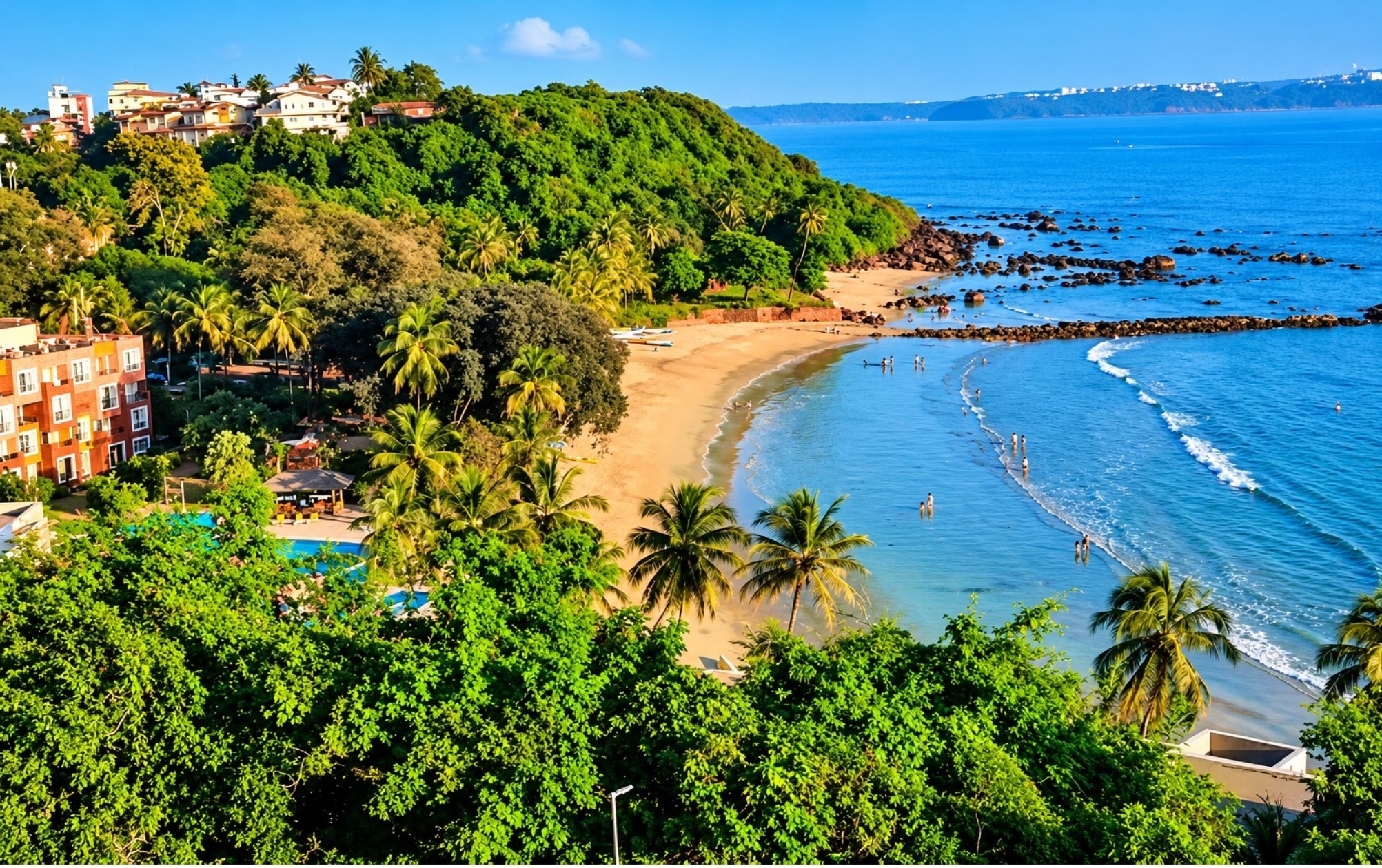
Perched along a picturesque laterite coastline, Vainguinim offers breathtaking views of the Arabian Sea. Its tranquil surroundings and proximity to historic landmarks make it a delightful destination where natural beauty meets Goa’s cultural heritage.
Adding architectural distinction to this coastal paradise is the iconic Cidade de Goa, a luxury resort spread across approximately 40 acres overlooking the beach. Designed by internationally acclaimed architect Charles Correa, the resort recreates the charm of a traditional Portuguese-era Goan village, complete with winding pathways, arched gateways, courtyards and picturesque terraces.
Vainguinim, Bicholim
Nestled approximately 6–7 km from Bicholim town, Vainguinim is a charming rural village that offers a glimpse into Goa’s quieter, lesser-explored countryside surrounded by lush greenery, spice plantations, verdant hills, and picturesque agricultural landscapes. Its traditional Goan homes, some bearing Portuguese architectural influences, and age-old shrines tucked beneath leafy canopies lend the village a distinctive old-world charm. Here, life continues at an unhurried pace, closely intertwined with nature, agriculture, and deeply rooted cultural traditions.
Among Vainguinim’s most cherished customs is Nave/Nebe, an age-old harvest ritual symbolising gratitude to Mother Earth for her bounty. The farmers revere village deity Khetoba, brother of Lairai of the seven sisters, whose blessings ensure bountiful harvests. As the paddy ripens, villagers ceremonially enter their fields, offering betel leaves, areca nuts and coins before cutting the first golden ears of grain. These freshly harvested sheaves are reverently offered to the village deity and then tied above home doorways, invoking divine blessings, prosperity, and abundance for the household.
The tradition also brings together communities from Vainguinim, Mayem and Bicholim-Gaonkarwada, who gather at Narayandevachem Tolle, a sacred water tank in Mayem, before offering the newly harvested grain to Goddess Mahamaya. More than an agricultural ceremony, Nave represents a living bond between the land, its people and their spiritual heritage, passed down through generations.
The Vainguinim Khazan reflects Goa’s traditional agricultural ingenuity, with earthen bunds and sluice gates regulating tidal waters and protecting fields from salinity. Agriculture remains integral to village life, with paddy cultivation, cashew plantations, and horticulture sustaining its rural character. Traditional farming practices and local produce preserve generations of agricultural knowledge. Amid Goa’s rapid urbanisation, Vainguinim retains its rustic charm, scenic countryside and cherished harvest traditions. Its khazan lands and close-knit community reflect Goa’s agrarian heritage, cultural traditions and enduring harmony with nature and its past.
Nestled within the Mhadei Wildlife Sanctuary in Sattari, about 5 km from the Karnataka border, Vainguinim is a secluded village surrounded by dense forests, rolling hills and seasonal streams. Largely untouched by modern development, its residents face isolation and poor road connectivity, particularly during the monsoon. Yet, their resilience and determination reflect the enduring spirit of Goa’s remote rural communities.
Historic Bainguinim
Bainguinim, near Old Goa, is another distinct locality bearing a name similar to Vainguinim in Bicholim, Sattari and Dona Paula. Its location near the former capital of Portuguese India places it within a historically significant landscape of centuries-old churches, village settlements, agricultural lands, and the cultural heritage of Old Goa.
One particularly fascinating aspect of Bainguinim is its connection with São Pedro (St Peter's Church), established in 1543 to serve the neighbouring villages of Bainguinim and Panelim. The church remains an important reminder of the area's Portuguese-era religious heritage.
Fonte de Santo António
Another lesser-known historical treasure is the Fonte de Santo António, a perennial freshwater spring that once sustained the flourishing city of Old Goa. Emerging abundantly from the rocky northern slopes of the present-day Kadamba Plateau, this natural fountain provided refreshing drinking water year-round, serving residents, religious establishments, and affluent households in the former Portuguese capital.
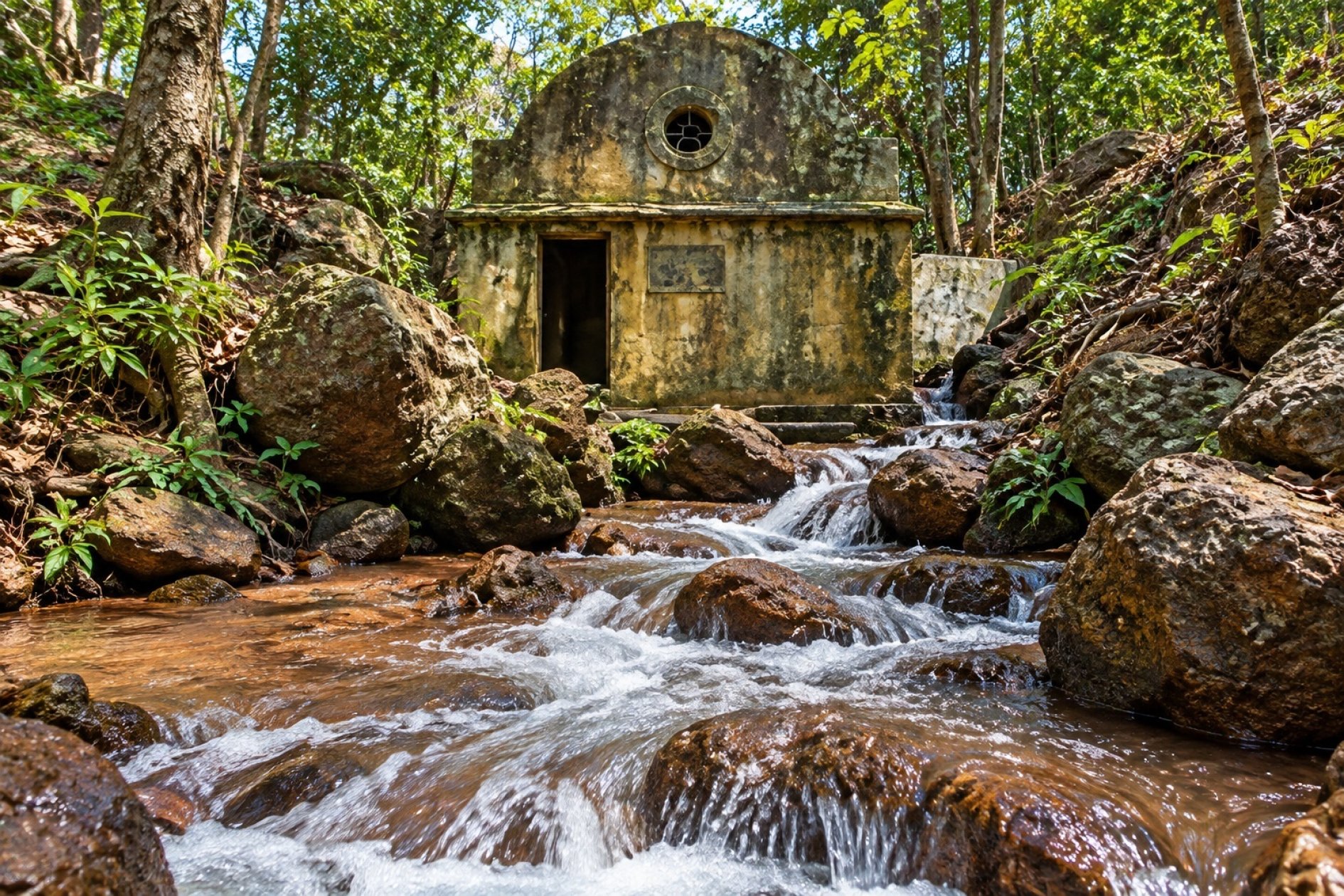
During the Portuguese era, enslaved workers reportedly transported water from the spring in earthen vessels, distributing it across the city. The Portuguese constructed a protective wall around the spring and installed pipes to channel its waters into large reservoirs. The fountain also became a bustling centre of everyday activity, attracting numerous mainatos (washermen) and women who gathered to wash clothes.
The spring's historical significance was documented by French traveller François Pyrard de Laval, who journeyed through South Asia between 1601 and 1611. José Nicolau da Fonseca later cited his observations in his 1878 publication, An Historical and Archaeological Sketch of the City of Goa.
Pyrard described the fountain as magnificent, noting that the uneven, undulating road leading to it remained busy throughout the day and even late into the night. Groups of people also visited the spring to bathe, sometimes carrying weapons for protection. Beyond supplying essential drinking water, Fonte de Santo António was a vibrant social landmark, reflecting the daily rhythms of life in Portuguese-era Goa.
(The author is a scientist, freelancer, and son of the soil from Taleigão, has explored some of the world’s remotest frontiers in Antarctica and Svalbard in the Arctic, and has also sailed across the fiery Southern Ocean during India’s polar scientific expeditions.)


