


THE GOAN NETWORK
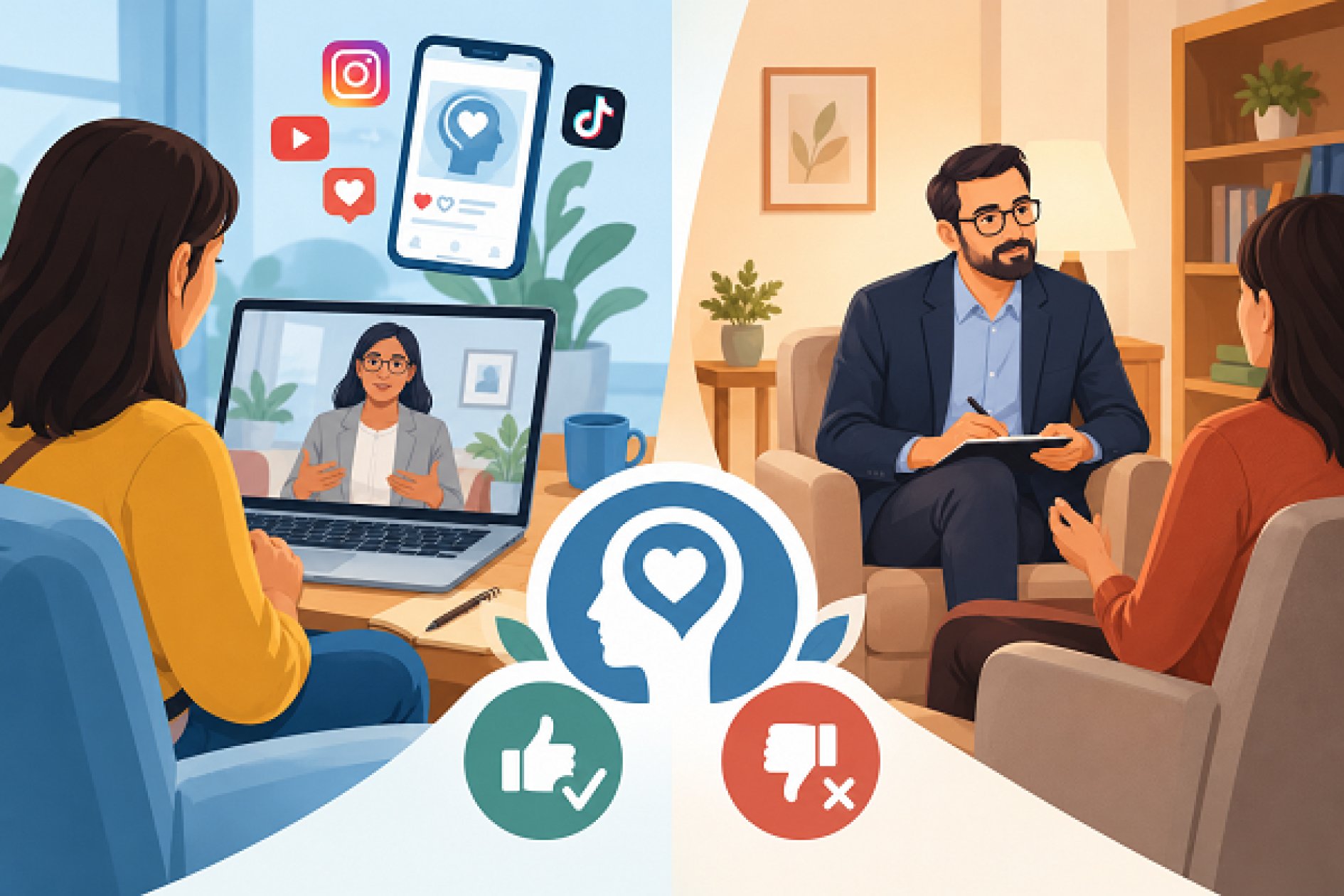
Social media is filled with advertisements for mental-health services, with practitioners encouraging people to reach out and give therapy a try. But how can people be sure that those offering support are qualified to do so? We spoke to mental-health professionals about what people should look for when seeking help online and how to choose between virtual and in-person therapy. While online sessions offer greater accessibility, in-person therapy has its own benefits. Professionals believe both formats can be effective, depending on the individual’s needs and comfort.
BODY LANGUAGE
Akshada Amonkar, president of the Psychiatric Society of Goa, believes both online and in-person appointments have their benefits and that neither is necessarily better than the other. However, she prefers that the first session take place in person, as it allows the patient and professional to meet and establish familiarity. “I would recommend an in-person appointment for the first session, followed by online consultations if the person is unable to visit the professional,” she says, adding that the choice ultimately depends on the individual’s circumstances and comfort.
Counsellor and somatic practitioner Vibha Pradhan also believes that both formats can be effective, though each has its limitations. “In-person sessions allow me to observe body language, posture, breathing and subtle shifts during a conversation. Sometimes, what a person says and what their body communicates may differ,” she explains. While online therapy offers accessibility and flexibility, counsellors may have a limited view of non-verbal cues, and noise or a lack of privacy can affect sessions. Pradhan says the therapist’s skills matter as much as the medium, adding that the choice should depend on the individual’s needs, comfort and circumstances. Although she may prefer in-person sessions when both formats are accessible, she recognises online therapy as a valuable option for those who cannot travel easily or need continuity of care.
HOME COMFORT
For some people, however, the comfort of seeking help from home can make the first step towards therapy less daunting. Clinical psychologist Chrissie Gomes believes online therapy can be helpful, particularly for those who feel more comfortable in familiar surroundings. While one of the main differences between online and in-person sessions is the absence of some non-verbal cues, she says the online format can make therapy feel less intimidating. “Getting dressed up and travelling for therapy can make the setting feel formal and create a barrier. Online sessions allow people to seek help from the comfort of their homes,” she explains.
Gomes nevertheless prefers that a person meet their therapist in person for at least the first session, as it can help ease the uncertainty surrounding the initial meeting. “Once that familiarity is established, I would encourage them to opt for online sessions if they prefer,” she says. She also cautions people against taking mental-health advice at face value, particularly with the growing number of life coaches, short courses and social media influencers offering guidance. “Always check credentials and be careful about whom you approach for mental-health support,” she advises.
CREDENTIAL CHECK
The need to make informed choices extends beyond the format of therapy to the services people encounter online. Amonkar urges people to be careful when choosing mental-health services, particularly with the growing number of advertisements promoting packages and support. While she does not consider such advertisements inherently wrong, she stresses that patients must remain alert about the services they choose. “Patients should check the credentials of the person they are approaching and be mindful of the kind of support they are receiving,” she says.
Pradhan similarly cautions against relying on appearances when assessing mental-health professionals. “Social media has made mental-health support more visible and accessible, which is positive. However, counselling should not be marketed through promises of quick healing or guaranteed outcomes,” she says. A polished profile or large following does not necessarily reflect professional competence. People should check a therapist’s qualifications, training, experience, and approach to confidentiality before seeking support.
Ultimately, finding the right mental-health support involves more than choosing between a screen and a face-to-face meeting. Accessibility, privacy, the therapist’s competence, and the comfort a person feels all influence the experience. As professionals point out, neither format is a universal solution. What matters is that people can access appropriate, ethical support that meets their needs without feeling pressured or misled.


