Goa’s salt pans are slowly fading, as labour disappears and weather turns unpredictable. What remains is a quiet struggle to keep a generations-old craft alive
You don’t notice salt when it’s there. No color, no voice, nothing that demands attention. But the moment it’s missing, everything feels off. Food loses its character. Something essential slips away.
In Goa, salt is more than a seasoning. It’s memory, labour, and inheritance.
Fading landscapes of salt
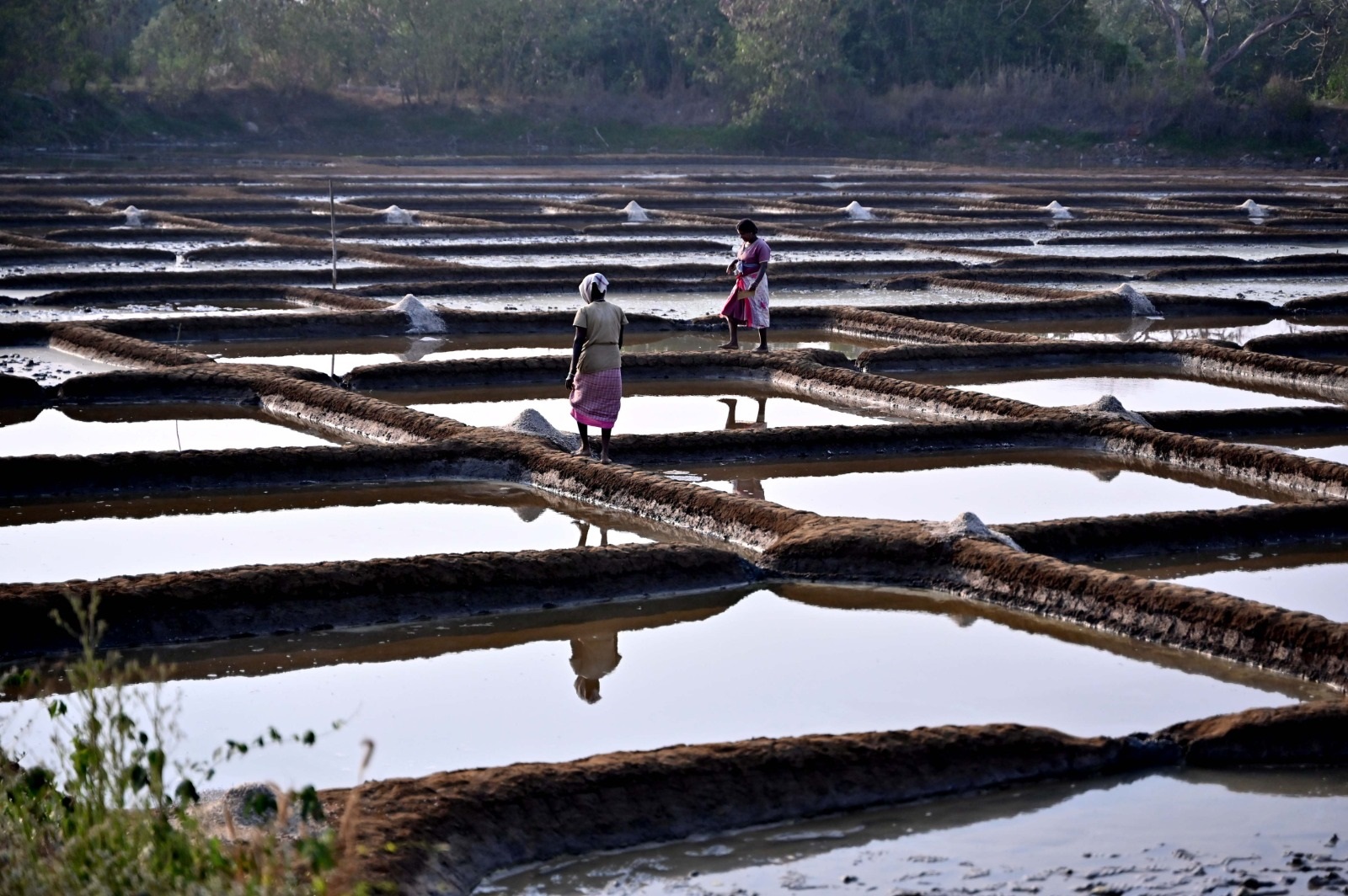
Travel through Curca and Batim, and you’ll still find a few salt pans glinting under the sun. Not many. Just enough to remind you what once was. Here, families like Salvador Fernandes’ have held on, even as the ground beneath their feet shifts, both literally and metaphorically.
“Salt extraction has stopped for now,” he says, not with drama, just quiet acceptance. “There’s no labour. People who used to come consistently for years don’t come anymore. And this work… It’s not easy.”
Demands of the craft
It never was. Salt-making asks for five straight months of relentless effort. It begins after the monsoon, when the land is dried, shaped, and prepared with care that borders on ritual. Water is guided into reservoirs, then into square pans called Kunnge, alongside Thaapne, the holding reservoirs. Precision matters. Too much water, and the heat won’t build. Too little, and the yield suffers.
“Our ancestors knew exactly how to manage it,” Salvador explains. “Each kunnge needs only the right amount of fresh water. If you overfill it, the heat doesn’t build, and production drops. Today, labourers just fill everything quickly. That affects the quality.”
A rhythm disrupted
There’s a rhythm to it. Heat, wind, patience. The water warms, settles, and evaporates. A hardened saline layer forms first, almost like rock. Then begins the careful addition of water again, allowing crystals to emerge over days.
“Our elders would repeat the process, spreading the saline layer multiple times a day,” he says. “That’s why the yield was better. Now it’s rushed.”
Six families once depended on this work in Salvador’s village alone. Today, even sustaining that feels uncertain.
Weathering uncertainty
And then there’s the weather. It doesn’t behave the way it used to. “Earlier, April and May meant strong heat, good production,” Salvador recalls. “Now, unseasonal rain, dampness… it spoils everything.” A single unexpected drizzle can undo weeks of labour.
Silent shores
Along the Ribandar–Panaji causeway, the story repeats itself. Once lined with salt pans, it’s now mostly silent. Felix Pereira, who still sells salt there, no longer produces it.
“There used to be so many pans here,” he says. “Now there’s just one. Nobody wants to do this work anymore. Even locals are unwilling.”
Holding on in Pernem
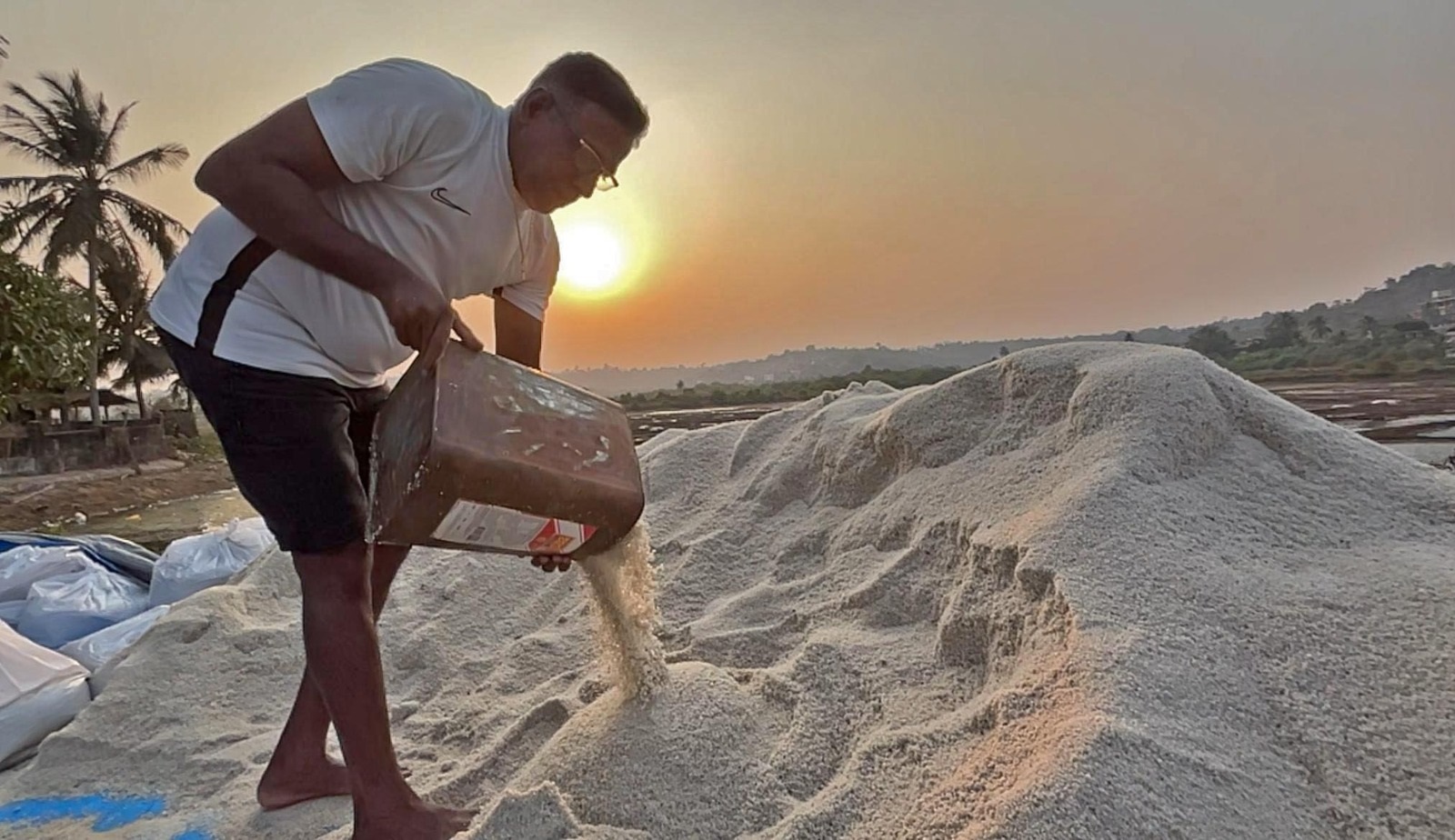
Further north in Pernem, in Agarvaddo, a name that itself comes from agar, meaning salt pans, the decline is visible, but not complete. Pravin Bagli, a third-generation salt pan owner, is still at it.
“There were 12 salt pans in my father’s time,” he says. “Now, only five.”
Pride amid decline
What keeps him going isn’t just his livelihood. It’s pride. “Our salt is clean. No mud, no contamination. It’s made by us, the villagers. That’s the difference.”
But even pride has limits when faced with uncertainty. Salt farming depends entirely on nature, and nature has become unpredictable. Low-pressure systems, sudden rain, and cloudy skies, each one chips away at both yield and morale.
“I’ve been trying my level best,” Pravin admits. “But youngsters are not willing to take the risk. Climate is one major reason. Unseasonal rain affects us badly, and there’s no insurance or compensation.”
A generation turning away
And then there’s the next generation.
“The current generation itself isn’t keen,” Salvador says. “So it’s difficult to expect anything from the next. Even if they know the basics, they don’t have the technical skills. And more than that, they don’t want this kind of hard work.”
It’s a full day’s labour. It begins at dawn, stretches through the heat, and demands consistency for months.
An appeal to preserve
Pravin doesn’t blame them. But he worries about what’s being lost. “I’ve seen youngsters selling their ancestral land,” he says. “I would request them not to. Instead, do something with it. Even part-time. This can generate income alongside jobs.”
Because what’s at stake isn’t just a livelihood. It’s knowledge.
Vanishing knowledge systems
The older generation understood timing, layering, and evaporation cycles. They knew when to delay extraction for better crystals, when to intervene, and when to wait. Today, much of that has thinned out.
Perceptions of quality
There’s also a quiet pushback against the idea that traditional salt is inferior. “They say factory salt has more iodine,” Salvador says. “But when tested, our salt has shown good iodine levels too. And it lasts longer. It doesn’t spoil for years.”
For families here, this isn’t just about science. It’s about lived experience. This is the salt they’ve produced, stored through monsoons, and consumed for generations.
Possibilities of revival
There’s also a practical truth they return to. “If we get labour, we can restart some of the salt pans,” Salvador says. “But it has to be done properly, on limited land, with proper attention. If people work together, production can improve. But overuse and neglect only spoil the salt.”
What remains at stake
Standing in these pans, watching the slow formation of crystals under an open sky, you begin to understand the weight of something so small.
Every grain carries effort. Every harvest carries risk. And maybe that’s the real story. Not just about salt, but about choices. What we continue. What we walk away from. What we allow to quietly disappear.
Goa’s salt hasn’t vanished yet. It’s still here, in fragments, in hands that refuse to let go. But it’s fading. And whether it survives may depend on whether someone decides it’s still worth the effort.