Shweta Goyal
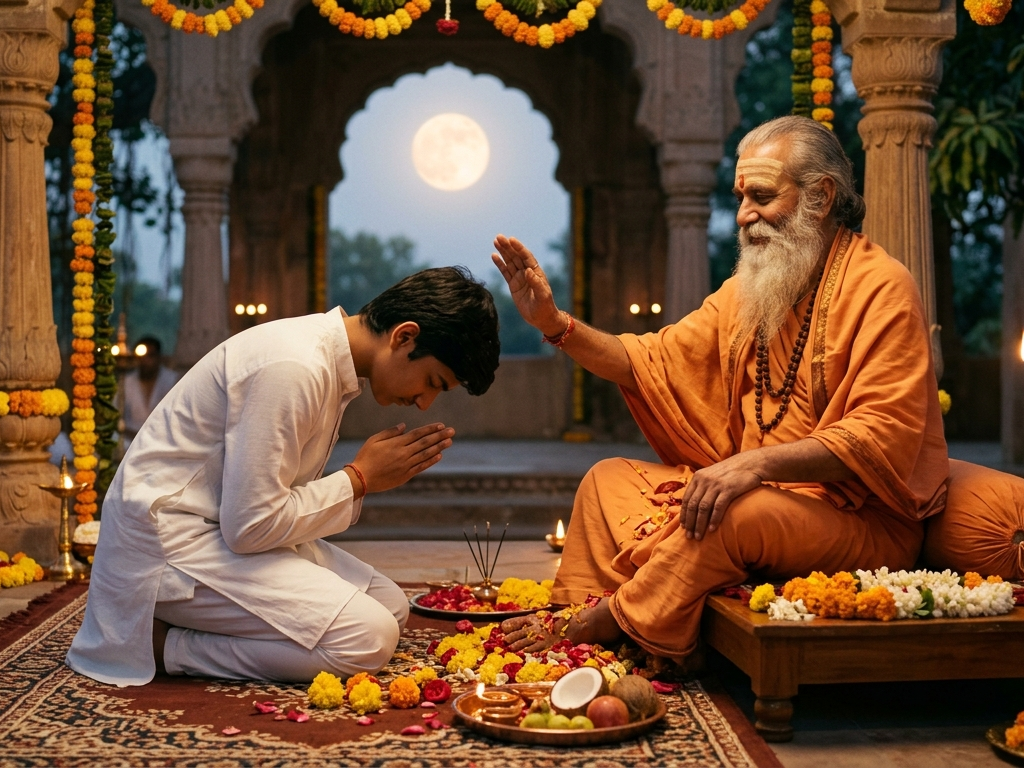
The Guru holds the supreme position in India’s cultural and spiritual tradition, transcending specific religions or sects. A Guru is an enlightened soul who removes life’s darkness and introduces the soul to its true nature. The Full Moon of the Ashadha month is called Guru Purnima, celebrated on July 29 this year. Dedicated to the power of knowledge, this festival has symbolised reverence since ancient times. In Sanskrit, ‘Gu’ means darkness and ‘Ru’ means its destroyer; thus, a Guru provides the light of knowledge. The mantra says: “Guru Brahma, Guru Vishnu, Guru Devo Maheshwara, Guru Sakshat Parabrahma, Tasmai Shri Gurave Namah.” The Guru is equated to the Trinity: like Brahma, he shapes our personality; like Vishnu, he sustains our life; and like Shiva, he destroys our flaws. The Guru creates the eligibility for the realisation of God.
Guru Purnima is also celebrated in memory of Maharishi Ved Vyasa. Ved Vyasa created the Mahabharata and codified the Vedas into four parts (Rigveda, Yajurveda, Samaveda, and Atharvaveda). He also composed the 18 Puranas, Brahma Sutras, Mimamsa, and Srimad Bhagavatam. Born on Ashadha Purnima at the end of the Dvapara Yuga, this day is also called ‘Vyasa Purnima’. He is considered the original Guru (Adi Guru), who illuminated the world. Ancient India’s Gurukul education system had disciples stay near the Guru to study scriptures and practice values, discipline, service, and penance. Education was a harmony of conduct and thought, and service to the Guru was a supreme duty. Today, this tradition lives on as disciples offer devotion on Guru Purnima.
Guru Purnima holds special significance in Buddhist, Jain, and Sikh traditions as well. In Buddhism, this day is sacred because Lord Gautam Buddha gave his first sermon to five disciples in Sarnath. Known as ‘Dhammacakkappavattana’, it established the Buddhist Sangha. For Jains, it marks the beginning of Chaturmas, when monks stay in one place during the rainy season to immerse themselves in scripture study and meditation. In Sikhism, accepting the ten Gurus and Sri Guru Granth Sahib as the final guide, the Guru’s grace is considered life’s foundational pillar.
The Guru’s importance transcends religion. Everyone needs guidance, and when it comes from an experienced, compassionate person, miraculous transformations occur. A true Guru provides an understanding of the external world while opening the door to the inner journey. Kabir Das Ji said: “Guru Govind dou khade, kake lagun paye. Balihari Guru aapne, Govind diyo bataye.” Kabir clarifies that if both God and the Guru stand before you, you should first bow to the Guru, as he is the bridge to God. Other saint-poets like Tulsidas, Surdas, Mirabai, and Ravidas echoed this sentiment, placing the Guru at the center of their spiritual practice.
The Guru gives direction, shapes life, and bestows the vision to realise the soul’s reality. The Guru’s task is elevating the disciple to the experience of Brahman (the Ultimate Truth). As the saying goes: “Mati se murat gadhe, Sadguru phoonke praan. Kar apoorn ko poorn Guru, bhav se deta traan.” (The Sadguru shapes a clay statue and breathes life into it. Completing the incomplete, the Guru saves one from worldly existence.) Like a potter, the Guru removes defects and breathes in the essence of life. Manusmriti states a Guru should possess ten virtues: forgiveness, compassion, penance, purity, restraint, discipline, charity, truth, knowledge, and contentment. Such a Guru brings material success and leads us to liberation.
In today’s fast-paced era, where material achievements dominate, the need for a Guru increases. A true Guru reminds us that life is for the soul’s evolution, not merely indulging. Amidst stress and eroding values, the Guru leads us back to our roots. Whether the Guru is Ved Vyasa, Buddha, Mahavira, Guru Nanak, or modern figures like Vivekananda and Ramana Maharshi, their need remains in every age. They act as a beacon in the ocean of existence. Without their guidance, material achievements vanish into emptiness. As the proverb states: “Guru bina gati nahi, gati hoye to hoye Guru ke charnan ki dhool se.” (There is no salvation without a Guru; if salvation happens, it happens through the dust of the Guru’s feet.) The Guru is the true light of life.
(The author is an educationist active in the field of teaching for more than 18 Years)