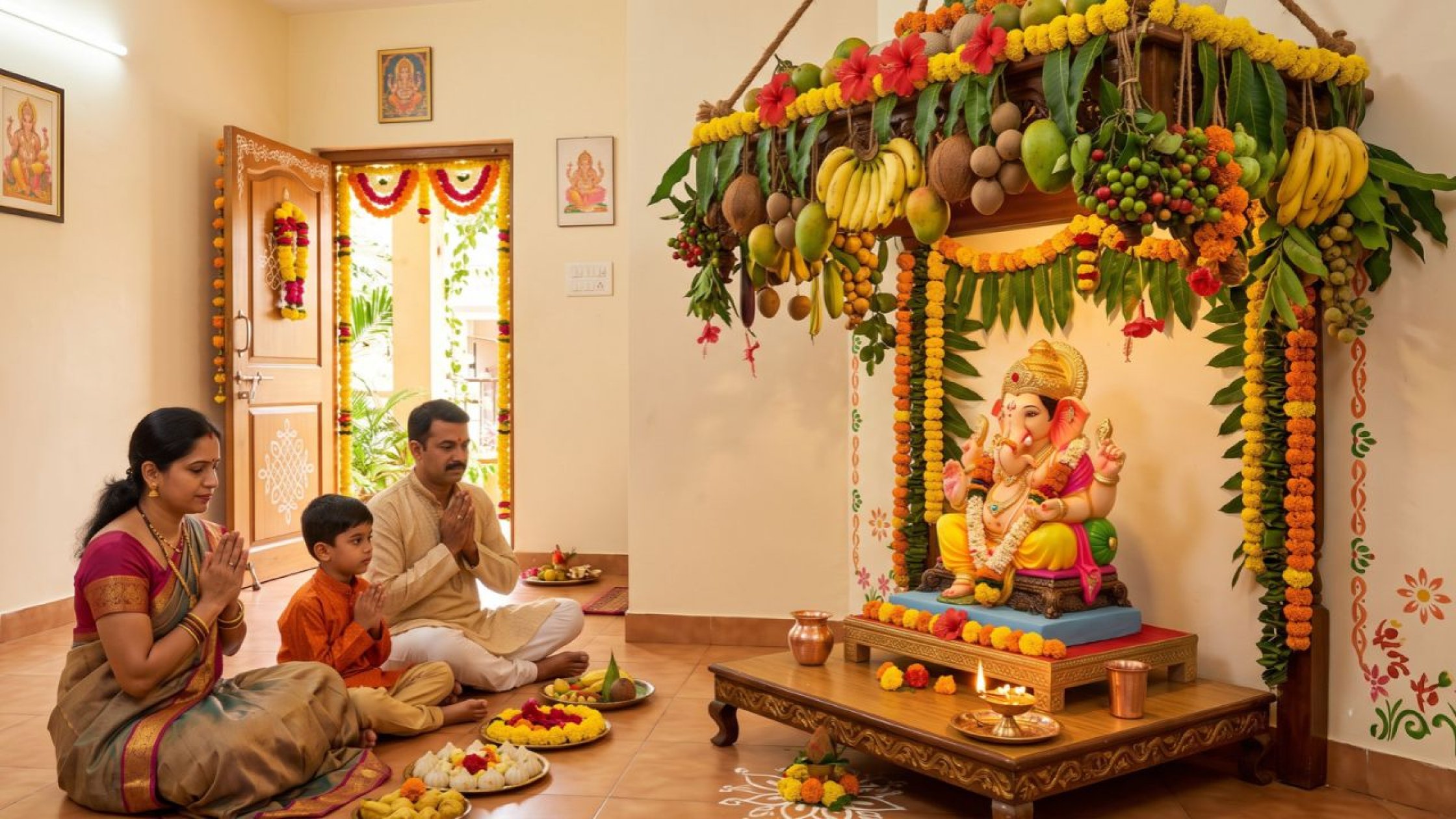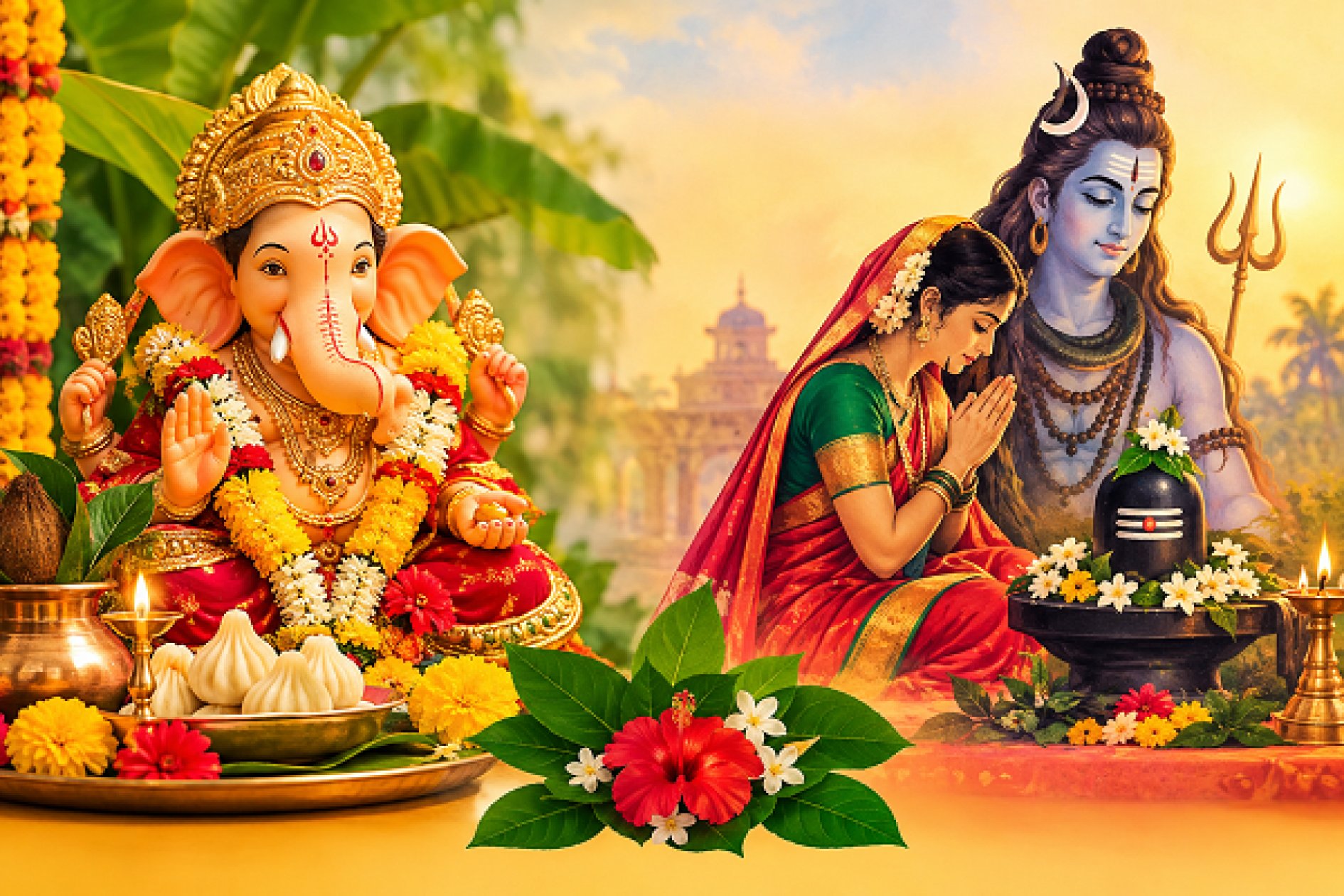
Ganesh Chaturthi, or more popularly Goa’s Chavath, is home to various traditions that have been followed for generations. From fasting on the previous day of Hartalika to some families observing it as ‘Tay’ with the traditional pudi, the rituals vary across Goan households. While the customs may differ, they carry the same faith for the families that follow them.
FESTIVAL TRADITIONS
For many homes, Chavath does not come on its own. It is Hartalika, Panchami, Anant Chaturdashi and smaller rituals that surround the festival. While Chaturthi is celebrated with fun and festivity, Hartalika is a quieter observance. Women bring home the idols of Hartalika and her sakhi, observe a day-long fast and eat uncooked food and seasonal fruits.
This year, however, Chaturthi and Hartalika fall on the same day, bringing two different sides of the festival together. While the celebrations will continue as always, the kitchen has another challenge: how to manage fasting food alongside Bappa’s naivedya on the same day.
NATURE CONNECTION
Rajendra Kerkar reflects on the relationship between the rituals and nature. He describes Hartalika as a “ritualistic eco-feministic festival” celebrated on the third day of the first fortnight of Bhadrapad in various parts of Goa by worshipping clay idols of Parvati and her sakhi.
Kerkar explains that married women as well as spinsters among the Brahmin communities observe the fast and worship the clay idols, offering seasonal flowers and 16 varieties of leaves collected for the occasion. Those observing the fast generally relish seasonal indigenous fruits, while the family is served vegetarian dishes on banana leaves.
Married Saraswat women, he adds, observe Hartalika on the same day with a picture of Goddess Parvati and their own rituals. Among non-Brahmin women, usually a picture of Parvati is worshipped along with the clay idol of Ganapati from the first day of Chavath.
IMMERSION RITUALS
In some areas of Goa, another ritual takes place before the immersion of the clay Ganapati idol. Kerkar explains that fresh water is brought in a copper or bronze pitcher and, in the evening, she is symbolically immersed in a well. Five varieties of cooked vegetables are then distributed along with a pancake of finger millet to the assembled devotees.
For the Naik Gaonkar household, Tay is traditionally associated with Goddess Parvati, Mother Earth, fertility and motherhood. The rituals also reflect Goa’s older connection with nature.
CHANGING CUSTOMS
In Sakshi’s house, however, Tay has always been observed simply. “There is no strict fast, but we do the puja and keep the tradition as part of our Chovoth celebrations,” she says. Sakshi also reflects on how traditions naturally evolve. “With women today balancing work, home and other responsibilities, it isn’t always possible to follow every practice exactly as earlier generations did,” she says. “For me, what matters is that the tradition continues within the family, even if the way we observe it today is a little different from how it was observed before.”
This connection with nature also finds expression in the sights and sounds of the festival.
For Chetan Vaman Khedekar, Tay and Chavath immediately bring to mind the clay ghumot. “For us, when we speak of Tay and Chavath, one thing that immediately comes to mind is the Matyechem Ghumat, the clay Ghumat,” he remarks. As various artis are sung to its rhythmic beats, a “prasanna vatavaran is created,” he says.
Gaurang Gokuldas Gurav points to another aspect of this relationship with nature. “While worshipping Ganesha too, there is a tradition of offering Him different kinds of leaves found in nature,” he says. He adds that another part of the celebration is the Matoli, filled with fruits and produce that have grown and ripened on the earth.
MATOLI TRADITIONS
For Sunita Naik from Balli, Tay is tied to the Matoli. “We don’t exactly have any puja, however we tie the Matoli on that day,” she notes.
Gaurang’s family follows a special tradition too, though it is connected to Visarjan rather than Hartalika. “At the time of Visarjan when Lord Ganesh is taken out of the house, rice is cooked and kept aside to dry. When the family returns after immersing the idol, the dried rice is collected and once it is dried properly, the husk is removed,” he explains.
For Arya Desai, Hartalika is also tied to a childhood memory. As a child, she remembers being given a responsibility while the elder women carried the Hartalika idols for immersion.
“I was always given the bell to hold and my aunt told me to keep ringing it till we climbed down to where our well is,” she recalls.
Perhaps it is these things that keep traditions alive. The bell carried by a child, the Matoli being tied, leaves being collected, food being prepared and the ghumot become part of how families remember Chavath. The rituals may differ from one home to another and may change with time, but they continue to find their place in the festival, carried forward within families today.