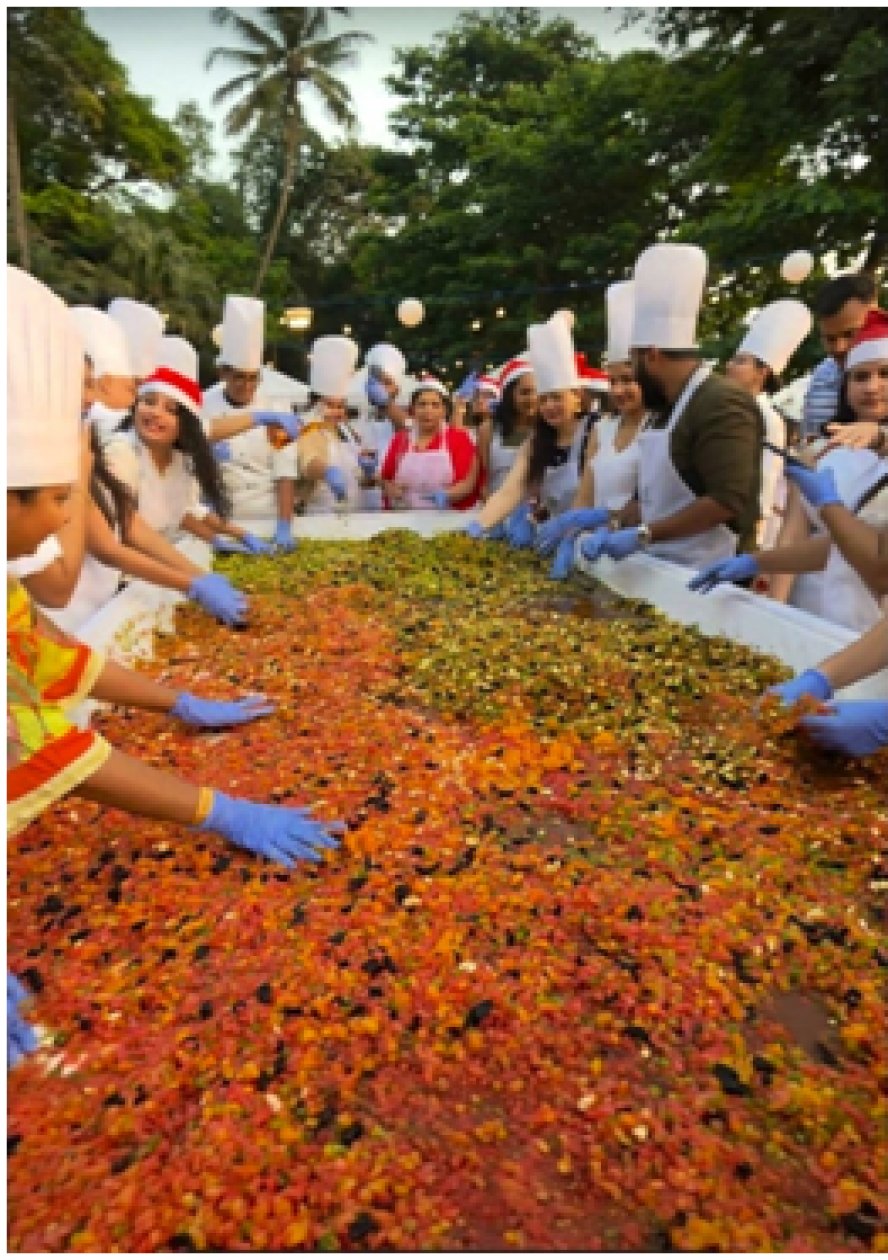
 Soaking in joy at the cake mixing ceremony at Cidade de Goa.
Atika Modassir (Oxon)
A balmy breeze blew across the Cidade de Goa Sunset Lawns, perfumed with sweet rum and salty sea, teasing our senses with the fragrant plum and candied fruit spread across the counter, matching the reds and oranges of the sunset across. The seasonal joy of anticipating the merrymaking of the holiday season enveloped us as we gathered for the fruitcake mixing ceremony, donning caps, gloves and aprons; ready to mix brandy, wine, sherry and rum into a heady fusion of currants, dates, prunes, cherries, figs and spices. Jingles hit the air as we stirred jubilantly with our hands, counting down to a Christmas cake that we would relish soon. Chef Arun Kala, Executive Chef at Taj Cidade de Goa, observed “Christmas is just around the corner, and the fruit-soaking ceremony marks the beginning of the festive season for us all. More than a culinary ritual, it is a community celebration that brings everyone together. It is an occasion to share the joy of the season, strengthen bonds and collectively usher in the Christmas and New Year festivities.”
Celebration, baked across cultures
Christmas cakes the world over symbolise familial traditions and abundance, gaining culinary distinction based on historical influences, religious practices, cultural norms and regional ingredients. A Christmas plum cake is the culmination of centuries old European baking practices, with Roman gastronomic traditions predating it with rich honey, nuts and dried fruit mixtures. The British plum cake custom presents itself over a millennia of transformation, starting with the medieval plum porridge made with grains, dried fruits, sometimes with meat, and later with spices from their colonial exploits. The 19th century Victorian era heralded the current rich form of the baked Christmas cake and the Christmas pudding which is steamed or boiled. The crown shaped Portuguese Bolo-rei, the icing coated German Stollen, the domed Italian Panettone, the sultana loaded British fruitcake, the fudgy Caribbean Black cake and the log shaped French Bûche de Noël; all celebrate the seasonal Christmas cornucopia of their lands.
The Goan Christmas double bonanza
Goa boasts of two types of festive cake delicacies- the first, is its very own golden Bolo de Batica (Baath), also known as Bolo de Rulão; made with locally sourced roasted semolina that lends its grainy texture and fresh coconut that confers its trademark flavour along with eggs, vanilla, cardamom and sugar. After resting the batter overnight to moisten the semolina for softness, it is baked to unlock its dense and crumbly texture.
Alongside the quintessentially local and unique Baath, the Goan plum fruitcake holds its own distinctive place on the table. The communal cake mixing ceremonies organised in public forums and hospitality venues across the state are a contemporary expression of family preparation rituals that take cue from the British Anglican Christmas pudding tradition of Stir-up Sunday; when Victorian communities gathered to collectively prepare the pudding, with family members taking turns to mix and stir with the opening invocation of the Anglican Collect (prayer) on the Sunday preceding Advent: “Stir up, we beseech thee, O Lord, the wills of thy faithful people…” With this prayer, they commenced stirring from east to west, memorialising the journey of the Three Wise Men and then making a wish whilst stirring thirteen ingredients embodying Christ and his twelve apostles. A silver coin and other small trinkets would often be hidden in the mixture, as tokens of luck, prosperity or love, and it would be left to mature in alcohol to develop depth of flavour.
Tradition with a twist
Nenette Fernandez of the 104 years old Mr Bakers, 1922 in Panaji has remarked in the past on receiving fewer Baath orders over Christmas. However, it has been recently seen to be sold steadily, as a tea-time snack and a popular delicacy for tourists to carry home with them. This is a heartening development that a traditional delight has not disappeared as time passes, rather it found a new place in the hearts of the younger generation, that is perennial. Even though they come from very distinct historical origins, both Goan Christmas cakes hold valuable lessons that continue to garner importance with the changing times. The Baath signifies a tradition of upholding sustainability and simplicity in celebrations, while the plum cake through its mixing ritual celebrates gathering socially to share in the labours of festivity.
The abundant flavours of joy
Yuletide treats comprise a wide array in the local festive food culture. The Portuguese tradition of consoada, preparing sweets for communal sharing on Christmas Eve, became integral to the Goan Catholic festivities and was adapted locally as kuswar. Across neighbourhoods, families gather around their kitchen tables for the preparation of kuswar delicacies like Kulkuls (crunchy ridged dough bits), Neureos (stuffed crescent pastries), Dodol (glossy jaggery pudding cubes), Bolinhas de coco (mini coconut cookies), Perad (Guava cheese), Bebinca (multi-layered caramelised desert), Doce de Grão (coconut gram sweets) and Marzipan (nutty confection). Each of these preparations stem from different cultural legacies and feature across local feasts and celebrations, but their starring role in kuswar marks the spirit of hospitality and communal sharing in Goa's Christmas celebrations.
With four PG degrees and a career spanning education and global HR leadership, the author has followed one enduring question through Oxford lecture halls, global boardrooms and her Goan homestead- what helps people and societies grow, flourish and find meaning?