


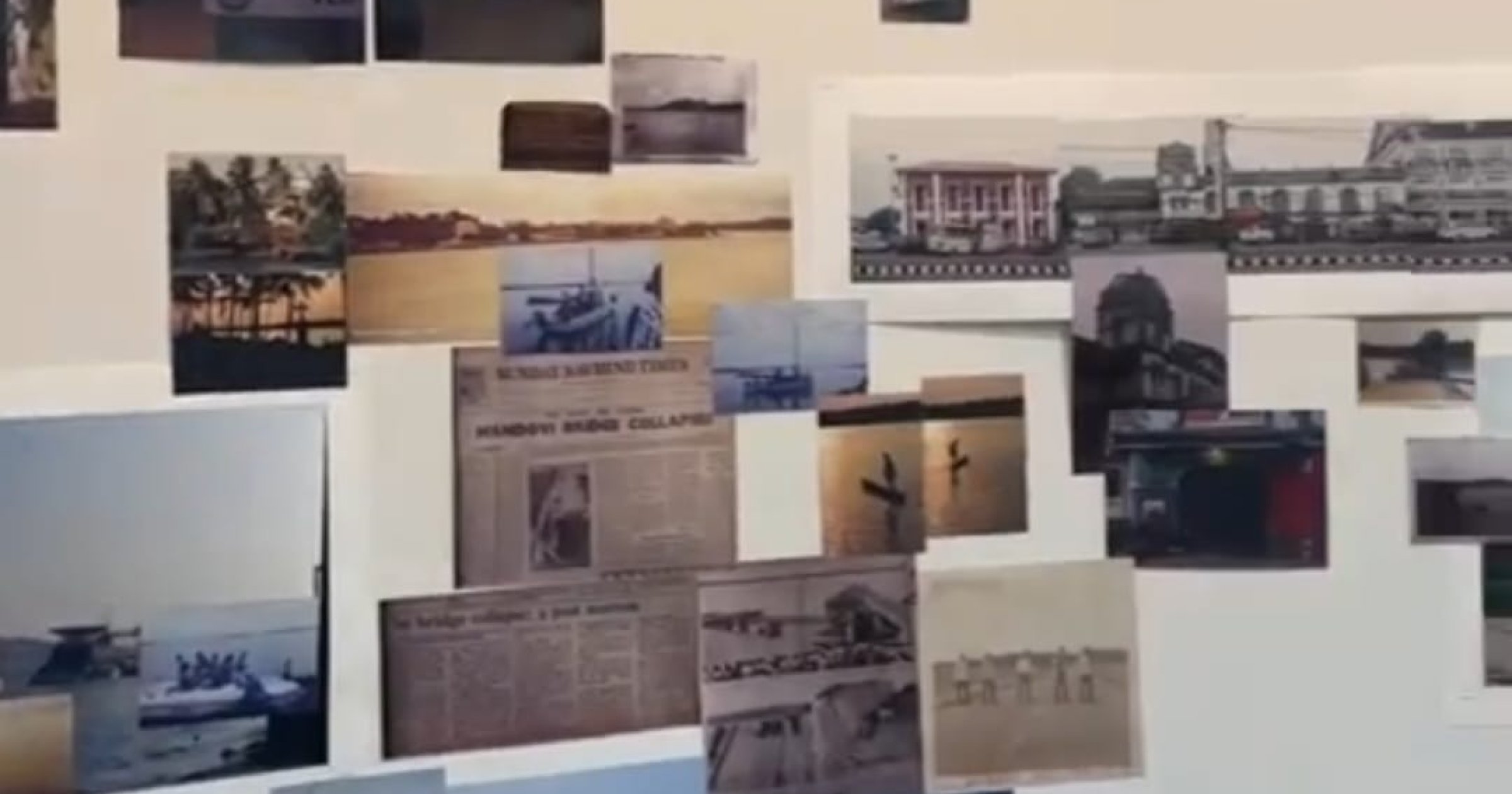
Old photo albums lie strewn across the floor as elders recount the funny anecdote that had everyone in splits the day a particular photograph was taken, a story that still brings the same laughter years later. Goa's history often survives not in museums or official records, but in yellowing photographs stored away in family cupboards and the memories they continue to evoke. Goa Familia attempts, and succeeds, in documenting these extraordinary stories of ordinary Goans.
FROM FAMILY ALUBUMS TO LIVING ARCHIVES
An evolving archive of Goan family photographs, histories and personal memorabilia is Goa Familia, co-curated by Akshay Mahajan and Lina Vincent. The project began in 2019 through their conversations with Rahaab Allana of the Alkazi Foundation. “It started with family albums and has since grown through exhibitions, films, performances and public programmes looking at migration, music, Tiatr, the Mandovi River and everyday life in Goa,” says Akshay Mahajan.
The process, he explains, is simple. Beginning with conversation, they listen as the family pieces together a history, story after story. “For me, everything begins with a conversation. We sit with the families and look through their albums while listening to the stories around the photographs,” narrates Mahajan. With the family’s permission, selected material is digitised, and the copies are returned to the family. “Very often, the photograph is only the starting point. The real archive is in the memories and stories that gather around it,” he adds.
While surrounded by so many stories, certain interactions sometimes leave a mark. For Mahajan, it was meeting Antonetta Fernandes, the mother of Marius Fernandes, Goa’s well-known festekar. “She was living with dementia, but old photographs would suddenly bring back very vivid memories of her life. It was moving to see how an image could unlock something that conversation alone could not,” he recollects.
PRESERVING MEMORIES
What interested Mahajan and Vincent the most was that the majority of Goa’s visual history is stored within family compartments rather than official records. "These still live in homes rather than formal archives. In fact, every family album holds a small part of a much larger story," he remarks. However, challenges persist. "Photographs often survive longer than the stories around them," he shares. Albums are damaged by humidity, names are forgotten, and the people who could identify faces may no longer be alive. "Trust is also important because these are intimate family histories, so we try to work slowly, listen carefully and involve families in every step," he adds.
Watching an ordinary photograph become extraordinary through conversation is his favourite part of the work they do. "A simple family portrait can suddenly open into a story about migration, music, architecture or an aspect of history that no longer exists," he says.
Goa Familia has taught Mahajan that history rarely begins in museums. “It often begins in people’s homes, in their old steel cupboards, large trunks, biscuit tins that contain anything but biscuits, and family albums. These ordinary photographs often become extraordinary records of Goa’s social and cultural history,” he notes.
NEXT GEN OF STORYTELLERS
It is this belief that also shapes his view of today's generation and their habit of documenting every moment. While youngsters are often criticised for constantly taking photographs, Mahajan sees it differently. “I think it is a good thing. Young people are not only photographing more, but they are also very open to preserving and retelling Goan stories,” he says. At the same time, he emphasises that photographs should be preserved with the stories behind them, so they continue to hold meaning long after the moment has passed.
LEGACY BEYOND PHOTOGRAPHS
As for the future of Goa Familia, he hopes that it continues to grow as a living archive. "The project has already moved beyond albums into exhibitions, films, performances and artist collaborations. There are still many oral histories and family collections waiting to be documented," he reckons.
As families turn the pages of albums that have quietly sat on shelves for decades, Goa Familia reminds us that history is not only found in monuments or official records. By preserving both the photographs and the memories they carry, Goa Familia is creating more than an archive. It is ensuring that the lives of ordinary Goans continue to be remembered, proving that some of the state's richest history has always existed quietly within its homes, waiting for someone to listen.


