


THE GOAN | PANAJI
Every heartbeat keeps the body going, yet heart health is often taken for granted until something goes wrong. With sedentary lifestyles, unhealthy eating habits, and other risk factors becoming common, heart problems are no longer seen only among older people. Even younger people are increasingly being affected by heart attacks and other cardiovascular problems.
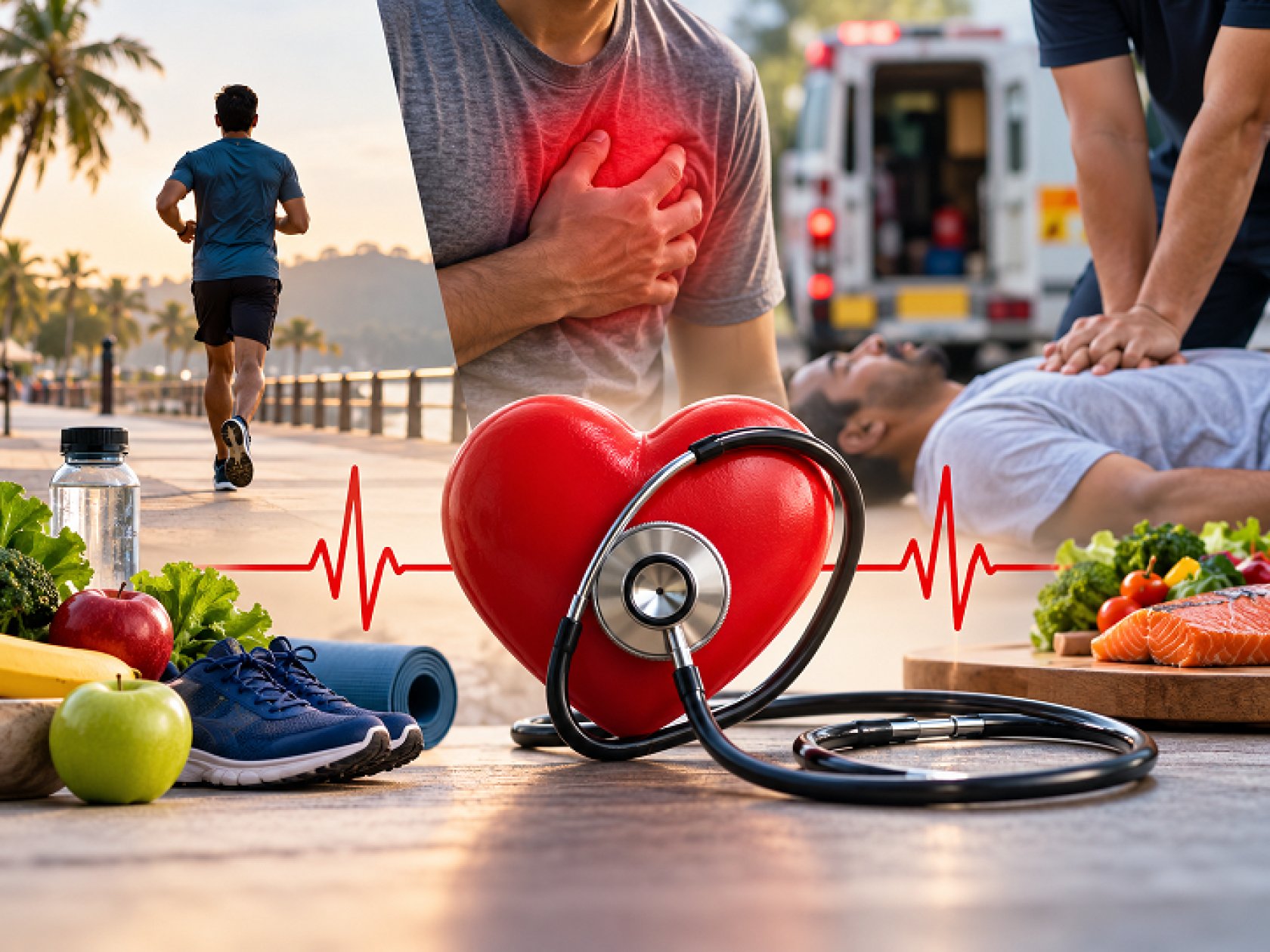
On World Heart Day, we look at what cardiologists have to say about caring for the heart, recognising symptoms, and responding during a cardiac emergency. Dr Rufino Monteiro, Consultant Physician Cardiologist and Diabetologist, points out that people often dismiss discomfort or pain in the upper abdomen as gas or acidity, upper-back pain as a muscular problem, and pain in the lower jaw as a dental issue. While calling an ambulance and seeking immediate medical attention remains crucial, some basic first-aid measures can also be taken while waiting for help. “Besides calling for medical help/ambulance, make the patient lie down comfortably; give Tablet Aspirin (150mg) & Sorbitrate tablet under the tongue,” he advises.
The time between the onset of symptoms and reaching a hospital can be critical, making it important to keep the patient comfortable and avoid any unnecessary exertion. Dr Venkatesh Malali, Consultant Interventional Cardiologist at the Department of Cardiology, Goa Medical College, has similar suggestions. “Time is extremely important in an acute heart attack situation,” he maintains. “Making the patients comfortable by making them sit or even lie down can help. While it is important not to make them exert themselves, which can worsen the condition,” he remarks, adding that while taking the patient to the nearest hospital remains of utmost priority, one should watch out for additional symptoms during that period, like blackouts, loss of consciousness, heart racing (palpitations), and breathing difficulty.
CPR awareness
While immediate medical attention is important during a heart attack, there are situations where a person may go into cardiac arrest and require resuscitation. This is where knowing basic CPR and BLS can become useful, particularly for those around the patient before medical help arrives. Although Cardiopulmonary Resuscitation, or CPR, is not a mandatory course across educational institutions in Goa and India, doctors maintain that knowing even the basics can help save a life. “Yes, CPR education and teaching the procedure is very useful in higher classes of schools, in colleges and even in society buildings, as this education can save lives as proven in other countries,” mentions Monteiro.
According to Malali, learning BLS, or basic life support, is essential knowledge. He points out that CPR is meant for cardiac arrest and not for a stable heart attack, “But even administering 'hands-only CPR' can sometimes be enough to revive the patient before the ambulance arrives,” he states. For this reason, doctors feel that CPR and resuscitation training should not be limited to medical professionals. They believe teaching young adults the knowledge and process of resuscitation is of utmost importance. “Incorporating demonstrations in schools and colleges is a step towards bringing awareness about BLS in the general public. I strongly recommend that schools and colleges in India and Goa arrange periodic demonstrations of CPR training using mannequins,” he suggests.
Emergency response
Knowing what to do in the first few minutes of a cardiac emergency can make a crucial difference. “Yes, even bystanders can do CPR if they learn the basic steps to do so,” he notes. The first step is to ensure that the patient is in a safe environment and check for responsiveness, followed by calling for help and checking breathing. If the person is not breathing normally, chest compressions should be started at 100-120 per minute. An Automated External Defibrillator can also be used if one is available.
Heart health
While knowing these basic steps can help during an emergency, awareness and prevention are equally important when it comes to heart health. World Heart Day is also an opportunity to remind people about the importance of understanding heart disease, its risk factors, and the preventive measures that can be taken. Monteiro says the day is meant to raise awareness about cardiovascular disease and educate the public about heart diseases and ways to prevent them.
This year’s theme, ‘Don’t Miss a Beat’, also focuses on the need to pay attention to heart health before a major cardiac event occurs. “The theme is particularly important as heart diseases can remain unnoticed until a major event like a heart attack, which can be catastrophic,” observes Malali. Regular cardiac evaluation and awareness of risk factors can help people keep a check on their heart health. He stresses that being aware of cardiac symptoms and not neglecting signs of heart disease are important in reducing the burden of heart disease in society.
While heart disease can sometimes strike without much warning, being aware of the symptoms and knowing how to respond can make a difference during an emergency. From recognising unusual pain and breathing difficulty to seeking immediate medical help and knowing basic CPR, timely action remains important. At the same time, regular cardiac evaluation, awareness of risk factors, and healthier lifestyle choices can help people take better care of their heart before an emergency occurs.


