DR UBALDINA NORONHA
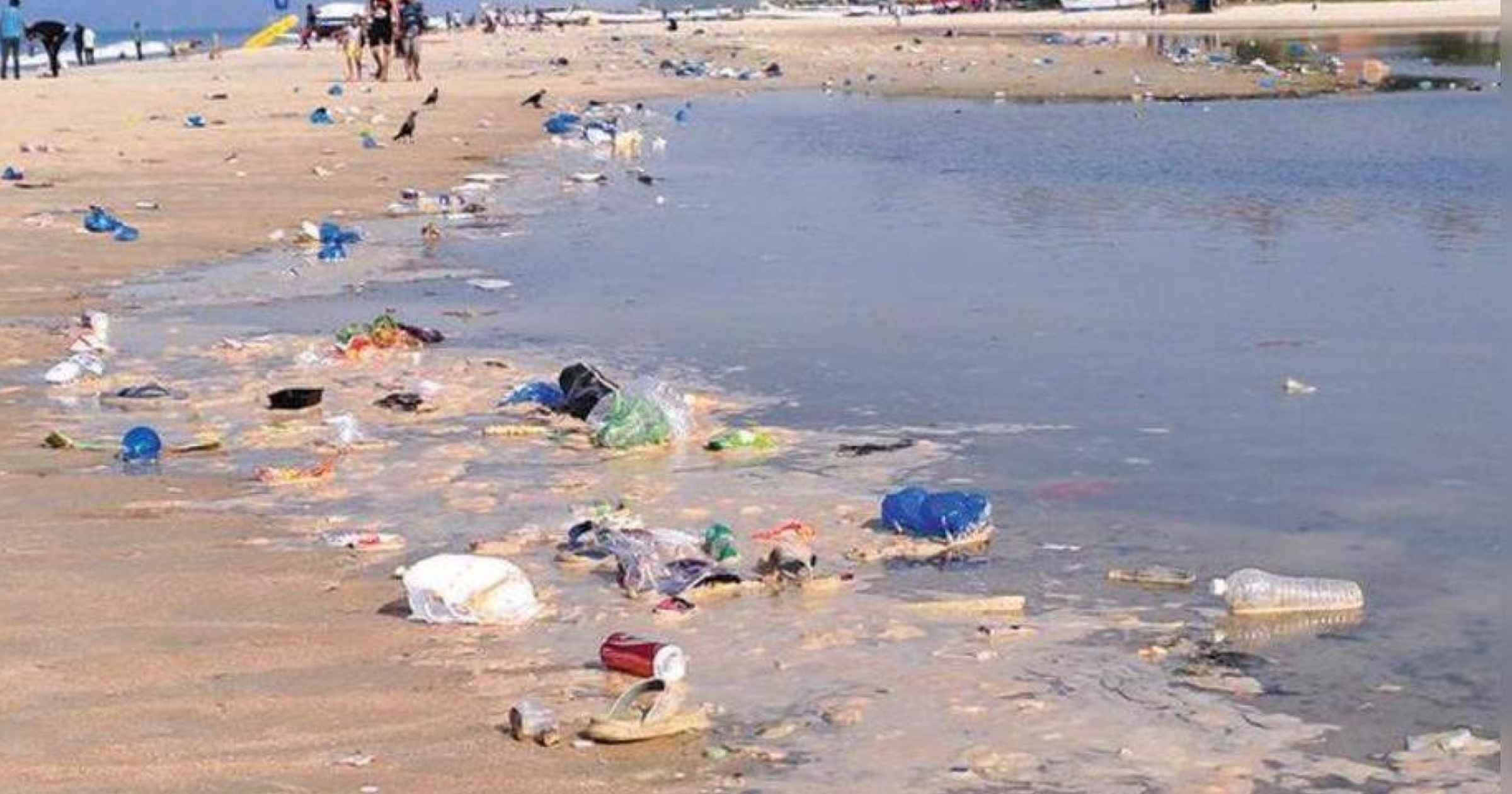
A festival was recently celebrated with rituals traditionally performed on riverbanks, lakes, ponds and on the beaches. However, photographs and videos surfaced, highlighting the aftermath of all sorts of material left scattered around the very places that had been treated as sacred only a few hours earlier.
The festival ended. And apparently so did one’s sense of responsibility. This is the same with any fairs, occasions or exhibitions held across our country. Goa repeatedly grapples with New Year’s celebrations littering the State. It raises an uncomfortable question: Why should cleaning after a public celebration or event be treated as somebody else’s job, be it sanitation workers, the municipality or well-meaning volunteers?
Lack of personal responsibility
This is not just an administrative failure. It is a civic and personal failure. We seem as a people to lack any sort of civic conscience. This behaviour cuts across educational qualifications and socio-economic classes.
The real issue is the way many of us understand public space. The roads and its footpaths, the playgrounds, the waterbodies and the neighbour’s vacant plot are treated as nobody’s property. That is precisely where the problem begins. Public space belongs to all of us. It is not a dumping ground merely because it is not inside our gate. All public spaces require a sense of shared civic inheritance. To throw garbage there, is a transfer of one’s own mess onto somebody else.
Why do we litter?
Social psychologist Robert Cialdini and his colleagues, in a well-known study on littering, found that people’s behaviour changed according to which norm was more visible. If a place is already dirty, we conclude that littering is normal there. If it is clean, we are more likely to preserve it.
This is why the same person who would never throw rubbish in a foreign country may do so freely at home. Abroad, the fear of penalty is real, but so is the social environment. The person does not necessarily become a better human being overnight; the environment makes better behaviour easier and bad behaviour costlier.
This littering behaviour connects closely with the ‘broken windows’ idea, associated with James Q. Wilson and George Kelling. They argued that visible disorder, such as litter, graffiti, broken glass, and neglected public property, sends a signal that nobody cares.
There is also the problem of ‘diffused responsibility’. In a crowd, each person assumes that someone else will act. And then there is ‘out-group indifference’. We care intensely about the cleanliness of our own spaces. But the moment waste can be pushed into a non-personal space, our moral imagination shrinks. The garbage simply becomes someone else’s problem.
Rethinking ‘cleanliness is Godliness’
This is where Mahatma Gandhi’s idea of ‘cleanliness is Godliness’ becomes relevant again. For him, sanitation was a moral and political question. He believed that a free India could not be a filthy India. He insisted that members of his ashram should clean their own surroundings rather than treat cleaning as work to be assigned only to others.
The Swachh Bharat Mission, launched by the government in 2014, consciously invoked Gandhi’s legacy. It was described as a mass movement for behaviour change, sanitation and waste management. But a mission cannot succeed only through slogans, photographs, pledges and one-day cleanliness drives. The very need for an annual Swachhata campaign tells us an uncomfortable truth that cleanliness has not yet become an instinct in our own lives. The problem is that we have not sufficiently internalised the idea that public cleanliness is personal responsibility.
Gandhi understood that cleanliness is not merely about brooms and dustbins. It is about dignity, equality and shared responsibility. If we believe cleaning is somebody else’s lowly work, we will never build a clean society. When we believe that keeping public spaces clean is part of citizenship, then we begin to change the mindset.
Perhaps we can begin by asking ourselves the question after every public celebration is simple: ‘Did we leave the place as it was, or was it better than we found it?’
(The writer is Associate Professor, Department of Psychology, St Xavier’s College, Mapusa)