THE GOAN
PANAJI
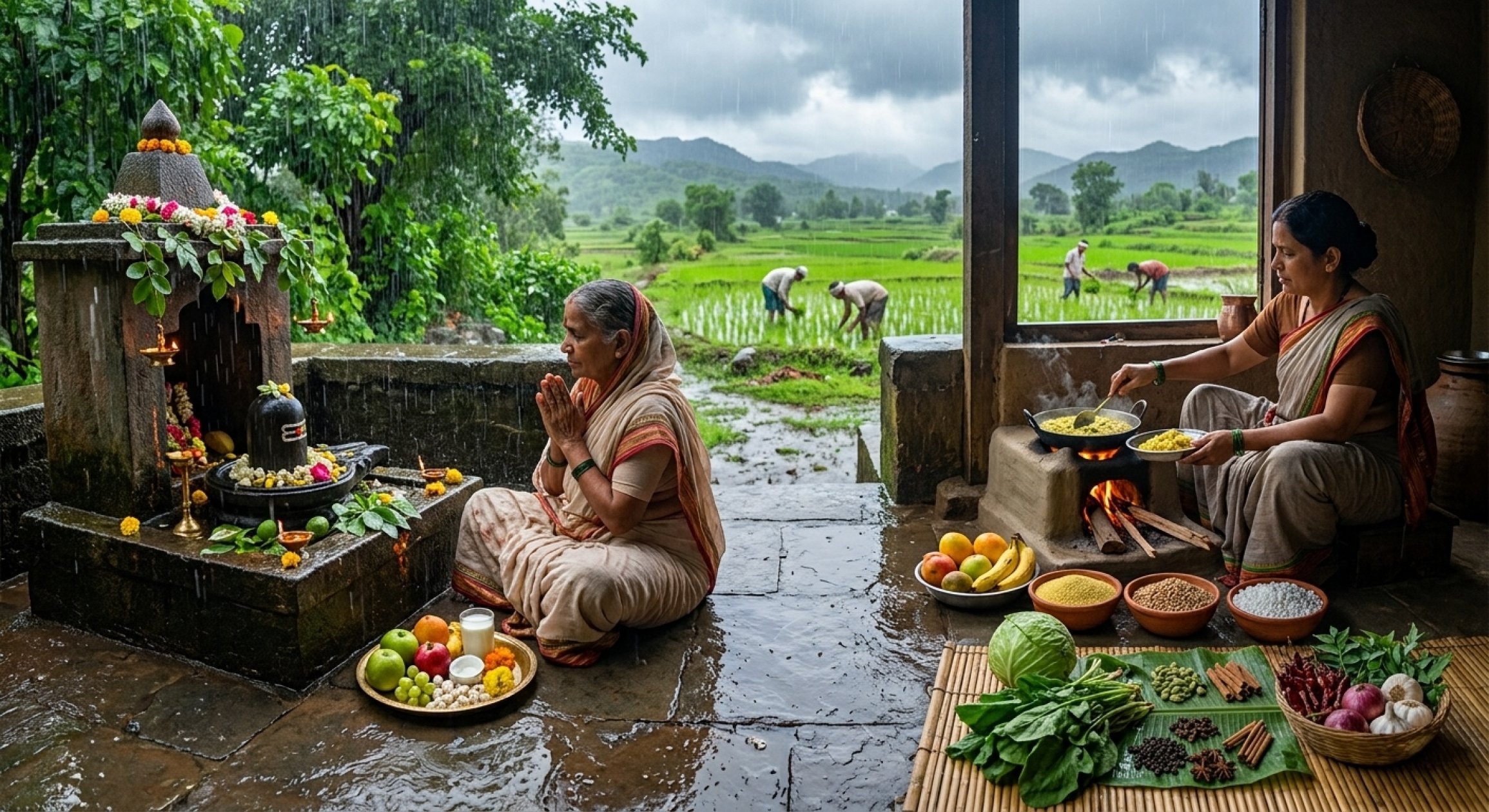
Shravan arrives with rain, prayers, and a long list of things that can and cannot be eaten. For generations, families have followed these customs without questioning them. Fasting on Mondays, giving up meat, avoiding certain vegetables, and even refraining from cutting hair have all been passed down as part of the month dedicated to Lord Shiva. But behind some of these practices lies something more than faith.
Shravan comes during the monsoon, a time when the weather, food habits, and even daily routines change. Ayurveda has long viewed the rainy season as a period when digestion can become weaker and has recommended lighter, freshly prepared food. Modern food safety also points to a genuine concern during the rains, as damp conditions and contaminated water can allow bacteria, viruses, and parasites to spread more easily.
Religiously, Monday is associated with Lord Shiva and devotees fast as an act of prayer and devotion. There is, however, another way of looking at the practice. Fasting often means eating less, eating simpler food, or avoiding heavy meals for a day. During the monsoon, choosing freshly cooked and simpler meals can be a sensible seasonal habit. The useful part of a traditional fast may be the break it gives from heavy, rich, and frequently eaten food.
Then there is the familiar Shravan rule of avoiding meat and fish. The religious explanation is simple: the month is devoted to prayer, restraint, and devotion to Lord Shiva. Shiva is also worshipped as Pashupatinath, the lord of animals, giving the practice an added spiritual meaning. There is also a seasonal side to the tradition. The monsoon is a period when food can spoil faster if it is not stored or cooked properly. Fish has another interesting connection with the rains. The monsoon is an important breeding period for several aquatic species, which is why fishing restrictions are also used in India to protect fish stocks during the season. Goa, for instance, has an annual monsoon fishing ban on mechanised fishing. While this is not the sole reason behind the religious practice of avoiding fish in Shravan, the seasonal overlap does make the tradition interesting from an ecological point of view.
What about onion and garlic? The usual religious explanation comes from their place in sattvic food traditions, where some devotees avoid them. The practical explanation often heard is that underground vegetables could come into contact with muddy or contaminated water during the rains. There is some truth to the larger food-safety concern, since monsoon conditions can increase contamination risks. Therefore, there is a risk that vegetables going underground are at a higher risk of coming into contact with worms, insects, or other creatures dwelling underground.
Even the popular fasting foods tell us something about the season. Sabudana, barnyard millet, buckwheat, amaranth, makhana, and fruits are common during vrat. The problem comes when fasting turns into a plate full of deep-fried sabudana vadas, fried potatoes, and sugary foods. A fast can be religiously followed and still be heavy on the body.
And then comes one of the more unusual Shravan traditions: not cutting hair or nails. There is no scientific evidence that cutting hair during Shravan is harmful. The stronger explanation is cultural. Shravan is a month associated with rain, fertility, and growth. The fields are turning green, crops are growing, and farmers are looking forward to the harvest. Not cutting something that grows naturally can therefore be understood as a symbolic respect for growth and abundance.
Perhaps that is what makes Shravan interesting. Not every ritual needs a scientific explanation, and not every traditional belief should be labelled as science. Some belong entirely to faith. Others may have developed from the practical realities of living through an Indian monsoon. So, is Shravan about religion or science? Maybe the answer is both, but in different ways. The prayers belong to faith; the fasting belongs to devotion, while some of the food restrictions also reflect an understanding of the season. What began as a way of living with the rains was passed down through generations as tradition. Today, we may understand the reasons differently, but the old practices still offer an interesting reminder: sometimes, our ancestors noticed the season long before science gave it a name.