


Income Tax Day
THE GOAN
PANAJI
Few things can unite people quite like the mention of income tax. The moment the words are uttered, conversations shift from holiday plans to deductions, deadlines and sighs. But beyond the panic, where does our tax money actually go, who has to pay the taxes, and are all those tax myths and financial reels really true?
Understanding tax
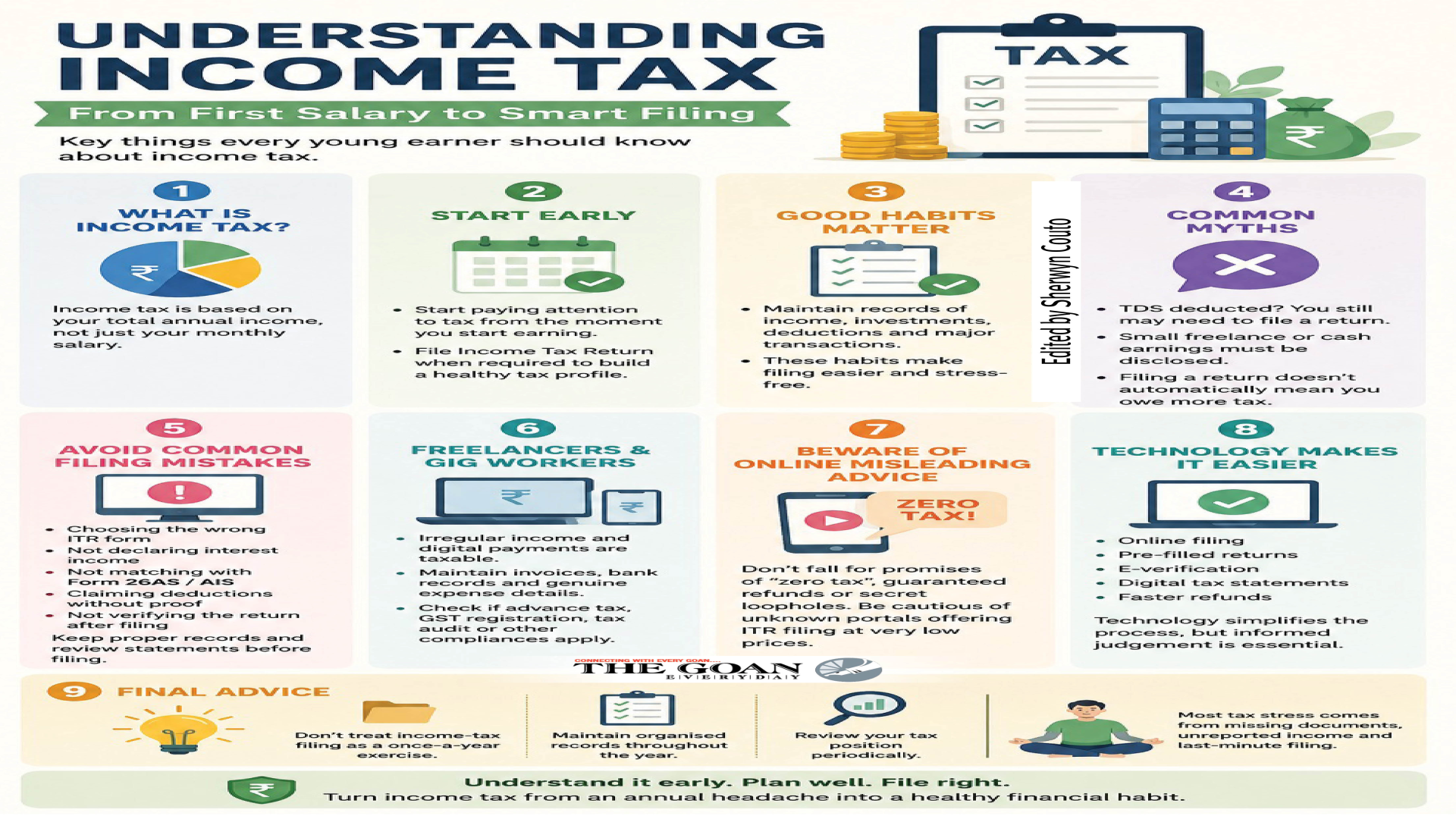
Observed across the country on July 24, Income Tax Day is a significant day for a growing economy like India. Yet the phrase income tax somehow raises more questions than it answers. With countless reels promising "how to pay zero tax" doing the rounds, it has become one of the most confusing parts of managing money, especially for young earners. The first salary brings excitement. The second brings budgeting. And before you know it, you are staring at a screen full of numbers and graphs as you hit another adult milestone: income tax.
Even those whose income is below the taxable limit should not ignore the system, he says. "A person should start paying attention to tax from the moment they begin earning, even if their income is not yet taxable." Filing an Income Tax Return is not only a statutory requirement in some cases but also helps build a healthy tax profile over time.
Building habits
Yet, despite becoming a regular part of working life, it continues to be surrounded by myths and half-truths. "The first thing to understand is that income tax is based on one's total annual income, not merely your monthly salary," explains CA Gaurav Kenkre. His advice to first-time earners is simple. “From the very first salary, develop the habit of maintaining records of income, investments, deductions and major financial transactions,” he says.
Common myths
That said, misconceptions continue to persist. One of the most common, according to Kenkre, is that once tax has been deducted at source, there is no need to file a return. "People also wrongly believe that small freelance or cash earnings need not be disclosed, or that filing a return automatically means additional tax must be paid," he says. In reality, each person's tax liability depends on the nature and total amount of their income. Despite becoming a regular part of working life, Income Tax continues to be surrounded by myths and half-truths. "The first thing to understand is that income tax is based on one's total annual income, not merely your monthly salary," explains Kenkre.
Filing errors
Mistakes during filing are equally common. Choosing the wrong return form, forgetting to declare interest income, failing to match returns with Form 26AS and the Annual Information Statement, claiming deductions without supporting documents and not verifying the return after filing are some of the errors he frequently sees. Most of these, he says, can be avoided by keeping proper records and reviewing tax statements before filing.
Freelancer taxes
As more young professionals move away from traditional jobs into freelancing, gig work and start-ups, tax planning becomes even more important. Irregular income or payments received through digital platforms are still taxable. Freelancers should maintain invoices, bank records, and details of genuine business expenses, and also check whether advance tax, GST registration, tax audit, or other compliances apply, rather than treating such earnings as informal pocket money.
Online advice
The rise of social media has only added to the confusion. Scroll through finance content, and you are likely to come across videos promising "zero tax", guaranteed refunds or secret loopholes. "Nowadays, some online portals also promise ITR filings for extremely nominal fees. Portals like that are suspicious concerning the quality of advice and accuracy of filings," he cautions.
Simplifying tax
At the same time, technology has undeniably made the process easier. Online filing, pre-filled returns, electronic verification, digital tax statements and quicker refunds have simplified what was once a lengthy process. But, as Kenkre points out, technology can only simplify the procedure. It cannot replace informed judgement when it comes to understanding tax laws and different sources of income. If he could change one thing about the system, it would be to make it easier for ordinary taxpayers to understand. "I would create a truly simplified, plain-language return, supported by one consolidated and fully reconciled annual tax statement," he says.
Final advice
Until then, he says, taxpayers can make the process far less stressful by adopting better habits throughout the year. So his biggest piece of advice? "Do not treat income-tax filing as a once-a-year exercise. Maintain organised records throughout the year and review your tax position periodically," he reckons. Most tax-related stress, he says, comes not from paying tax itself but from missing documents, unreported income and last-minute filing. Thus, while Income tax may never become anyone's favourite conversation, understanding it early can turn it from an annual headache into a healthy financial habit.


