THE GOAN NETWORK
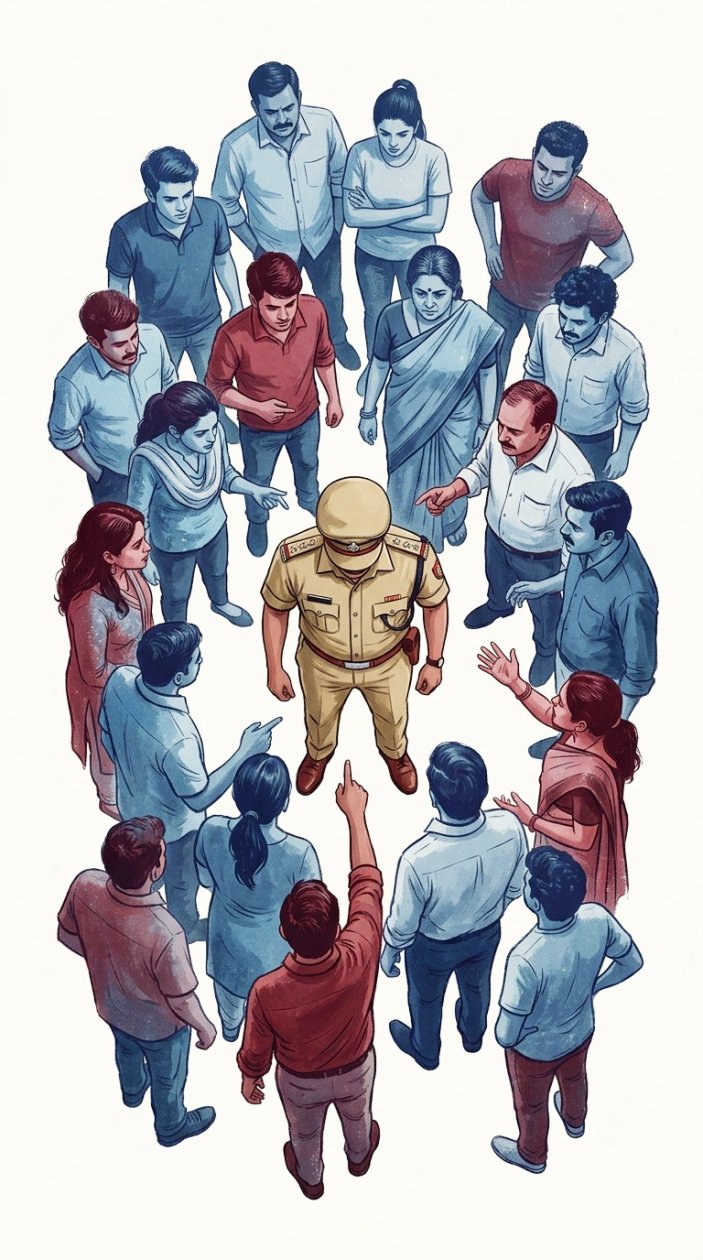
A fight breaks out, an accident occurs, or a crime is committed; the police are often among the first to arrive at the scene. Yet, what happens when those who are meant to protect us need to be protected themselves? A police officer steps out of a vehicle after receiving a call, expecting to do what the uniform demands: control a situation, respond to a complaint, and keep the peace. Sometimes a group refuses to cooperate. And sometimes, before the situation can be brought under control, the officer himself becomes the target.
ATTACKS RAISE CONCERNS
The recent news highlighted in The Goan edition dated August 18, 2026, reported that videos of a chaotic confrontation at the Sanguem police station had gone viral, showing political actors allegedly threatening the men in khaki. In the past two years, police personnel in different parts of the state have allegedly faced abuse, obstruction, and physical attacks while performing their duties. The same news report also mentioned a police officer who was attacked following a minor road accident in Mapusa. A woman sub-inspector was assaulted by a group in Fatorda last August; during the same month, PCR staff were attacked in Vasco. More recently, an errant motorist allegedly threatened and pushed an on-duty traffic constable at Malim junction. Thus, recent incidents in Goa involving attacks on police personnel have raised concerns over whether public behaviour towards law enforcement is becoming increasingly confrontational.
RESPECTING MEN IN UNIFORM
The public reaction, as a whole, is indeed straightforward: no disagreement or fight can justify physically attacking a police officer. While the police are expected to maintain law and order in public, non-cooperation and attempts to prevent them from carrying out their duties affect more than just the individual officer. “The police are doing their job of maintaining peace and order. If such actions take place and the police let it go or do not take action, it sends a wrong message to others,” remarks senior citizen Anton D’Souza, adding that nowadays everyone must be taught to respect those who are performing their duty. An attack on a policeman can result in delayed action during an emergency, encourage others to challenge authority, try and create a dangerous environment for everyone present, while sending the message that one can get away with such actions.
QUESTIONING AUTHORITY
The Sanguem incident involved an alleged confrontation at the police station, during which police said one of the political actors and others threatened and obstructed personnel on duty, leading to the registration of a case and their subsequent arrest. Yet, even with action being taken, the question remains. While some believe that the police force commands respect, not everyone is of the same view. “There was a recent case of police brutality as well. Although action has been taken there too, I believe it is a matter of give respect and get respect,” states sociology student Shane Lobo, while asserting that he is in no way justifying the crime.
“People have every right to question the police if they feel they are being treated unfairly. But there is a difference between questioning an officer and abusing or attacking one,” mentions NCC cadet Shriya Kamat. “If there is a complaint, there are legal ways to address it. Violence cannot always be the answer,” she says.
CHANGING ATTITUDE
Some also point to a wider change in public behaviour. Ritika Naik, an assistant professor, believes the recent incidents also reflect a larger change in the way people respond to disagreements and authority. “People today are becoming increasingly impatient and confrontational. A small disagreement can quickly turn into an argument, and then violence. This is not just about the police, but about the way we are reacting to conflict in everyday life,” she says. At the same time, she adds, questioning authority and demanding accountability should not be confused with taking the law into one’s own hands. “There is a proper way to raise a complaint. Once people begin threatening or attacking those who are performing their duty, it becomes a matter of concern,” she reckons.
In the end, respect for the uniform and accountability within the force cannot be separated. People have the right to question, criticise and file complaints against police personnel when they believe they have been treated unfairly. The police, in turn, must also be held accountable for misconduct. But the line is crossed when a disagreement turns into threats, obstruction or violence. As Goa witnesses more such confrontations, the larger challenge will be to ensure that the uniform commands respect without placing those who wear it above accountability.