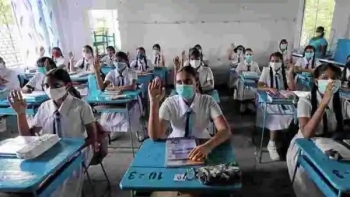
The G20 EdWG starting yesterday, is deliberating to make technology-enabled learning more inclusive, qualitative, and collaborative at every level.
India has convened the G20 Leaders' Summit for the first time this year after it assumed the G20 Presidency from Indonesia in December last year and will continue till November 30, 2023. Chennai is set to host the first G20 Education Working Group (EdWG), a 2-day meeting starting yesterday, i.e. on February 1 and 2.
The Global twenty, or the G20, is an economic cooperation formed on September 26, 1999 with 20 members, the European Union and 19 other countries. Each year the member country that has the presidency invites the guest countries to the G20 meetings.
The Argentine G20 presidency in 2018 proposed the creation of the G20 EdWG, affirming that everyone has the right to education. The idea was to establish programmes for vulnerable and less digitally literate groups such as young women and rural, and illiterate populations. Given that 85% of youth live in developing countries and about one-fourth of them are excluded from education, training or work.
The term ‘inclusive education’ was first brought to light in Canada, followed by the USA and Great Britain and refers to ‘education for all’ without discrimination against gender, caste, language, socioeconomic conditions, or disability. The EdWG recognises that the barriers to schooling persist across all levels of education, including for youth, women and girls, who are central to a more prosperous, peaceful, stable and sustainable society.
A study by Weiner and Tardis in 2004 compared special students brought up in segregated environments-Ã -vis those raised in an inclusive environment. It was found that the students bought up in an inclusive environment demonstrated better social competencies, communication, and motor skills. Thus, inclusive education can significantly help reduce discrimination against children and promote equality, access and rights to education and care by bringing all children into a single classroom.
During the two days of deliberations in Chennai, the EdWG will focus on ensuring inclusive, equitable, and quality education for all. To keep the bridge between education and skills intact, lifelong learning opportunities are also in focus.
Today inclusive education’ is widely accepted as an ideal central to proven social goals for educational systems. Instead of looking at diversity as a challenge, it is an opportunity to enrich learning and improve social relations. The ‘Agenda for Sustainable Development 2030’ and the ‘Sustainable Development Goals’ (SDGs) spell out to make efforts and ensure that ‘no one is left behind’.
The theme of the Chennai Meet is ‘One Earth, One Family, One Future’ and carries forward the deliberations held under past presidencies. The aim is to address the problems preventing the full transformational potential of education from being realised. Four priority areas have been identified for deliberations in line with the theme, namely, address significant issues that learners across the world are encountering; further the use of technology in education; enable a relook at the teaching and learning methods; and encourage collaboration to make education more relevant to learners.
India, in recent years, has taken strident steps towards inclusive education. The Indian Constitution commands our government to foster all-inclusive development in every walk of life, including education and enlightenment, and follow no discrimination based on gender, caste or creed. Over the years, successive governments have built and strengthened the education infrastructure to make equitable and inclusive education possible.
The entire thrust of the New Education Policy (NEP) is built around inclusion and equity for youth and children receiving education. Including technology in classrooms through various government interventions has been some of the most effective ways to promote inclusion. A significant focus is on learning in the vernacular or regional languages.
India could primarily benefit from EdWG inputs to address the main challenge of brightening up the future and ensuring high-quality and inclusive education systems in a rapidly changing society. The EdWG may assist in identifying relevant skills and policies to foster active citizenship committed to sustainable development and give India’s existing efforts a great fillip. Further, it is also imperative for the EdWG to develop measures to establish articulated mechanisms for the international financing of education.
In the past G20 EdWG, the focus has been on strengthening educational systems. Themes like educational poverty, universal quality education, continuity of learning in times of crisis, and supporting teachers have been discussed. The earlier presidencies have also discussed issues related to the changing nature of work and the challenges posed by Covid19 pandemic. In this light, the Education Ministry of our country is looking forward to EdWG to realise the full transformative potential of education and learning from the various shared innovative practices.
The second G20 EdWG is scheduled in Amritsar on March16-17, the 3rd Meeting is scheduled in Bhubaneswar on April 25-27, and the 4th Meeting is in Pune on June 20 -21. The G20 EdWG resonates with India’s ancient belief that the world is one family. To find solutions to the planet’s everyday challenges, we must envision and act together, including in education.
It is expected that the EdWG will provide an opportunity to share what India has achieved in the education sector on a global platform. At the same time, it will also be a chance to learn and highlight the best practices from around the world.