The State's strength lies in its natural beauty, cultural heritage, music, cuisine, and the warmth of its people
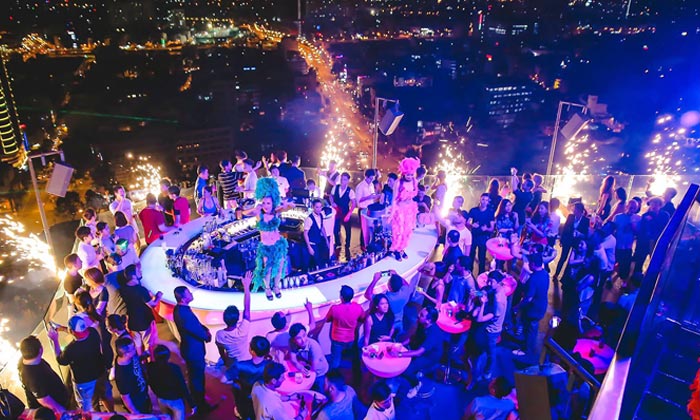
The recent fire at a nightclub in Arpora has understandably focused public attention on safety lapses, regulatory failures, and accountability. Yet, running parallel to these urgent concerns is a deeper and more uncomfortable question that has received far less scrutiny: the normalisation and commercial exploitation of obscenity as a business model within Goa’s nightlife economy. Videos circulating widely on social media from the said establishment depict a stage spectacle deliberately centred on a scantily clad female performer, with the clear intent of drawing crowds, increasing footfall, and stimulating alcohol sales. This was not incidental entertainment. It was the product being sold.
Obscenity as
revenue strategy
Across several nightclubs and casino spaces in Goa, both offshore and onshore, the same formula has been repeatedly deployed. A sexually provocative performance is positioned as the principal attraction, marketed overtly and sometimes crudely as part of the “Goa experience”. The commercial logic is straightforward: sexualised spectacle increases consumption, prolongs patron presence, and inflates profits. What is troubling is not merely the presence of such performances, but their deliberate use as a tool of economic inducement. Obscenity, in these contexts, is not accidental or artistic; it is transactional.
The legal position
on obscenity
Indian criminal law has never treated obscenity as a morally neutral commodity. Section 292 of the Indian Penal Code, 1860, criminalised the sale, circulation, and public exhibition of obscene material, recognising that certain forms of representation undermine public decency and social order. The Bharatiya Nyaya Sanhita, 2023, which replaces the IPC, retains this normative stance through corresponding provisions under Section 294 & S. 296 which deal with obscene acts and representations in public spaces. The underlying principle remains intact: public display or commercial circulation of obscenity is an offence, regardless of whether it is wrapped in the language of entertainment or tourism.
The Supreme Court has consistently drawn a distinction between genuine artistic expression and obscenity. In Bobby Arts International v Union of India (1996), the Court acknowledged that nudity or sexuality, when integral to artistic or narrative purpose and not intended to arouse base instincts, may fall within the protective ambit of freedom of expression. That reasoning, however, offers no shelter to performances whose sole purpose is sexual provocation for commercial gain. When the female body is reduced to a marketing instrument, stripped of narrative context, cultural grounding, or artistic intent, the claim of protected expression collapses.
Cultural context and
territorial morality
Obscenity cannot be assessed in abstraction. Indian jurisprudence has repeatedly emphasised the relevance of community standards and social context. What may be tolerated or culturally embedded in one society does not automatically acquire legitimacy when transplanted into another. Goa’s cultural history does not include the public commodification of women’s bodies as entertainment for male consumption. The Goan social fabric, rooted in close-knit families, mutual respect, and a strong sense of dignity accorded to women as mothers, caregivers, and equal participants in social life, stands in stark contrast to the spectacle being promoted in these establishments.
A particularly disturbing aspect of this phenomenon is the recruitment of economically vulnerable women from outside India to perform in such environments. When a woman is brought from a distant country, often with limited bargaining power, and placed on a stage to be openly objectified by patrons, the transaction cannot be sanitised as harmless entertainment. It reflects a deeper form of exploitation, where economic disparity is leveraged to convert femininity into a consumable product. This practice insults not only the individual woman involved but the very idea of womanhood as deserving of dignity and respect.
Goa’s legislative
intent to protect itself
Goa’s own legislative history reveals a conscious attempt to shield its society from precisely such excesses. During the tenure of the late Manohar Parrikar, restrictions were imposed barring Goans from entering offshore casinos. This policy decision was not arbitrary. It reflected a clear legislative intent to insulate Goan society from the corrosive social effects of unrestrained gambling and allied hedonistic practices. The objective was to preserve the sociological composure of the State while allowing tourism to function within defined limits. When obscenity is now openly advertised and disseminated through social media, the spirit of that protective intent is undermined.
The aggressive marketing of obscenity under the banner of tourism creates a dangerous distortion. Goa is projected, both nationally and internationally, as a space that endorses sexualised entertainment as a defining feature of its identity. This narrative falsely implicates Goans as willing participants in a culture they neither created nor accepted. The State becomes a reluctant billboard for practices imposed by commercial operators whose primary allegiance is to profit, not to local values or long-term social wellbeing.
Gender dignity and
public responsibility
At its core, the issue is one of gender dignity. A society that permits the routine objectification of women in public commercial spaces sends a message about what it values and what it tolerates. The argument here is not prudishness or moral policing. It is about recognising that women are not instruments for driving beverage sales or gambling revenues. When regulatory authorities look away, obscenity is effectively licensed, and the law is reduced to a spectator.
Goa’s future as a tourist destination does not depend on the sale of obscenity. Its strength lies in its natural beauty, cultural heritage, music, cuisine, and the warmth of its people. A course correction is required, grounded in strict enforcement of existing criminal law, clearer licensing conditions, and a refusal to allow commercial interests to redefine social norms. Capitalising on obscenity is not a Goan tradition. It is an imported distortion that deserves neither tolerance nor silence.