Under the Constitution of India, betting and gambling fall under the State List, empowering individual States to regulate or prohibit gambling and gaming activities. Goa is one of the few States in India where casino gaming is legally permitted under the Goa Public Gambling Act, 1976. Though the Act reflects a colonial-era gambling framework, it has been amended from time to time to accommodate modern casino-led gaming activities.
Goa has permitted casino operations both onshore and offshore. Onshore gaming operations are restricted to five-star hotels, while offshore operations are restricted to floating vessels in the river Mandovi. The term ‘offshore’ is technically a misnomer as these vessels operate within territorial mainland waters. Presently, there are 13 licensed casinos in Goa comprising six offshore casinos and seven onshore casinos. The key difference is that live gaming is permitted only at offshore casinos, while onshore casinos are restricted to machine-based games.
Casinos are considered a tourism product that attracts visitors, generates government revenue, provides employment opportunities and creates a multiplier effect in the economy. On the flip side, there are social, economic and financial concerns relating to environmental impact, limited employment benefits for Goans, gambling addiction, household distress and loss of savings among vulnerable groups. Other policy grey areas include the extent of business turnover, gaps between revenue potential and actual realisation, loopholes in the regulatory framework, vulnerability to hawala transactions, money laundering, tax evasion, revenue leakages, unaccounted rent-seeking arrangements and illegal payments within the ecosystem.
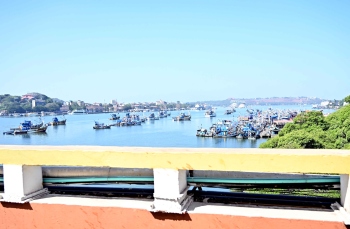
The ongoing debate over relocating floating casinos from the river Mandovi has drawn considerable public attention, with residents and environmental groups raising concerns about the impact on Goa’s lifeline waterway. One major concern is river pollution arising from the discharge of sewage, grey water, food waste and oily wastewater, along with the risk of fuel leaks and contamination from generators and marine vessels. Increased tourism activity around casino jetties also contributes to solid waste generation.
Another concern relates to aquatic ecology, including disturbance to fish breeding zones and biodiversity, underwater noise and vibration from engines, generators and support vessels, and artificial lighting that may affect aquatic life and river ecology. River congestion and navigation are also important issues, particularly the obstruction of navigation channels used by ferries, fishing boats and tourism vessels, increased accident risks due to the concentration of large stationary vessels, and added pressure on river transport infrastructure.
Shoreline and sedimentation issues have also been highlighted. Critics point to possible destabilisation of the riverbed due to anchoring activities, alterations to tidal flow and sediment movement, and erosion near jetties and docking points. Air and noise pollution is another concern, with diesel generators contributing to emissions and continuous music, traffic and late-night activity affecting nearby residential areas. Increased vehicular congestion near embarkation points along the Mandovi riverfront adds to these concerns.
From a visual and heritage perspective, critics argue that large illuminated vessels alter the aesthetic character of the riverfront and may affect heritage zones and the city’s scenic tourism appeal. Disaster and safety risks are also cited, including fire hazards on vessels carrying large crowds, challenges in emergency evacuation during floods or storms, and concerns regarding vessel carrying capacity and disaster preparedness. Carbon and sustainability issues arise from the heavy energy demand required for air-conditioning, lighting, gaming operations and hospitality services.
Supporters of the industry argue that many of these concerns can be effectively addressed through scientific waste-treatment systems, environmental clearances, strict maritime safety standards, shore-based power supply, cleaner fuel systems and continuous monitoring by regulatory authorities such as the pollution-control board and port authorities. The Government of Goa has responded by freezing the number of offshore casino licences and expressing willingness to explore relocation options. As the government continues to search for a suitable relocation site, the future of the Mandovi as both a cultural symbol and ecological asset remains at the centre of one of Goa’s most contentious development debates. The Government has repeatedly stated that floating casino vessels cannot remain permanently in the river. However, the timeframe for identifying an alternative location has been repeatedly extended since 2013. The latest extension allowing floating casinos to operate in the Mandovi expires on 31 March 2027.
As the Government faces the NIMBY (Not In My Back Yard) syndrome while identifying an alternate location, the chances of relocation appear remote. Consequently, the most likely outcome may be the continued extension of operational permissions under the pretext of identifying a suitable site until legal intervention and judicial directions compel the permanent shutdown of casino operations in the river Mandovi.
Therefore, it is advisable for the Government to begin exploring alternative options immediately. The principal attraction of floating casinos is live gaming, which is currently not permitted in land-based casinos. One option would be to allow live gaming in onshore casinos while permanently shutting down floating casino operations, thereby clearing the Mandovi river of casino vessels.
Alternatively, the Government may explore creation of such a special gaming zone at the Manohar Parrikar Airport city side development area, which has restricted access away from local population. This will be a win-win proposition for Mandovi river floating casinos, the Government of Goa and the GMR. Upon shutting floating casino operations, the Mandovi river may be fully utilized for water sports activities, recreational navigation, river cruises and yacht tourism. Moreover, the ongoing PPP project of setting up of Goa Institute of Maritime Excellence by the Ganpat University on the bank of Mandovi river will get sufficient room for maritime education, skill development and training including diving courses which will add value for Goa’s future marine economy.
(The author is a retired senor bureaucrat)