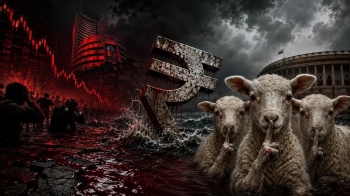
Once diesel prices, LPG costs, and procurement expenses rise simultaneously, the viability of establishments such as khanawadis begins weakening rapidly
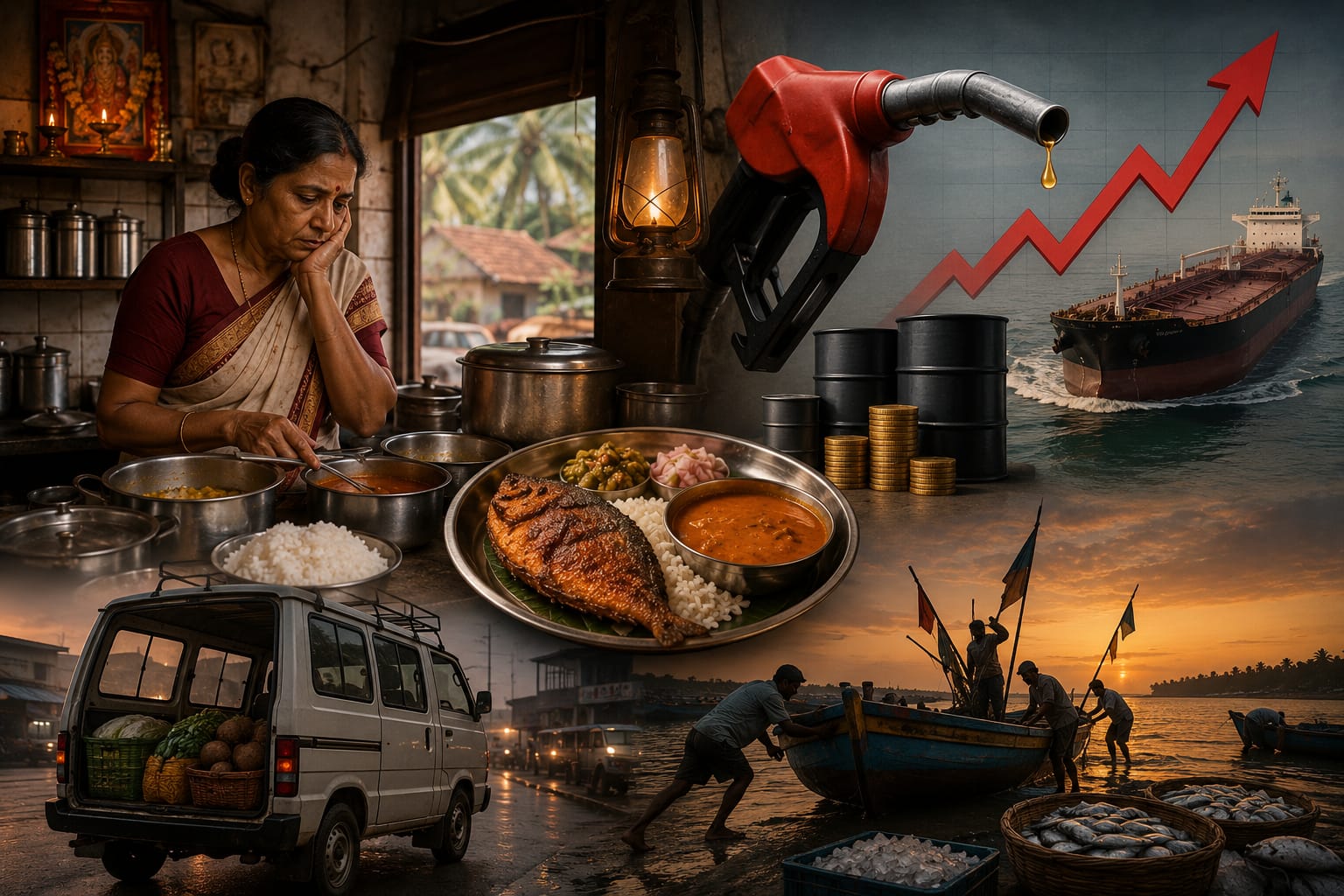
In Aquem, Margao, there existed a modest khanawadi that had quietly become part of the daily rhythm of the locality. Homely Goan food used to be prepared there by women of the household and served in the traditional form of fish curry rice. Fried fish, umane fish curry, vegetables, steamed rice, pickle, and coconut based preparations would together arrive upon a steel plate that reflected not merely culinary preference, but Goa’s coastal identity itself. The khanawadi functioned as an affordable source of nutrition for office workers, labourers, students, and residents who depended upon simple local meals at noon.
For months, the establishment had continued its routine through increasing fuel costs and supply disruptions. Every morning, the male member of the household would reportedly travel in a Maruti Omni van to procure fish, vegetables, spices, rice, coconut, and cooking essentials from the market. LPG cylinders would fuel the stoves upon which the food was prepared. Electricity would keep the establishment operational. Diesel and petrol would sustain the transport chain through which ingredients arrived from Goa, Karnataka, and Maharashtra. Yet for the past two months, the khanawadi has remained shut during lunch hours. One of Margao’s quiet community spaces has slowly disappeared beneath the weight of rising operational costs and uncertain supply chains.
Strait and stove
The closure of a small khanawadi in Margao may appear disconnected from geopolitical tensions unfolding near the Strait of Hormuz. Nevertheless, modern economies no longer permit such separation. The disruption of maritime oil supply routes between the Persian Gulf and importing nations eventually manifests itself not merely through international commodity charts, but through LPG cylinders, diesel invoices, electricity costs, and shrinking food margins within small establishments struggling to survive inflationary pressure.
India continues to remain heavily dependent upon imported crude oil. Even if diplomatic negotiations eventually restore stability between the United States and Iran, the physical resumption of energy movement through the Strait of Hormuz would not occur overnight. Shipping schedules, naval clearance, tanker availability, insurance restoration, freight recalibration, and refinery synchronization require weeks or months before adequate supply normalisation can occur.
Goa’s fuel sensitive economy
Goa is frequently described as a tourism driven economy. Yet it may more accurately be described as a fuel sensitive service economy. Tourism itself depends upon aviation fuel, taxi transport, freight logistics, refrigeration systems, fisheries, hospitality operations, and uninterrupted electricity supply. Every increase in fuel cost silently travels through the wider economic chain before eventually reaching the consumer.
The effect is not felt equally across society. Luxury tourism establishments may absorb temporary inflationary shocks. Large corporations may hedge operational risks. Small businesses cannot. A family operated khanawadi, a fish vendor, a taxi operator, or a roadside eatery survives upon thin margins and predictable operational expenditure. Once diesel prices, LPG costs, and procurement expenses rise simultaneously, the viability of such establishments begins weakening rapidly.
Hidden burden upon fisheries
Goa’s dependence upon fish as a primary source of nutrition also intensifies the consequences of energy disruption. Trawler operations require diesel. Ice transport requires electricity. The movement of fish from jetties to local markets depends upon transportation networks already strained by fuel inflation. Once operational expenditure rises, the increased burden is transferred through the supply chain until the final consumer pays substantially more for a staple item that once remained affordable.
The consequences extend beyond food preference. Fish curry rice is deeply embedded within Goa’s cultural and nutritional framework. Once the affordability of such meals weakens, the economic strain begins affecting daily social life itself.
Imported inflation reaches households
The burden of imported inflation is often misunderstood as a matter affecting only petrol pumps. In reality, every sector dependent upon transport and electricity begins absorbing the pressure. Vegetables arriving from neighbouring States become costlier. Construction materials become expensive to transport. Delivery chains become unstable. Small restaurants increase prices while simultaneously losing customers unwilling to spend more during uncertain economic conditions.
Goa’s economy possesses one of India’s highest per capita income levels. The State contains affluent real estate zones and high consumption sectors, while simultaneously depending upon thousands of small and medium enterprises that remain vulnerable to even temporary increases in fuel linked expenditure.
The State government itself remains exposed to prolonged energy disruption. Higher fuel prices eventually influence transport expenditure, electricity procurement, inflation management, and economic assistance measures. Goa’s fiscal deficit already remains significant, while indirect taxation continues to constitute a major revenue source. Fuel taxation therefore becomes politically sensitive because governments benefit from increased tax collection even as citizens and small businesses absorb operational distress.
Building economic resilience
Temporary relief mechanisms may therefore require consideration during periods of prolonged global energy instability. Public transport support, targeted fisheries assistance, and temporary relief for vulnerable micro enterprises may help preserve economic activity during transitionary periods. Simultaneously, long-term resilience must also be pursued through decentralised energy planning.
The expansion of rooftop solar systems, local renewable infrastructure, electric mobility, and reduced dependence upon imported fuel may no longer be viewed merely as environmental idealism. They increasingly represent instruments of economic survival. Every unit of locally generated energy reduces exposure to distant geopolitical shocks whose consequences eventually arrive upon Goa’s coastline through inflation and disrupted supply chains.
The closure of a modest khanawadi in Aquem may never appear within economic surveys or international market reports. Yet such disappearances reveal the true human consequences of energy disruption more clearly than commodity charts ever could. Between the Strait of Hormuz and a lunch plate in Margao exists a vast economic chain sustained by fuel, transport, electricity, labour, and fragile operational margins.
The real test before Goa is not whether global energy markets eventually stabilise. The greater challenge lies in whether local economic systems can remain resilient enough to survive the uncertain transition between geopolitical disruption and the restoration of stable energy supply.