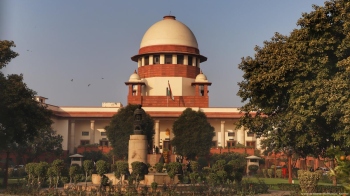
The media and public often frame the tenure of Chief Justices in terms of their personal legacies, achievements, and controversies.
While the outgoing 50th Chief Justice of India has been lauded for his progressive judgments and his efforts to modernise the judiciary, rationality demands introspection as to whether such praise obscures the fact that judicial reforms and landmark rulings are the result of collective deliberation.
Concomitantly, criticisms aimed at a Chief Justice should not overshadow the systemic challenges faced by the judiciary, such as delays in justice delivery, pendency of cases, and inconsistent application of legal principles.
Role of the
Chief Justice
A plain reading of Granville Austin’s book entitled: Working a Democratic Constitution (1999) offers a comprehensive analysis into the interplay of political forces, judicial interpretations, and societal changes.
The Supreme Court of India, as the apex judicial institution, embodies a forward-looking vision rooted in its constitutional mandate to adapt to evolving societal needs while remaining anchored in the enduring judicial traditions of the past. The Court's decision-making reflects a dynamic interplay between precedent and progressive interpretation, ensuring the continuity of legal principles while addressing contemporary challenges. The role of the Chief Justice of India is pivotal in this framework, serving not merely as the administrative head but as a guardian of these judicial traditions. By upholding the practices of deliberative consensus, rigorous legal reasoning, and respect for the rule of law, the CJI ensures that the Court's judgments resonate with both historical wisdom and future aspirations. This harmonious blend of tradition and innovation fortifies the Supreme Court’s legitimacy and reinforces its role as a custodian of constitutional values in an ever-changing world (Austin, 1999)
Framework of
normative jurisprudence
Normative jurisprudence is that branch of legal philosophy which emphasises how laws ought to function in promoting justice, equality, and societal welfare.
Robin West's book entitled: Normative Jurisprudence: An Introduction (2011), has explored the role of moral values and legal ideals in shaping legal scholarship and judicial reasoning aptly.
While drawing inspiration from the article entitled: "Normative Jurisprudence, Utilitarianism, and Theories of Justice" by Twining, W. (2009): it becomes evident that by exploring the ethical foundations and purposes of laws which play a crucial role in shaping the Supreme Court’s approach to constitutional interpretation and judicial decision-making, the Chief Justice of India (CJI), holds a unique position in steering the Court’s jurisprudential direction, particularly in cases involving constitutional morality, fundamental rights, and public interest litigation. Through the allocation of benches, selection of cases for priority hearing, and the framing of legal questions, the CJI can influence the trajectory of the Court’s normative commitments.
The Supreme Court of India is enshrined in the Constitution as a Court of Record under Article 129, emphasising its dual role as a custodian of rights and a repository of authoritative judicial precedents. As a Court of Record, its decisions are binding on all lower courts, and its judgments hold evidentiary value.
Moreover, the Supreme Court is vested with the power to punish for contempt of itself, reinforcing its authority to maintain the sanctity of judicial proceedings and uphold public confidence in the judiciary.
These powers, crucial for preserving the rule of law, are conferred upon the institution by the Constitution. Thus the authority to penalise contempt and safeguard fundamental rights belongs to the Supreme Court as an enduring constitutional body, transcending the tenure and individuality of any Chief Justice.
Challenges in humanising
Chief Justices
In analysing the tenure of the recently retired 50th Chief Justice and that of his predecessors-in-office, it's essential to focus on the preservation of the Supreme Court's institutional values rather than personalising the roles of individual Chief Justices. This approach would ensure that the judiciary's integrity and independence remain paramount, irrespective of the personalities leading it.
The Supreme Court's legitimacy hinges on its adherence to core institutional values:
Judicial independence: Maintaining autonomy from the executive and legislative branches is crucial to prevent undue influence and uphold impartiality.
Adherence to precedent: Consistency in rulings fosters legal stability.
Transparency and accountability: Open proceedings and clear reasoning in judgments enhance the Court's credibility.
Focusing on the personal attributes or actions of Chief Justices can overshadow the Court's collective role and its foundational principles:
Perception of bias: Personal relationships or actions by a Chief Justice, such as participating in events with political figures, can lead to perceptions of bias.
Erosion of collegiality: Emphasising individual legacies may detract from the collaborative nature of the Court's decision-making process, which relies on collective deliberation.
To uphold the Supreme Court's institutional values, the following measures would be vital:
Implementing ethical guidelines: Establishing a formal code of conduct for Supreme Court justices can provide clear ethical standards.
Ensuring transparent appointments: A transparent and merit-based process for appointing justices reinforces public confidence in the judiciary's independence.
Promoting judicial restraint: Chief Justices should exercise caution in their public engagements to avoid actions that could be perceived as compromising the Court's neutrality.
Challenges for new
Chief Justice
As the new Chief Justice assumes office, they inherit not only the responsibilities of their predecessors but also the legacy of an institution grappling with evolving societal expectations.
Pendency of cases and delayed justice: One of the most critical issues is the backlog of cases. While technological advancements, such as e-filing and virtual hearings, have been implemented, systemic reforms are needed to expedite the judicial process.
Balancing innovation and stability: The judiciary must adapt to changing legal landscapes, particularly in areas like digital rights, environmental law, and economic regulation.
Maintaining institutional independence: The new Chief Justice must navigate the delicate relationship between the judiciary and other branches of government. Upholding the principle of separation of powers is essential.