


The South-West monsoon hasn’t yet descended on the state with all its splash and for three-quarters of June, the skies swapped between clouds and sunshine. The tempting golden yellow mangoes might have disappeared from our markets, but the IMD Goa keeps issuing ‘yellow alerts’ cautioning the fishermen against venturing into sea. A niz Goemkar can brave a stormy sea with calm and confidence, but monsoonal sobriety of lunch without 'nustem' due to ban on fishing, drives him nuts!
Of course, we have a rich range of compensatory cuisine concocted out of that salted fish treasure hiding in some obscure corner of the kitchen. The plate and the palate though unhappy; Goemkar endures this gastronomic abstinence, admiring the emerald-green landscape beneath the grey skies torn with jiggered streaks of lightning.
The adage ‘unpredictable as the weather’ seems to be true to the core here, for the rains in recent decades have become very erratic and unpredictable, exposing the flaws in our monsoon modelling and reiterating our limited understanding of Indian climatology.
For a country like India, where agriculture accounts for close to 44% of total employment, but the sector contributing to only 17.5% to 18% of GDP, these monsoonal anomalies can have serious consequences, pushing people out of agriculture, triggering a rural-urban demographic change and complicating the food security scenario for a populous nation. For Goa, paddy is a water-intensive crop, and a profitable harvest can only be guaranteed by timely and normal monsoons.
The disturbed, out of sync hydrological cycle can spell doom and disaster for several crucial ecosystems’ services and goods too. To start with the recharge of ground water aquifers if delayed can cause acute scarcity of that ‘elixir of life’ for all living beings, not just human. There are reports that the water levels in our water reservoirs is agonisingly low and is plummeting fast.
The dried-up water bodies if not filled in time can disrupt a few water-dependent ecological communities, upset species composition and affect aquatic biodiversity. The frogs surface with the first showers and engage in mate enticement. But if the rains do not continue and the dry spell extends, the requisite aquatic microhabitat does not emerge and even if the frogs successfully mate and lay eggs, in absence of water it is dead-end for the species. Many arboreal crabs that occupy hollows on tree trunks, also need rainwater to survive. Many seasonal freshwater fish similarly depend on rain waters and serve as important source of protein for hinterland consumers.
In coastal Salcete with the first rain I see young and old flocking to the fields with gunny sacks, raising my suspicion and curiosity. But my fears are unfounded as these rain enthusiasts only collect 'konge' (apple snails) and 'thigur' (catfish) that appear almost de novo, when the soil gets drenched with rains. The locals do not overexploit and use this for subsistence, as also sell this produce in village markets to supplement their income. Rain is fair to the hinterland population too and offers to them the protein rich mushrooms and a rich variety of fish in their forest streams.
An eagerly awaited rain-reliant celebration in June is Sao Joao. Wearing colourful 'kopels' (wreath made of creepers and flowers) on the head, the celebrants jump into waterbodies as a tribute to St John the Baptist! In recent years with erratic rains, the organisers of this festival instal sprinklers and showers to simulate rain for the young revellers; a pointer that even climate change cannot dilute our celebratory fervour!
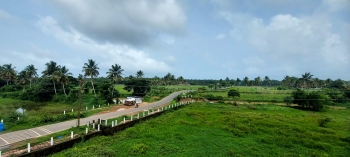
The scenic village of Nuvem turns into a surreal ‘picture perfect landscape’ with the new and the old, juxtaposed structures of the Igreja de Mae do Pobres standing tall and sombre amidst the expansive lush green paddy fields; overlooking the python like bypass that has transacted this serene village.
Behind the church, the otherwise silent Sal rivulet swells and roars again, and the cormorants display their somersaults diving into the water to catch fish, the meditative egrets stay put in the fields scouting for fish and snails. The patient kingfishers perched on low hanging branches demonstrate perseverance and focus. The industrious farming community of this village and their farm animals toil in the paddy fields relentlessly, all through the rainy season.
The stretch between the Nuvem bypass and the Duncolim lake is mesmerising in this season, with narrow serpentine village roads occupied by buffaloes that rejoice in the pouring rains. The village folks try their luck with fishhooks, while the solitary whitewashed cross shaded by the palm fronds add a touch of mysticism to the place. The Duncolim waterbody is my personal favourite and has been my ‘living laboratory’ for several years. This wetland supports rich array of bird life, besides fish that reside in it. Magically, it transforms into a cropland during the rains, incentivising its protection by the locals.
The village boasts of Goa’s first and only women’s college nestled amidst the perennially green hills, a kind gift of 32 acres by philanthropist Dona Thelma Da Costa Lourenco to the visionary sisters of Apostolic Carmel congregation. The college campus is alluring in this wet season, bustling with young cheerful students from nearby villages, as also faraway towns.
I have seen this village transform alarmingly over the last thirty-five monsoons, silently braving the onslaught of vulgar modernisation and painful demographic invasion. The once unapologetically wild hills have now been tamed by massive concrete. The narrow winding village roads where the cyclists paddled their humble bicycles, have changed to four-lane highways that tempt high-end speeding vehicles of the rich and the famous. First rain makes these asphalted surfaces slippery and treacherous, thus accident prone. So far, Salcete has held its fort against market forces and Saxttikars have zealously guarded and preserved their geographic and cultural identity resisting the lure of sub-urban glitter. But that sense of belongingness is fast vanishing like the timely rainfalls of the bygone years.


