


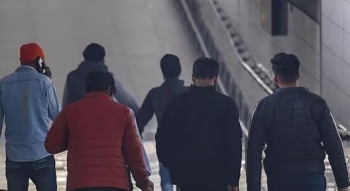
The plight of Indians deported from the United States offers a reflection of the unyielding pressures that drive migration, shedding light on the harsh realities that so many are forced to confront. For these individuals, migration was a desperate escape from the socio-economic hardships that have plagued their lives. They sought a better future: improved livelihoods, better opportunities, and a hope for a life far removed from the crushing poverty they had known.
Instead, they found themselves living in the shadows, undocumented, vulnerable, and caught in a constant state of fear. Living in an alien land without legal protection, their existence was a tough balancing act of going to work, returning home, and never daring to imagine a future outside the margins.
Deprived of rights to formal employment or even basic identification, these migrants lived in a continuous state of limbo. While it may have appeared ordinary to the outside world, their daily lives were far from normal. The threat of deportation was a shadow they could never escape, knowing that one day it would fall on them, pulling them back to the very life they had tried to flee.
For those deported, it is the destruction of a dream, the collapse of all they had hoped to build. They return home, not just empty-handed but often weighed down by debts incurred in their dangerous journey.
Returning as a “failed Dunki” comes with its own inescapable burden. This would be with a deep sense of shame. It is a stigma that would show the individual as one who failed to achieve the ultimate aspiration: the dream for a better life. For these returnees, migration was the last desperate gamble for a better future. Its consequences will be felt not only by the individual but by their families and local communities as well.
There is a profound social cost. Families might be ostracised, sometimes even shunned by neighbours who view the return as a mark of poor decision-making. The shame of returning empty-handed erodes the individual’s self-worth, and the sense of loss becomes more than just financial”it is personal, it is cultural, and it is psychological.
So, what hope can we offer these returnees, the “failed Dunkis,” whose aspirations have been dashed? How can we address the profound emotional and psychological toll that follows such a painful return? The answer lies not in turning a blind eye to their plight, but in taking responsibility for the larger systemic failures that led them to seek refuge abroad in the first place.
If India’s vast population is to have a chance at thriving within its own borders, we must first accept that migration is, in general, a response to the failures within our society. The lack of good jobs, the paucity of quality education, and the absence of reliable healthcare systems are all factors that compel millions to take the dangerous leap of seeking a life elsewhere. The nearly 725,000 undocumented Indian immigrants in the US, as reported in a 2024 Pew Research study, indicate a deep, persistent issue that demands our attention.
By this logic, most of us living in the top 10 cities of India are, in fact, descendants of multi-generational migrants who left their native villages in search of a better life”whether for education, employment, marriage, or opportunities for prosperity. Our ancestors, driven by similar aspirations for a brighter future, left behind what they knew in pursuit of hope and survival. Just as we do today, they sought to improve their circumstances by moving to urban centres, embracing the unknown in the hope of a better life.
The stigma associated with these returnees must be re-framed. Migration, whether successful or unsuccessful, has always been part of human history.
To offer real hope to these returnees, we must invest in creating opportunities at home. The governments, alongside the private sector, must step up to provide tangible support: jobs, accessible capital, and reliable social safety nets. The solution lies not just in attracting investments to the top-tier cities but in decentralising opportunity. Small towns and villages need to become economic powerhouses where people can find work, build businesses, and create sustainable futures. This will provide an alternative to the dangerous gamble of migration, offering individuals a reason to stay or return to a country with a future that feels worth investing in.
Beyond economic opportunities, it is crucial that we address the social stigma attached to the “failed Dunki.” The cultural narrative around migration needs to shift from one of failure to one of empathy. Those who return, often scarred by the experience, must not be met with scorn but with compassion. They deserve opportunities to rebuild, not just economically but also socially. Skill development programs, financial assistance, and crucially, emotional and psychological support, must be part of a broader reintegration strategy. We must foster an environment that provides counselling, peer networks, and community-driven initiatives to help these individuals restore their self-worth and reintegrate into society.
There is a message for all of us. The status quo must change. We must focus on building a more inclusive, equitable India, one where no citizen feels the need to risk everything to find a better life abroad. If we are to build a nation where every person has the opportunity to live with dignity, we must focus on providing the resources and opportunities necessary for people to thrive at home.
The future of India depends on our ability to create a society where success is not defined by foreign shores but by the prospects available at home. Only then can we ensure that the learnings of the “failed Dunki” are not in vain.
-- FPJ


