


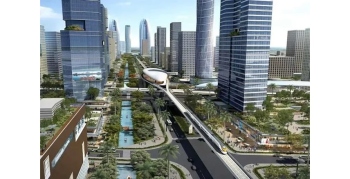
From ancient to modern cities, the history of urban design is a chronicle of humanity’s ongoing efforts to create organized, efficient, and liveable spaces.
As one of the world’s earliest major urban civilizations, the Indus Valley civilization was known for its advanced city planning and sophisticated urban infrastructure.
As the earliest known urban culture in the Indian subcontinent; with grid-pattern streets, advanced drainage and sanitation systems, standardized brick construction, and organized communal features like large public baths and wells in homes, major cities like Harappa and Mohenjo-Daro demonstrated a high level of planning and public health focus, setting a precedent for urban development in the Bronze Age.
‘Hampi’ was the glorious capital of the Vijayanagara Empire, a powerful Hindu Kingdom that ruled Southern India from the 14th to 16th centuries.
Ancient ‘Hampi’ was relevant to urban planning for its sophisticated medieval layout featuring distinct zones for administrative, religious, and residential purposes, integrated infrastructure like aqueducts, and ‘Pushkarnis’ (water tanks), and a hierarchical distribution of markets and royal enclaves.
The ancient site demonstrates how thoughtful urban design and governance can create a functional and glorious metropolis, offering timeless lessons in land management and sustainable city development.
We thus note that urban design and governance were integrated parts of ancient Indian history. Ancient Indian texts like ‘Arthashastra’ and the ‘Vastushastra’, guided the layout, infrastructure, and social organization of cities and towns.
With colonial rule, India’s urban landscape was transformed by the introduction of planned layouts which focused on heath and sanitation.
New cities and areas within existing cities were designed with broad roads, gardens, and infrastructure for public health. New administrative bodies were established to manage the expanding urban areas under colonial rule.
From the early urban centres of the Indus Valley civilization to the elaborate planned cities and forts built by various empires; a review of India’s history confirms that throughout different eras, powerful dynasties and empires consistently focused on enhancing the urban landscape.
Rulers sought to expand cities, construct robust infrastructure like roads and public buildings, and establish administrative centres, all of which contributed to urbanization and the development of a distinct urban heritage across India.
In Goa, under the Portuguese regime, cities like Panaji were planned with elevated defensive structures, commercial lower levels, and administrative upper levels, often centred around churches.
Cities were typically structured into two tiers -- lower levels for commercial activities and upper levels for administration and residential buildings. This unique urban layout and architecture reflects a larger cultural synthesis distinct from other colonial cities.
Post-independence, India witnessed a flurry of intensive industrialization and urbanization, and infrastructure development. Governments over the years adhered to a plan of development which had more relevance to their style of functioning, but which did not always bode well for the nation.
The rapid urbanization, as a consequence, has brought about insurmountable challenges, which over the years have been compounded by weak urban governance and a lack of adequate planning and funding.
Hill stations are enduring legacies of British rule in India which leave behind unique colonial-era architecture, urban planning, and infrastructure. But today’s Himalayan hill stations seem to have fallen prey to the machinations of the real estate lobby.
The business of acquiring land or property and transforming them into usable and profitable assets has sounded the death-knell for the region with unplanned construction, lax building codes, and fragile mountain environments being ill-equipped to handle the pressure. This unchecked development contributes to increased risks of natural disasters like landslides.
The disorganized, unregulated, and haphazard growth of cities without proper foresight is a prominent feature of today’s urban development ‘plans’. It is as if today’s ‘regimes’ have their own definition of development and progress.
Unfortunately, contemporary urban planning is now increasingly influenced by non-utilitarian factors and prioritizing high-profile infrastructure over essential services for the entire population.
Climate and weather played a fundamental role in ancient urban development by influencing settlement locations, the design of structures, and the availability of resources.
Ancient city planning often involved adapting to local weather conditions, using natural materials, and designing buildings for protection against extreme temperatures and natural disasters.
However, despite growing awareness of climate change impacts like extreme weather and rising temperatures, planners in the modern era often lack the necessary statutory frameworks, scientific knowledge integration, and financial incentives to incorporate climate vulnerability assessments into the planning and building process, resulting in cities that are ill-prepared for future climate risks.
We live in an age where rapid technological advances have simplified many aspects of modern life making daily tasks more convenient and productive for individuals and society as a whole.
Yet, we don’t seem to match the efficiencies of the earlier era which insisted on making sure that city layouts were carefully organized by ensuring that necessary infrastructure kept pace with expansion. The strategic planning of land use and the design of well-integrated public space was strictly adhered to. For instance!
While modern infrastructure should have superseded the ancient drainage and sewage systems, creating new and efficient centralized systems through advanced technology and engineering, a single burst of torrential rain these days is enough to ‘submerge’ the cities.
Monsoon, as no other climate, continues to expose the flaws in modern urban planning.
The combination of inadequate drainage systems, large areas of impervious surfaces like concrete and asphalt that don’t absorb water, and saturated soil from previous rain events creates a rapid surface runoff that overwhelms storm drains and causes flash floods. This is just one of the woes that afflict modern urban planning.
Future-focused urban planning involves creating functional, resilient, and inclusive cities by integrating advanced technology, sustainable practices, and community engagement to anticipate population changes, environmental challenges, and economic needs.


