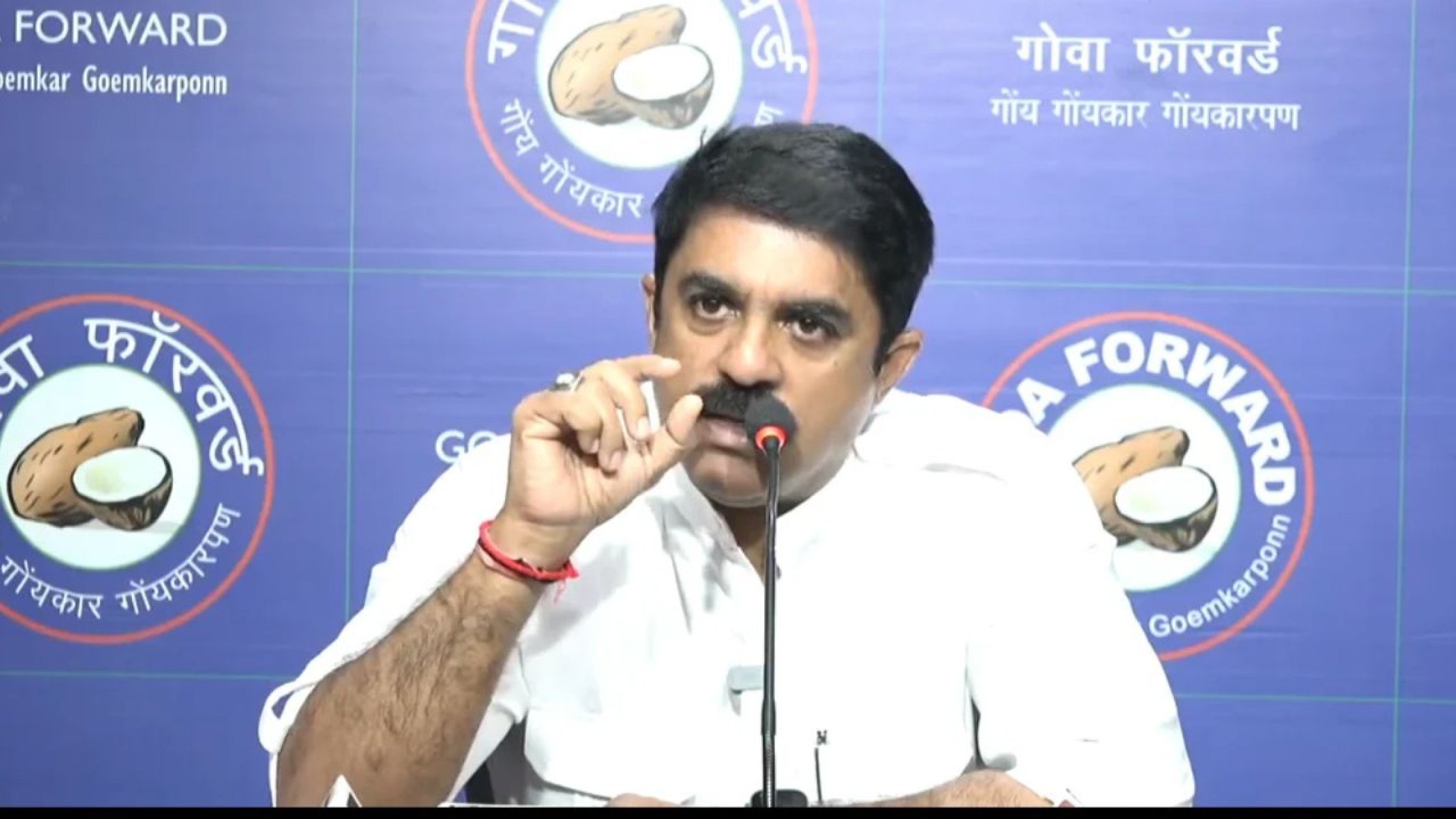
PANAJI: Goa Forward Party (GFP) chief and Fatorda MLA Vijai Sardesai has alleged manipulation of electoral rolls during the Special Intensive Revision (SIR), claiming that around 4,500 votes were deleted in Fatorda and approximately 50 voters were shifted from Curtorim to Fatorda using identical house numbers. Warning of legal action if authorities fail to act, Sardesai called the upcoming election “rigged” and announced a campaign against what he termed “vote chori”.
Speaking to reporters on Saturday, Sardesai alleged that genuine local voters were being removed from electoral rolls while questionable entries were being retained or added. He said a complaint supported by documentary evidence had been submitted to the Chief Electoral Officer (CEO), demanding an inquiry and action against officials found responsible.
Citing instances of individuals who had reportedly voted in Curtorim in 2012 and 2017 but were subsequently listed in Fatorda under identical house numbers, Sardesai questioned why these entries had not been removed during the SIR exercise. He argued that the geographical boundaries of Assembly constituencies were defined following the 2012 delimitation exercise and could not be arbitrarily altered to facilitate voter transfers across constituencies. “The primary objective of the SIR was to verify and clean up the electoral rolls,” Sardesai said, questioning how allegedly invalid entries had continued to appear in supplementary rolls despite the verification process.
According to figures cited by Sardesai, the draft electoral roll had 11,85,034 electors before 1,67,468 entries were deleted, including approximately 25,000 deceased persons. He urged voters across Goa to check their registration status and report discrepancies to ensure their names had not been removed without their knowledge. Sardesai warned that voter deletions could have consequences beyond the right to vote, pointing out that electoral registration was also linked to access to certain government welfare benefits, including the Deen Dayal Swasthya Seva Yojana (DDSY) and state pension schemes.
He further claimed that between 1,000 and 1,500 voters had been disqualified or deleted through procedures involving Forms 6 and 7. According to him, requirements such as landlord no-objection certificates and rental documents were creating difficulties for genuine residents, even as allegedly invalid entries persisted. The GFP chief also questioned the enrolment of individuals allegedly ineligible to vote, including non-citizens. He said complaints supported by documents had been filed against 50 individuals over alleged illegal registrations across constituencies using identical house numbers. He called for an investigation under the applicable provisions of the Representation of the People Act.
Sardesai urged journalists and political analysts to examine constituencies where election victories were decided by narrow margins. He referred to the victories of Chief Minister Pramod Sawant, Govind Gaude, Subhash Shirodkar and Ravi Naik, arguing that discrepancies in electoral rolls could influence outcomes in closely contested seats. He also referred to reports concerning centralised software used by the State Election Office, which allegedly marked 97 per cent of voters as eligible, and questioned whether the verification process had adequately addressed irregularities.
Appealing to political parties and citizens to unite against alleged electoral manipulation, Sardesai said voter deletions could affect Goans across communities, including local Hindu voters. He urged people to treat the issue as a matter of democratic rights rather than party politics.
Sardesai said the GFP would launch a campaign against alleged “vote chori” and approach the courts if authorities failed to investigate the complaints and take appropriate action.