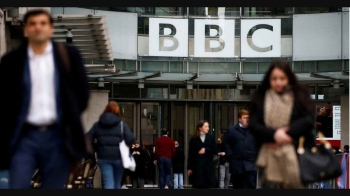
For the British Broadcasting Corporation (BBC), ‘love was not in the air’ on February 14. On Valentine’s Day of 2023, the Income Tax (I-T) Department entered the premises of the BBC in Delhi and Mumbai and conducted surveys continuously for approximately 58 hours. The surveys at the BBC’s offices were performed under several provisions of the I-T Act.
In the middle of disturbance and anger from opposition parties and journalistic associations, the government confirmed the survey as a customary practise. The BBC also stated that it is fully co-operating with tax authorities to get the situation resolved quickly. The survey was conducted to scrutinize suspected malpractices regarding transfer pricing and profit diversion. Section 133A of the I-T act 1961 permits the I-T Department to conduct the surveys.
So far so good ” everything clangs as per the tax manual! Actual glitches commence rising when this text is put in a broader framework. The survey on the BBC has come just a couple of weeks after the media corporation publicized a documentary grilling the role of the present Indian Prime Minister, Narendra Modi, in the disreputable 2002 Gujarat riots, in his capacity of a chief minister then.
Disciplinary deed or
act of revenge? (SUB HEADS)
Few experts did not hesitate and did not take much time to label the survey as a disciplinary action. Many experts disclosed different views too. If the survey is performed with a sentimentality of revenge, it must be mentioned that such a reaction doesn’t match the national government of a vibrant democracy like India. Keeping claims of legal misconduct and profit diversions to one side, representatives of the Bharatiya Janata Party are not shying away from grilling the operational aspects of a century-old media corporation like the BBC. A spokesperson of the BJP harshly de-abridged the BBC as ‘Bhrasht Bakwaas Corporation’, indicating that it is a corrupt, propaganda-spreading organization. Despite the fact, the tax authorities have mentioned revenue- and profit-linked anomalies, representatives from the ruling government are harping on a different melody by bringing the functional trustworthiness of BBC as a media organization into question. This seemingly merges into a sensitive situation where the organization is considered fit to be penalized for its suspected incompetence.
Importantly, two dubious queries arise here. First, how appropriate is it for a democratic government to bring an esteemed and long-serving media house into the witness box, centred completely on personal perception? Second, whether misconduct by a former government permits the present government to go the same lane? It must be noted the BBC functions under the Royal Charter and is assigned to offer properly precise and unbiased news to build people’s understanding of all parts of the United Kingdom and the broader world.
It is factual that the accusations of financial abnormalities against the BBC should be accurately scrutinized, but the intention and the timing of the survey, too, insist on scrutiny. It is highly relevant to note that numerous raids and inspections have been carried out against certain media persons and media houses in the past couple of years. None of those has reached any conclusive results. This, in a way, validates the allegation against the government that it might be utilizing the method as a penalty for acts that are not yet proven as being illegal.
Although opposition parties have lambasted the government for its bullying strategies, the current case has consequences far beyond the kingdom of domestic politics. The Editors Guild of India is intensely worried about the continuance of a tendency of employing government agencies to threaten and pester media channels critical of the ruling establishment.
Are pressure
tactics beneficial?
Frequently the government has employed outfits such as the Central Bureau of Investigation, the I-T Department, and the Enforcement Directorate have been employed to bulldoze media groups that had either critically inspected government strategies or uncovered some misconduct. This is not the first time. Many establishments like NDTV, NewsClick, the Dainik Bhaskar Group of Publications, and the institute that finances the Centre for Policy Research have over the preceding few years suffered the bossiness of such outfits. What the BBC has experienced is a similar type of pain. Maybe the government wants to assert that it can get even with any association that humiliates it, even if it is by way of advocating the truth. America, Britain and many other nations also expressed some small apprehensions, from time to time, about minority rights and press freedoms in India.
It is against this background that people in general, have doubts about the income tax survey.
A few years back, the BBC did a biopic on the Uighurs of the Xinjiang province of China, which was not to the fondness of the government there. The broadcaster was convicted for what it did. But there is an elementary variance between India and China. While it is a tyrannical government that governs China, India on the other hand takes pride in the fact that it is the leading democracy in the world. A nation cannot be judged democratic if it does not have an energetic media that can criticize the government. The media house serves the object of a watchdog and if it is cramped, it is dangerous for democracy. India gets admiration worldwide because it is democratic and has an open civilization. Any attempt to overpower the liberty of the media will be damaging to the long-term welfare of the nation. Therefore, the I-T department’s “survey” in the offices of BBC will surely be seen as a tactic of pressure that will not show the government of India in a good light.