An apple a day keeps the doctor away! But if any mention is made about the product from the rosaceous tree causing some physiological imbalance in the human body, people wouldn’t think twice about discarding this medical manna from their favoured list of fruits.
Doctors don’t tire of telling you what is good and bad for your body. Of course they should be knowing for they are the authority on this matter. But it becomes exceedingly confusing when a fruit or vegetable or some food substance hitherto considered harmful for the body gets the dietician’s stamp of approval for consumption after some recent research findings dispute the claim.
In this age of information boom, where facts are just a mouse click away, people think nothing of skipping the medical consultant’s advise and interpreting the findings according to their level of intelligence. Hence it becomes all the more difficult to have a thumb-rule laid down in such cases where the ‘to have’ or ‘not to have’ deliberations continue to baffle the masses.
A considerable time has been spent on pitting the advantages of having tea over the consumption of coffee and vice-versa. Likewise, the habit of having fruits before or after a meal! Various publications have succeeded in putting the fear of God amongst the laymen who are in quite a dilemma. The problem is that almost all the research findings emanate from either the US or other European countries. Definitely what holds good in the West cannot be applied as a benchmark in India. But is it actually so!
The efforts by the United States some time back in all but condemning the extensively used coconut oil in India so as to create a market for its own Palmolein oil can well be viewed as an aggressive enforcement of the marketing strategy of a superpower over the third world countries.
How else could the global medical fraternity come down so heavily on the use of coconut oil and proclaim it as one of the main causes of heart ailments in the sub-continent?
Undoubtedly, saturated fat is the main dietary cause of high blood cholesterol and coconut oil is one of the few plant-derived oils that has high saturated fat content and is liquid.
However the warning comes with some controversy as health organizations note the low incidence of heart diseases in tropical regions where coconut oil use is high.
Moreover, in recent times scientists on both sides of the coconut oil debate agree that the oil, in its virgin state, isn’t harmful. The problem comes when the coconut oil is hydrogenated, becoming a trans fat in the food manufacturing process. Indisputably, trans fats have no place in a healthy diet.
All of a sudden the equations have changed and once again scientists do not seem to tire of enumerating the benefits of coconut oil. After having transcended the heights of illogicality, the coconut oil paradox now assumes a new high with there being a consensus on coconut oil. How puzzling!
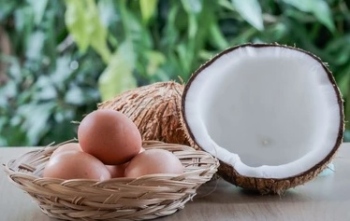
And now, contrary to previous belief, new research shows that moderate consumption of eggs does not have a negative impact on cholesterol levels! In fact, latest studies have shown that regular eating of two eggs per day does not affect a person’s lipid profile, but may actually improve it, or so it is being claimed.
In the late seventies dietary guidelines recommended limiting cholesterol to no more than 300 milligrams a day. As egg yolks are the largest contributor of dietary cholesterol, the message was to limit the whole egg.
Furthermore, research suggests that it is saturated fat that raises cholesterol rather than dietary cholesterol. Science has moved forward since then, but people’s perceptions have not.
According to another study, there is no significant link between egg consumption and heart diseases. In fact, some researchers opine that regular consumption of eggs may help prevent blood clots, stroke and heart attacks.
The Choline present in the egg is an important nutrient that helps regulate the brain, nervous system and cardiovascular system. So ‘roz khao andey’!
However, despite the perceived benefits of choline, dietary recommendations have discouraged people from eating certain high choline foods, such as egg and fatty meats.
According to posts in Chris Kresser’s website, there is a significant reason for us to make a special effort to include many high cholesterol foods in our diet. Yet for decades now, we have been neurotically avoiding cholesterol-rich foods for fear of developing heart diseases, thanks to the promulgation of the unfortunate Diet-Heart hypothesis.
Where do all these ‘preventive measures’ leave us! The deluge of research findings makes it impossible for us to consume anything without the risk of altering our permissible ‘pathological levels’. Quite often established taboos are ridiculed upon and the new crops of medical experts and dieticians have no qualms in contradicting the earlier stands.
With rapid strides being taken in the medical field, the old order is giving way to the new, apparently with a conflicting stand.
Unfortunately fearing cholesterol makes people prepare a long list of ‘must avoid’ food items, and sticking to it most diligently too. But in the bargain they end up eating more of the junk-food variety that could challenge the diktats of a balanced diet.
Some people don’t seem to tire of advising others on their food habits! In any case we need to understand that far from being a health destroyer, some types of cholesterol are essential for good health.
The cholesterol obsession is not a new medical fad, it has been on for decades now. But with the fast-food era having redefined our eating habits, people have shown a marked fondness for dabbling with the mathematics of lipids.