It is often presumed that Goa’s constitutional identity was forged only upon its liberation in 1961. Such a presumption, however, overlooks the structured legal order that had already taken root under Portuguese rule. The territory was governed by a codified civil law system anchored in legislative diplomas and uniform civil provisions. This framework emphasised formalism, notarial certainty, and legal uniformity across communities.
Unlike British India, where personal laws fragmented civil relations, Goa witnessed a relatively cohesive legal structure governing marriage, succession, and property. While colonial rule cannot be idealised, it would be reductive to ignore that a functioning civil law regime had already shaped Goan legal consciousness well before integration into the Indian Union.
Constitutional transition
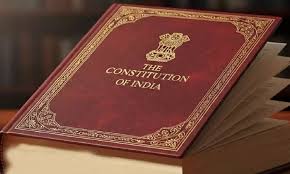
The extension of the Indian Constitution to Goa after December 19, 1961 marked a constitutional shift of considerable magnitude. Yet, this transition did not entail a wholesale replacement of existing laws. Article 372 ensured the continuance of pre-existing legal frameworks, thereby preserving Portuguese-origin statutes and notarial instruments within the Indian constitutional order.
What changed was not the law itself, but its source of authority. Legislative diplomas that once derived validity from Portuguese sovereignty began to operate under the supremacy of the Indian Constitution. This created a layered legal system in which civil law traditions coexisted with a common law constitutional framework.
It is in this layered system that courts in Goa frequently encounter the challenge of interpreting colonial-era deeds and notarial acts. These instruments, executed under a civil law tradition, were designed to carry conclusive evidentiary value. However, the courts adjudicating them today are institutions shaped by constitutional principles of fairness, equality, and judicial review.
The reconciliation of this divergence has been judicially crafted. The courts, while examining such documents, first ascertains their meaning within the original civil law framework and thereafter subjects them to constitutional scrutiny. A notarial act that was once treated as final is now examined through the lens of procedural fairness and substantive justice.
This process has produced a hybrid jurisprudence -- Portuguese in form, yet Indian in spirit where colonial legal instruments are neither discarded nor mechanically applied, but are adapted to align with constitutional mandates.
Ambedkar’s
constitutional vision
The constitutional framework within which this reconciliation occurs was itself the product of deep comparative study. In shaping the Indian Constitution, its writers drew upon diverse global models, including the federal structure of the United States, parliamentary traditions of the United Kingdom, and welfare-oriented approaches found in Scandinavian systems.
This vision was inherently transformative. It was designed for a society emerging from British colonial rule, marked by inequality and institutional fragility. Emphasis was placed on fundamental rights, social justice, and democratic accountability.
Significantly, this constitutional design did not engage with the Portuguese legal system, which continued to operate in Goa during the same period. The Constitution of India, coming into force in 1950, was not conceived with territories like Goa in immediate contemplation. Consequently, when it began to apply to Goa post-liberation, it encountered a legal ecosystem that had evolved along an entirely different trajectory.
The persistence of Indo-Portuguese administrative nuances well into 1974 further accentuated this temporal overlap. The courts were thus required to mediate between two distinct constitutional histories, one rooted in colonial civil law, and the other in a post-colonial democratic framework.
A constitution misaligned?
It is within this context that a more critical question arises whether the constitution, in its original design, was sufficiently attentive to Goa’s distinct legal heritage.
Drafted for a newly independent nation emerging from British rule, the constitution prioritised transformation and uniformity. Its provisions were necessarily general in character, designed to apply across a vast and diverse population. However, Goa’s legal system, shaped by codification and uniform civil principles, presented a different starting point.
Portuguese-origin legal instruments, with their emphasis on formal validity, do not always align seamlessly with constitutional doctrines rooted in equity and evolving interpretations of fundamental rights.
This has led to a situation where the constitution, while supreme, does not explicitly articulate the manner in which such inherited civil law systems are to be integrated. The burden of reconciliation has thus fallen upon the judiciary, which must interpret laws that the constitution itself did not specifically envisage.
Yet, this perceived deficiency also reveals an inherent strength. The constitution’s flexibility has allowed it to accommodate Goa’s legal peculiarities without necessitating their erasure. What may appear as a boilerplate framework in theory has, in practice, demonstrated an ability to adapt through judicial interpretation.
A living constitutional
confluence
The experience of Goa illustrates that constitutional systems need not operate in isolation. The coexistence of Portuguese civil law and Indian constitutional principles has produced a legal continuum rather than a rupture. The courts have emerged as the site of this confluence, mediating between historical continuity and constitutional transformation.
In doing so, they have crafted a jurisprudence that is uniquely Goan -- one that respects the precision of civil law while being guided by the normative force of constitutional rights. The interaction between these systems is not static, but dynamic, evolving with each case that calls for interpretation.
Harmony through adaptation
Goa stands as a testament to the possibility of constitutional coexistence. It demonstrates that inherited legal systems can be preserved, scrutinised, and ultimately harmonised within a broader constitutional framework.
The confluence of the Portuguese and Indian constitutional traditions is not without its tensions. Yet, it is precisely within these tensions that the strength of the legal system is revealed. The ability to adapt, rather than to erase, reflects a mature constitutional order.
In the final analysis, Goa’s legal landscape does not represent a clash of constitutional identities, but their convergence shaped by history, refined by judicial reasoning, and sustained by the enduring promise of justice under the constitution.