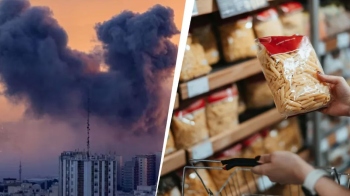
It is often assumed that a war in West Asia remains far removed from the markets of Goa. Yet food economics does not operate within neat geographic boundaries. When conflict disturbs energy routes, fertiliser supply, and freight movement, its effects are eventually reflected in the price at which vegetables, grains, and other essentials reach the local consumer. The present tensions involving the United States and Iran may therefore be read not merely as a foreign policy crisis, but as a matter with practical implications for household expenditure in Goa.
The first point that deserves clarity is that Goa is not a large fertiliser consuming State in comparison with the agricultural giants of India. The data shared on fertiliser usage shows that Goa’s nitrogen consumption stood at only 1.770 thousand tonnes in 2021. By contrast, Maharashtra’s nitrogen consumption was placed at 1,699.850 thousand tonnes in 2021, while Karnataka’s stood at 1,179.450 thousand tonnes in the same year. Goa’s phosphate consumption was only 0.870 thousand tonnes in 2020, and its potash consumption was 0.920 thousand tonnes in 2022. These figures make one proposition immediately clear. Goa’s own agricultural base is relatively modest in chemical fertiliser use.
Goa’s farm profile
This low level of fertiliser usage is not accidental. Goa’s agricultural pattern is structurally different from that of the major grain producing States. Its cultivation remains associated more with coconut, cashew, arecanut, horticulture, and limited vegetable production than with the vast cereal economies of north and western India. Such a pattern naturally results in lower aggregate fertiliser demand.
The policy direction of the State also supports this distinction. Emphasis has been placed on balanced nutrient application, organic farming, soil health management, and scientific optimisation of fertiliser use. Assistance for organic manure units and vermi-compost units has been noted. Tools such as fertiliser calculator applications and nutrient management aids have also been developed to guide more precise usage. The agricultural discourse in Goa has therefore not centred upon maximising chemical input consumption, but on moderating it.
That is precisely why the issue before Goa is slightly different from that confronting high intensity agricultural States. The present conflict becomes relevant because food consumed in Goa is not produced in Goa in sufficient volume.
Imported food reality
Goa’s food economy has long depended upon inflows from neighbouring States, especially Maharashtra and Karnataka. The daily market basket in Goa is sustained not only by local produce, but by vegetables, cereals, pulses, and other essentials entering by road from outside the State. That structural dependence gives the present conflict a direct economic meaning for Goa.
If Maharashtra and Karnataka face higher fertiliser costs, their cost of cultivation rises. If their agricultural systems depend more heavily on nitrogen, phosphate, and potash, they feel the effect of rising input prices more sharply. The data shared by you makes that contrast impossible to ignore. Goa’s nitrogen consumption of 1.770 thousand tonnes appears tiny when read beside Maharashtra’s 1,699.850 thousand tonnes and Karnataka’s 1,179.450 thousand tonnes. The scale of dependence in those supplying States is therefore vastly greater.
This matters because Goa does not merely purchase food. It purchases food whose price is shaped by the economics of production in those outside regions.
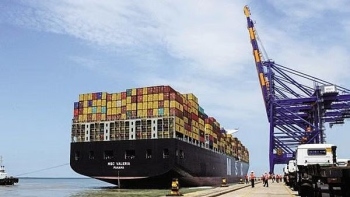
Once global conflict affects energy and shipping, the effect is transmitted in three stages. First, fertiliser inputs become costlier where agriculture is more chemically intensive. Secondly, freight costs begin to rise because fuel and transport become more expensive. Thirdly, the cumulative increase in cultivation and logistics costs is passed on to wholesale and retail buyers. Goa enters this chain at the final stage, but it does not escape the chain.
The lesson from earlier international disruptions has already been observed. The European Parliamentary Research Service note on the Russia and Ukraine conflict explained that food insecurity pressures emerge through reduced exports, higher prices of food supplies and agri-food inputs such as fertilisers and energy, and the wider international trade response. The issue is not always immediate scarcity. More often, the issue is cost, affordability, and purchasing pressure.
For Goa, that pressure would most likely appear in the price of vegetables first, then in grains and allied supplies transported from outside. A rise in freight alone can alter the landed cost of essentials in a State whose market is deeply reliant upon interstate movement.
Local vulnerability
The question of food security in Goa should therefore not be reduced to whether local farmers use much fertiliser. That would be too narrow a test. Food security in Goa is better understood through the lens of dependence, affordability, and supply continuity. A State with limited chemical fertiliser use may still remain vulnerable if a substantial portion of its food basket is produced in high input agricultural regions outside its boundaries.
At the same time, there is room for moderation rather than panic. India has spoken of strong fertiliser stocks and continued subsidy support. Goa itself has been encouraging organic and balanced nutrient practices.
Resilience ahead
This moment should therefore be read as an argument for strengthening Goa’s own agricultural resilience. Even incremental increases in local vegetable cultivation, better storage systems, support for horticulture, scientific soil management, and reduced wastage can provide meaningful relief. The value of local production is not merely symbolic. It lies in reducing the distance between the field and the plate.
The present conflict thus offers Goa an economic lesson. The State’s relatively low fertiliser usage is a strength within its own agricultural profile. Yet its reliance on food produced elsewhere ensures that global shocks are still felt in local markets. What is saved in one field may still be paid for at the market stall.