As Goa approaches another Assembly election, the electorate deserves more than competing political narratives. It deserves to know how public contracts are awarded, who receives them, how political donations intersect with the contracting industry and whether the safeguards surrounding public expenditure are working as intended.
The issue is not whether every successful contractor is politically favoured. The issue is whether the available evidence discloses patterns which merit independent scrutiny before voters are asked to pass judgement at the ballot box. The case of Bagkiya Constructions warrants such scrutiny.
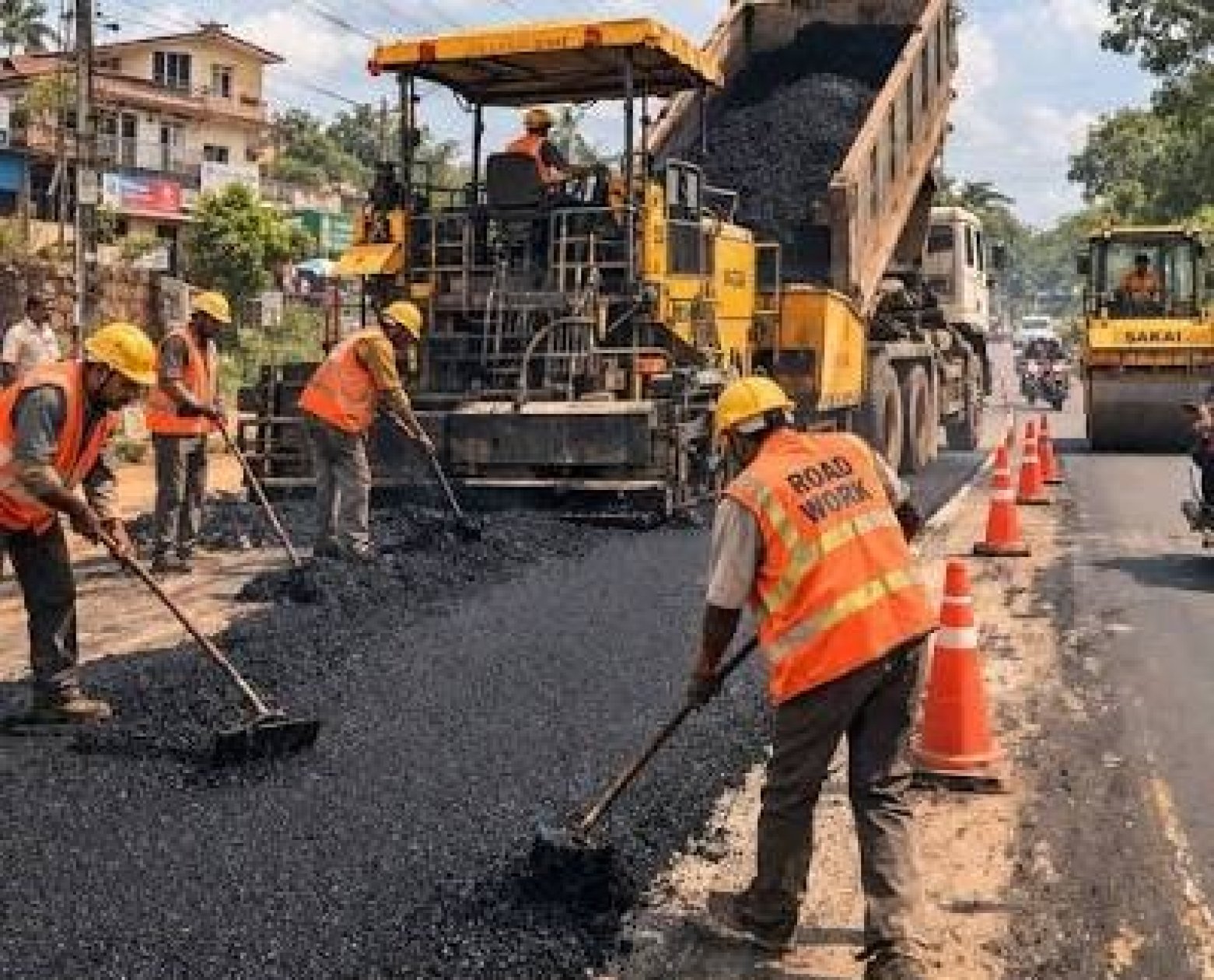
Public procurement data records Bagkiya Constructions as having won 31 Public Works Department tenders since 2021, with a recorded value of approximately Rs 211 crore. The same database records substantial business from other Goa government entities, including the Goa Tourism Development Corporation (BidEasy, 2026).
There is nothing inherently improper about this. A contractor possessing the requisite financial capacity, technical personnel, machinery and experience is entitled to compete for public works and to win them. Indeed, several Bagkiya contracts were competitively tendered, with multiple bidders participating.
The political-finance record, however, provides another piece of the picture. Bagkiya Construction Pvt Ltd is recorded as having contributed Rs 10 lakh to the Bharatiya Janata Party in financial year 2023–24 and Rs 30 lakh in 2024–25, making an identified total of Rs 40 lakh (Association for Democratic Reforms, 2026). That fact should neither be concealed nor exaggerated.
It does not prove that any contract was awarded because of the contributions. Indeed, Bagkiya's substantial government contracting preceded these particular donations. A responsible newspaper cannot turn temporal association into proof of a quid pro quo. But neither should the relationship be dismissed as irrelevant.
The matter becomes more serious because of what has been recorded in a judicial proceeding concerning the company's taxation.
In ACIT v Bagkiya Constructions Pvt Ltd, the Income Tax Appellate Tribunal, Panaji Bench, considered material obtained during an Income Tax Department survey of the company. The Tribunal recorded evidence concerning allegedly bogus sub-contracting entries, cash withdrawals and cash kept outside the books. It also recorded the director's statement that cash was required for business exigencies and “liaising” payments, and that approximately 4–5 per cent of turnover had been estimated as out-of-books liaisoning expenditure for securing business contracts (Income Tax Appellate Tribunal, Panaji Bench, 2026).
The Tribunal further recorded material in which cash was stated to have been used for purposes including securing government contracts, clearing bills from government departments and liaisoning expenditure. This finding requires precision.
The Tribunal did not find that the money was paid to the BJP. It did not find that any BJP leader received it. It did not establish that any particular government contract had been obtained through a political payment.
What it did do was sustain part of the tax authorities' case on the basis of impounded material and statements, while rejecting the Assessing Officer's broader, ad hoc calculation of profit. The Tribunal ultimately restricted one addition relating to bogus sub-contracting to Rs 85 lakh (Income Tax Appellate Tribunal, Panaji Bench, 2026). That distinction is vital. But so is the underlying evidence.
There is another recent development. In June 2026, the Goa Government revoked Bagkiya Constructions' Class I-AA (Super) contractor enlistment following an internal inquiry into the enlistment process. The Principal Chief Engineer confirmed that a departmental committee had examined the matter and that Vigilance was also investigating allegations concerning the company's eligibility documents (Local newspaper, 2026).
The subsequent government position also indicated that contracts awarded while the company held the higher classification could be reviewed (The Goan, 2026).
Again, this should not be converted into an accusation that every contract was improperly obtained. The Government's action concerns the enlistment process and requires its own legal and factual assessment. Nor is this controversy confined to one contractor.
A petition before the Bombay High Court at Goa has alleged favouritism in the award of tendered and untendered PWD works, including allegations concerning relatives of a former Principal Chief Engineer and a group described by the petitioners as “preferred contractors”. The petitioners have alleged a potential loss of approximately Rs 1,350 crore to the State exchequer. Those are allegations in litigation and are not judicial findings (The Goan, 2026).
Every major PWD contract should be capable of being independently reconstructed: The original estimate, every bidder, the quoted rates, L1 status, award date, completion period, extensions, additional quantities, revised estimates and final payment. Contractor classification should also be traceable. Political contributions should then be placed alongside that chronology. Such scrutiny could produce either conclusion.
If the records show genuinely competitive tenders, competitive pricing and properly justified variations, contractors should be cleared of insinuation.
If they reveal repeated restricted competition, unexplained post-award increases, questionable eligibility documents, unusual nomination works or other departures from procurement rules, those matters should be investigated irrespective of the political identity of the government.
The electorate should therefore resist two equally convenient arguments: That every wealthy contractor is corrupt, and that every government contract is automatically legitimate because it passed through a tender process. Neither proposition is sufficient.
The real democratic demand should be for traceability. Who received the contract? How many competitors participated? Why was the successful bid accepted? What changed after the award?
How much was ultimately paid? Did the contractor remain eligible throughout? And did any political contribution occur before or after the award?
These questions do not amount to an accusation. They are the minimum questions that should accompany the expenditure of public money.
The 2027 election should not be fought on unverified claims of “scams”, nor should allegations be dismissed merely because they are politically inconvenient. Goans are entitled to the evidence.
If the evidence clears the system, transparency will strengthen public confidence.
If it exposes preferential treatment, the electorate will be entitled to demand accountability.
Until then, the most responsible conclusion is also the most uncomfortable one: the documented overlap between large government contracts, political contributions, contractor-eligibility controversies and judicially recorded evidence concerning out-of-books liaisoning expenditure warrants independent scrutiny—but it does not, on the present evidence, establish a BJP–contractor quid pro quo. That distinction is not a weakness in the story. It is precisely what makes the story worth investigating.